
AV over IP: Why Your Next Conference Room Should Run on the Network, Not on Cables
Author
SSAL Expert TeamPublished
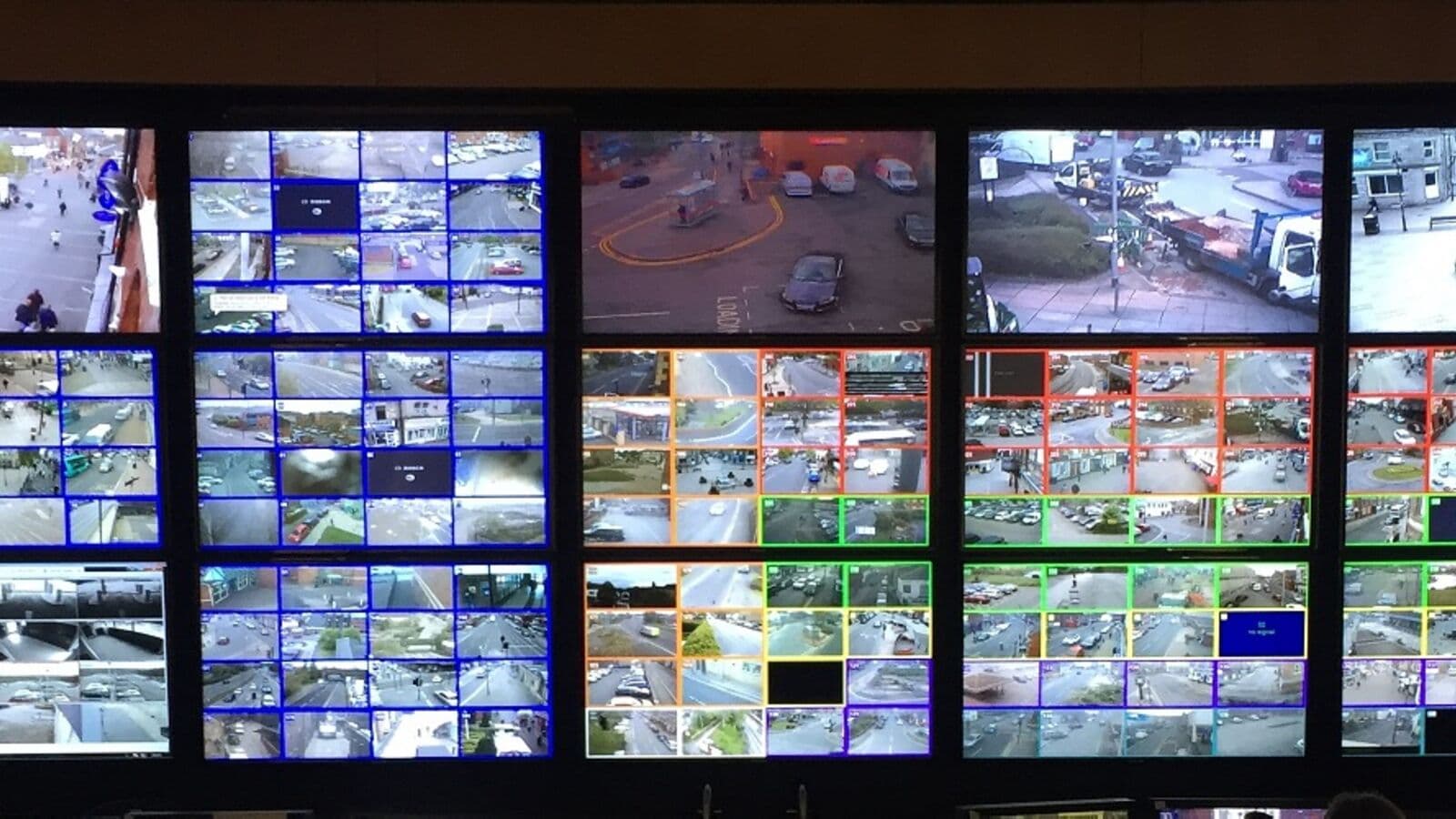
The way enterprises distribute audio and video signals across buildings is undergoing a fundamental transformation. For the past three decades, AV distribution meant physical cables — HDMI, DVI, VGA, SDI — routed point-to-point or through expensive hardware matrix switchers. In 2026, a growing number of enterprises are replacing this infrastructure with AV over IP (AVoIP): video and audio distributed over standard Ethernet network infrastructure.
The shift is driven by economics, flexibility, and scalability. This article explains what AV over IP actually is, how the major standards compare, what your network needs to support it, and why Bangladesh enterprises building out multi-room AV systems should consider it for their next project.
The Problem with Traditional AV Distribution
HDMI Cables: Simple but Limited
A single HDMI cable connecting a laptop to a display is simple and reliable. It becomes a significant constraint as soon as you want to do anything more complex: send one source to multiple displays, switch between multiple sources at a single display, or distribute signals across a building.
HDMI's maximum reliable cable run without signal boosting is approximately 10 metres. Beyond that, active HDMI cables, HDMI over fibre extenders, or HDBaseT transmitters are required — each adding cost and a potential failure point. In a building where sources and displays are on different floors, running dedicated HDMI infrastructure becomes expensive civil engineering.
Matrix Switchers: Powerful but Inflexible
The traditional enterprise solution for multi-room AV distribution is the hardware matrix switcher: a dedicated device that can route any of its inputs to any of its outputs. A 16×16 matrix switcher (16 inputs, 16 outputs) allows any of 16 sources to be sent to any of 16 displays simultaneously.
The problem with matrix switchers is their fixed architecture. A 16×16 matrix is exactly 16 inputs and 16 outputs — adding a 17th source requires replacing the entire switcher. Routed signals require dedicated copper or fibre cable home-runs back to the central matrix location. Troubleshooting requires physical access to centralised hardware. And quality matrix switchers from Crestron, AMX, or Extron carrying uncompressed 4K signals cost USD 15,000–50,000 for medium-scale systems — before installation, cabling, and programming.
What AV over IP Does Differently
AV over IP replaces the dedicated matrix switcher with your existing Ethernet network. Sources (laptops, cameras, media players, cable boxes) connect to small encoder devices that convert the video signal into IP data packets. Displays and other endpoints connect to decoder devices that receive those packets and reconstruct the video signal.
The routing that would previously require a physical matrix switcher now happens in software — the same way your IT department routes data traffic across the network. Any encoder can send to any decoder, to any number of decoders simultaneously, from anywhere on the network. Adding a new source means plugging in a new encoder; adding a new display means plugging in a new decoder.
This architecture is fundamentally more scalable, more flexible, and — at scale — significantly more cost-effective than traditional matrix distribution.
The Three Major AVoIP Standards
SDVoE: Uncompressed 4K over 10GbE
Software Defined Video over Ethernet (SDVoE) is the performance premium standard in the AVoIP market. Developed by the SDVoE Alliance (whose members include Crestron, Extron, ZeeVee, and AptoVision), SDVoE transmits uncompressed 4K video at full quality over 10 Gigabit Ethernet network infrastructure.
Uncompressed transmission means zero latency — the signal arrives at the decoder with sub-frame delay, making SDVoE appropriate for live switching in broadcast environments and real-time applications where any delay is unacceptable. It also means the network carries substantial data: a single uncompressed 4K60 signal consumes approximately 18 Gbps, which is why 10GbE switch infrastructure is mandatory.
SDVoE is the right choice for high-performance command centres, broadcast facilities, and enterprise environments where the network infrastructure investment in 10GbE switching has already been made or is planned. The per-endpoint cost (encoder + decoder pairs) is higher than compressed alternatives.
NDI: Compressed Video over Standard Gigabit Networks
Network Device Interface (NDI), developed by NewTek (now part of Vizrt), is a compressed video-over-IP standard widely used in broadcast production and increasingly in enterprise AV. NDI transmits high-quality compressed video over standard 1 Gigabit Ethernet — infrastructure that most enterprise networks already have.
NDI is not lossless, but the compression quality is high enough for corporate presentation applications, video conferencing, and digital signage. The bandwidth consumption is manageable: full-bandwidth NDI streams run at approximately 100–250 Mbps per stream, which allows multiple simultaneous streams on a well-configured Gigabit network.
The NDI ecosystem is broad: hundreds of cameras, capture cards, software applications, and hardware devices support NDI natively. For enterprises building IP-based video production workflows or wanting to distribute video between software applications (OBS, Zoom, Teams) and hardware, NDI is a compelling choice.
Proprietary AVoIP Systems
Several major AV manufacturers offer proprietary AVoIP systems optimised for their own ecosystems. Crestron NVX runs on 1GbE infrastructure and integrates deeply with Crestron control systems. Extron NAV Pro offers similar capability. Kramer's KDS series provides AVoIP distribution with compressed 4K support.
These proprietary systems offer tighter integration with the manufacturer's broader AV ecosystem — control systems, touch panels, scheduling software — at the cost of vendor lock-in. For an enterprise already standardised on Crestron or Extron, the proprietary AVoIP platform often provides the best integration experience.
Network Requirements for AVoIP
Bandwidth and Switch Selection
The network infrastructure requirements for AVoIP depend on the standard chosen:
SDVoE (uncompressed): 10GbE switching throughout the AV network segment. Each display and source endpoint requires a 10GbE switch port. The core switch must handle the aggregate bandwidth of all simultaneous streams — 24 simultaneous 4K60 streams consume approximately 432 Gbps, requiring a high-capacity spine switch.
NDI and proprietary compressed systems: 1GbE switching is typically adequate for most corporate deployments. A managed gigabit switch with sufficient port count handles the AV traffic alongside standard IT data traffic, with appropriate QoS (Quality of Service) configuration.
QoS: Prioritising AV Traffic
Video traffic is latency-sensitive and unforgiving of packet loss or jitter. On a network carrying both AV and standard IT data traffic, QoS configuration ensures video packets receive priority routing. Without QoS, a large file transfer by one employee can cause momentary network congestion that produces visible artefacts or dropped frames in AV streams.
DSCP (Differentiated Services Code Point) marking is the standard mechanism: AV encoders mark their packets with a high-priority DSCP value, and network switches process marked packets ahead of unmarked data traffic. This configuration is straightforward on any enterprise-class managed switch from Cisco, HPE, or Aruba.
VLAN Segmentation
Separating AV traffic onto a dedicated VLAN (Virtual Local Area Network) provides both quality and security benefits. AV multicast traffic — where one source streams to multiple decoders simultaneously — is contained within the AV VLAN and does not flood the general IT network. This is particularly important for multicast-heavy deployments where a single source feeds dozens of display endpoints.
Benefits at Scale: The Bangladesh Enterprise Scalability Context
For Bangladesh enterprises managing AV across multiple floors, buildings, or campuses, the scalability advantages of AVoIP become compelling.
Consider a corporate headquarters in Dhaka with 30 meeting rooms, 20 digital signage displays in lobbies and corridors, 10 executive offices with displays, and a central boardroom — 60+ display endpoints in total. A traditional matrix switching approach for this scale requires multiple large-format matrix switchers, hundreds of metres of dedicated HDMI or HDBaseT cabling, and a centralised AV machine room with significant power and cooling requirements.
An AVoIP approach uses the existing building IT network infrastructure, encoder units at each source location, decoder units at each display location, and software-based routing control. The centralised AV machine room is replaced by a rack of encoders and decoders distributed in IT comms rooms on each floor. Adding a new conference room means patching two Ethernet cables — one for the encoder, one for the decoder — rather than running a dedicated cable home-run to a central matrix.
Cost Comparison: When AVoIP Makes Financial Sense
AVoIP is not always cheaper per endpoint than traditional AV distribution. For very small deployments — a single conference room or a handful of display points — traditional point-to-point HDMI with a small matrix switcher is simpler and less expensive.
The crossover point typically occurs at approximately 8–12 display endpoints. Above this scale, the elimination of the large hardware matrix switcher (a significant capital cost), the reduction in dedicated cabling runs, and the software-based flexibility of IP routing combine to make AVoIP the more economical choice. Above 20 endpoints, AVoIP is almost universally the lower total cost option.
For a new building fit-out where the IT network infrastructure is being installed simultaneously, the incremental cost of specifying 10GbE switching (if SDVoE is the target) or managed gigabit switches (for NDI or proprietary systems) is modest relative to the AV system cost — making the network upgrade the obvious choice.
SSAL's AV over IP Expertise
SSAL designs and installs AV over IP systems for enterprises across Bangladesh. We work with Crestron NVX, Kramer KDS, and SDVoE-compatible platforms depending on scale, budget, and integration requirements. Our network engineers ensure the underlying IP infrastructure is correctly configured — QoS, VLAN, switching bandwidth — before the first AV endpoint is commissioned.
Ready to evaluate AV over IP for your building?
[Get Free Consultation] — Our AV and network engineers will assess your existing infrastructure and recommend the right AVoIP approach for your scale.
[Talk to Our Expert] — Discuss your specific multi-room AV distribution requirements with a specialist.
Filed under
- AV-over-IP
- SDVoE
- NDI
- enterprise-AV
- network-AV
- 4K-distribution
- Bangladesh
- conference-room
SSAL Expert Team
SSAL engineering team — Bangladesh-focused technical writing on security, fire-safety, ICT, and building technology.
Related Articles
How AI-Powered AV Systems Are Solving the Hybrid Meeting Problem
Discover how AI camera tracking, noise cancellation, and smart room booking solve hybrid meeting challenges. ROI data and enterprise AV guide for Bangladesh.
OpenHow to Design AV Systems for Every Room Type: From Huddle Rooms to Executive Boardrooms
Complete AV system design guide for all room types. Display sizing formulas, mic placement, camera FOV, and Bangladesh boardroom design context. 2026 edition.
OpenThe Hidden Costs of a Poorly Designed Conference Room AV Setup
Poor AV setups waste 8 minutes per meeting, cost thousands in IT support, and damage client relationships. Calculate your real AV productivity cost for Bangladesh offices.
OpenNeed Help Choosing the Right Solution?
SSAL engineers respond to RFQ submissions within 1 business day with a scoping call request.
- 48-hour site survey
- Free consultation
- 24/7 priority support