
Bangladesh Security & Automation Market Trends 2026: What to Watch
Author
SSAL Expert TeamPublished
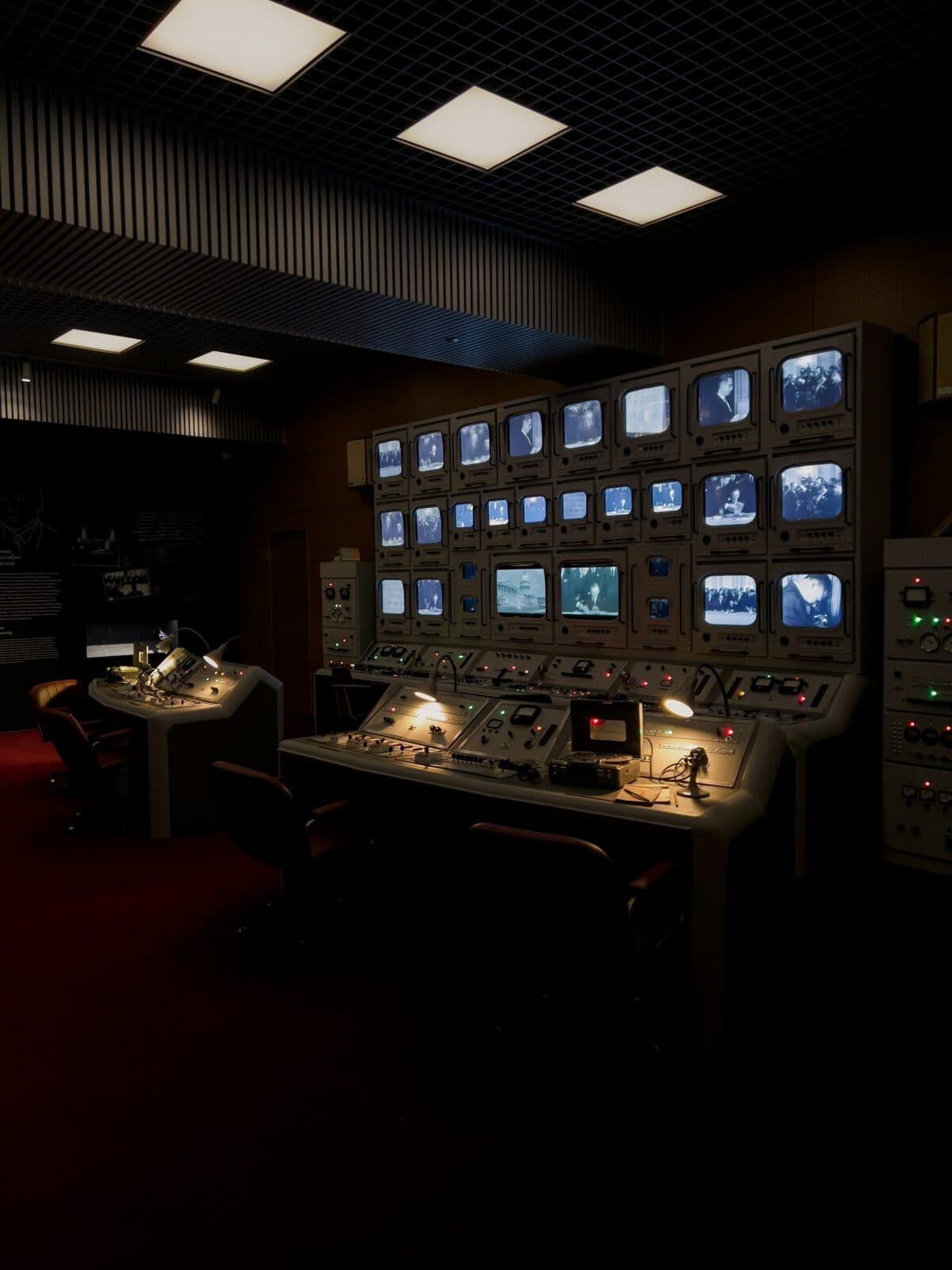
The physical security and automation market in Bangladesh is at an inflection point. After years of relatively fragmented, price-driven procurement — particularly in the SME and mid-market segments — Bangladesh is now experiencing structural forces that are accelerating adoption of enterprise-grade security, automation, and building management systems. Regulatory enforcement, compliance deadlines, urban infrastructure investment, and post-pandemic workplace transformation are all converging in 2026 to create significant market momentum.
This article analyses the key trends shaping the Bangladesh security and automation market in 2026, from regulatory drivers and technology adoption to brand dynamics and the forces reshaping procurement behaviour.
Bangladesh Physical Security Market: Size and Growth
The Bangladesh physical security market — covering CCTV, access control, fire safety, intruder alarms, perimeter security, and integrated security management — is estimated at approximately USD 150-180 million annually in 2026, growing at 12-15% per year. This growth rate significantly outpaces GDP growth, driven by the structural factors described in this article.
The market is concentrated in Dhaka and Chattogram, which together account for approximately 70% of commercial security spending. However, secondary cities — Sylhet, Khulna, Rajshahi, Cumilla, and Gazipur — are showing faster growth rates as industrial and commercial development accelerates outside the major metro areas.
The Building Management System (BMS) and home/commercial automation segment — covering HVAC control, lighting automation, energy management, and AV systems — represents an additional USD 40-60 million market segment, growing at similar rates as the corporate real estate sector modernises and energy efficiency becomes a boardroom priority.
Driving Trend 1: Bangladesh Bank Regulatory Enforcement
Bangladesh Bank's ICT Security Guideline v4.0, effective from 2022, has been the most significant regulatory driver of enterprise security investment in the banking sector. With the 2-year implementation window having passed, Bangladesh Bank is now in active enforcement mode — conducting annual ICT security inspections of all scheduled banks and issuing formal compliance findings.
Banks that have received adverse inspection findings are now investing urgently in CCTV upgrades (to meet 90-day retention and full HD resolution requirements), biometric access control for server rooms and treasury areas, and environmental monitoring for server rooms. This is not discretionary spending — it is regulatory remediation.
The market impact is significant. Bangladesh has 61 scheduled banks plus multiple non-bank financial institutions (NBFIs) operating thousands of branches, hundreds of ATMs, and dozens of data centre facilities. Each of these locations requires compliant CCTV, access control, and supporting systems. The volume of retrofit work required is substantial and will continue through 2027-2028 as banks complete their compliance programmes.
Driving Trend 2: RMG Sector RSC Compliance Deadlines
The RSC (Readymade Sustainability Council) has been progressively tightening its enforcement of fire safety and physical security requirements at enrolled garment factories. Approximately 1,600 factories in Bangladesh are enrolled in the RSC programme. Many still have outstanding Corrective Action Plan (CAP) items related to fire alarm upgrades, sprinkler installation, and access control improvements.
RSC member brands — including H&M, Inditex, PVH, Marks & Spencer, and others — are increasing their own compliance expectations alongside RSC standards. Several major brands now require biometric attendance systems and CCTV coverage of shipping areas as a condition of continued sourcing relationships.
The 2025-2026 period has seen brands issuing increasingly firm timelines for factory compliance, with threats to suspend sourcing from factories that fail to close CAP items on schedule. This is creating a wave of factory investment in fire safety and security systems that will continue through 2027.
Driving Trend 3: Smart City Initiatives
The Bangladesh government's Smart Bangladesh Vision 2041 and the Dhaka Smart City project are directing substantial infrastructure investment into urban security systems. Key initiatives underway include:
Dhaka Traffic Surveillance Network — An expansion of the CCTV network covering major intersections, flyovers, and public spaces in Dhaka Metropolitan Area. This project involves thousands of IP cameras, integrated video management, and AI-based traffic analytics. Local integrators with IP surveillance expertise are key beneficiaries.
Digital Bangladesh Security Infrastructure — Broader government initiatives to deploy surveillance infrastructure in public spaces, transport hubs, and government buildings. Projects under BTRC, DMP (Dhaka Metropolitan Police), and the Home Ministry are collectively investing hundreds of crores of taka in public security infrastructure.
Smart Chittagong Port — Bangladesh Inland Container Depot (ICD) and Chattogram Port Authority are investing in integrated security and access control systems to modernise the port's security infrastructure, reduce cargo theft, and meet international maritime security standards.
These government projects are driving demand for large-scale IP camera deployments, video analytics, command centre infrastructure, video walls, and integrated access control. The specifications for government projects typically require international brand equipment with local after-sales support — a market structure that favours established integrators with brand authorisation.
Driving Trend 4: Commercial Security Investment in Dhaka's Business District
Rising crime in commercial areas — including ATM fraud, vehicle theft from car parks, break-ins at commercial premises, and organised retail theft — is driving enterprise investment in security systems in Dhaka, Chattogram, and other commercial centres. Commercial property landlords in Gulshan, Banani, Motijheel, and Agrabad are under pressure from commercial tenants who increasingly make security infrastructure a lease evaluation criterion.
Grade A commercial office buildings in Dhaka now require enterprise-grade CCTV coverage, access control for tenant floors, visitor management at reception, car park management systems, and integration with building management systems. Buildings without these systems struggle to attract multinational tenants whose parent companies have security standards that require compliant building infrastructure.
Driving Trend 5: Post-COVID Workplace Transformation
The return to office post-pandemic has been accompanied by significant investment in building technology. Hot-desking, flexible workspace, and occupancy-based building management require systems that traditional buildings do not have. This is driving investment in:
- Access control systems that support mobile credentials (smartphone-based access)
- People counting and occupancy monitoring systems (often delivered via CCTV analytics)
- BMS integration with access control to drive HVAC and lighting based on occupancy
- Meeting room management and AV systems for hybrid working
Large enterprises in Dhaka are driving this trend, with multinational companies, NGOs, and professional services firms leading adoption. This market segment has shown willingness to pay for quality — it is the fastest-growing segment for premium international brands.
Technology Trend 1: AI Video Analytics Adoption
Artificial Intelligence-based video analytics — the ability to extract actionable intelligence from camera feeds automatically — is transitioning from a niche technology to mainstream consideration for enterprise buyers in Bangladesh.
Mature AI analytics applications that are being deployed in Bangladesh in 2026 include:
- Intrusion detection: virtual perimeter lines that trigger alerts when crossed after hours
- Loitering detection: alerts for persons remaining in sensitive areas (ATM vestibules, car parks) beyond a defined time
- People counting: accurate occupancy data for retail, commercial, and transportation environments
- License plate recognition (ANPR): automated vehicle access control and log generation
Facial recognition is technically capable but creates PDPO 2025 compliance complexity that many enterprises are avoiding until clearer regulatory guidance is available.
Edge AI — where the analytics processor is embedded in the camera itself rather than running on a separate server — is rapidly becoming the standard for new deployments. Hikvision's DeepInMind series and Dahua's WizMind cameras embed AI analytics at the camera level, reducing the server infrastructure required and enabling AI analytics at costs accessible to mid-market buyers.
Technology Trend 2: Cloud-Based Security Management
Cloud-based video surveillance and access control management — where the management software runs on cloud infrastructure rather than on-premise servers — is growing rapidly in the SME segment. Cloud VMS (Video Management System) platforms eliminate the need for on-premise NVR servers, enabling SMEs to access enterprise-class video management at subscription pricing.
The challenge in Bangladesh is network reliability and bandwidth costs. Cloud VMS works best with high-bandwidth, low-latency connections — conditions that are available in Dhaka's commercial districts but less reliable in secondary cities and industrial zones. Hybrid approaches — cloud management with edge recording — are the most practical solution for most Bangladesh deployments in 2026.
Technology Trend 3: Mobile Access Credentials
Traditional physical access cards (RFID, proximity cards, smart cards) are being supplemented or replaced by mobile phone credentials. Employees present their smartphone to an NFC-enabled reader instead of a card. This eliminates card management overhead (lost cards, expired cards, cards not returned by departing employees) and enables remote credential management.
Mobile credentials are gaining traction in corporate office environments in Bangladesh, particularly where the workforce is smartphone-equipped (as is increasingly the case). Adoption in factory and warehouse environments — where smartphones may not be permitted on the production floor — is slower. HID Global's Mobile Access platform and ZKTeco's mobile credential solutions are the most active in the Bangladesh market.
Technology Trend 4: IP-Based PA Systems Replacing Analog
Public Announcement (PA) system replacement is an underappreciated market opportunity. Bangladesh's commercial and industrial buildings contain millions of square metres served by aging analog PA systems that are unreliable, difficult to maintain, and incapable of delivering modern functionality (selective zone paging, digital audio recording, integration with fire alarm). IP-based PA systems from DSPPA and Bosch are replacing analog infrastructure in commercial buildings, hospitals, educational institutions, and factories.
The integration between IP PA systems and fire alarm systems — enabling automatic voice evacuation announcements when the fire alarm activates — is a BNBC 2020 requirement for high-rise buildings. This regulatory driver is creating a specific replacement market for legacy PA systems in Bangladesh's growing high-rise commercial real estate stock.
Brand Dynamics: Chinese vs. Global Brand Competition
The Bangladesh security market divides broadly into two segments by buyer type:
Price-Sensitive Segment (SME, small commercial, residential) — This segment is dominated by Chinese brands, primarily Hikvision and Dahua. These brands deliver acceptable quality at accessible price points and are backed by a growing dealer network across Bangladesh. In this segment, brand competition is primarily price-driven, and margins for installers are thin.
Enterprise Segment (banking, large commercial, industrial, government) — This segment supports a broader range of brands. Hikvision and Dahua compete with global brands including Bosch, Axis (Axis Communications), Avigilon (Motorola), and Honeywell for enterprise projects. Genetec and Milestone compete in the video management software category. ZKTeco dominates access control at mid-market pricing, while HID Global and Gallagher serve the premium enterprise access control segment.
The enterprise segment is where margin and value are sustained. Compliance requirements (Bangladesh Bank, RSC, international buyer codes of conduct) specify performance requirements that cheap equipment cannot reliably meet, creating a sustainable quality differentiation.
SSAL's Market Position in 2026
We are positioned as a full-spectrum enterprise security and automation solutions provider — the integrator that delivers the comprehensive platform that regulatory compliance, enterprise operational requirements, and technology trends demand. With 16+ years of group experience through Smart Technologies (BD) Ltd., authorised integrator status for Hikvision, Dahua, Bosch, ZKTeco, Honeywell, Genetec, and other leading brands, and a track record across banking, RMG, commercial real estate, healthcare, and government sectors, we are equipped to help Bangladesh enterprises navigate both the compliance landscape and the technology opportunity of 2026.
Talk to Our Expert
Understanding market trends is the starting point. Translating those trends into a security and automation investment plan that serves your organisation's specific needs — regulatory, operational, and financial — is where expert guidance adds real value.
Talk to Our Expert — contact us to discuss your security and automation roadmap for 2026 and beyond.
Filed under
- bangladesh-security-market
- market-trends-2026
- ai-video-analytics
- smart-city
- cloud-security
- ip-camera
- access-control
- bms
- automation
SSAL Expert Team
SSAL engineering team — Bangladesh-focused technical writing on security, fire-safety, ICT, and building technology.
Need Help Choosing the Right Solution?
SSAL engineers respond to RFQ submissions within 1 business day with a scoping call request.
- 48-hour site survey
- Free consultation
- 24/7 priority support