
AI Video Analytics in Bangladesh 2026: What Enterprises Should Adopt Now vs. Wait For
Author
SSAL Expert TeamPublished
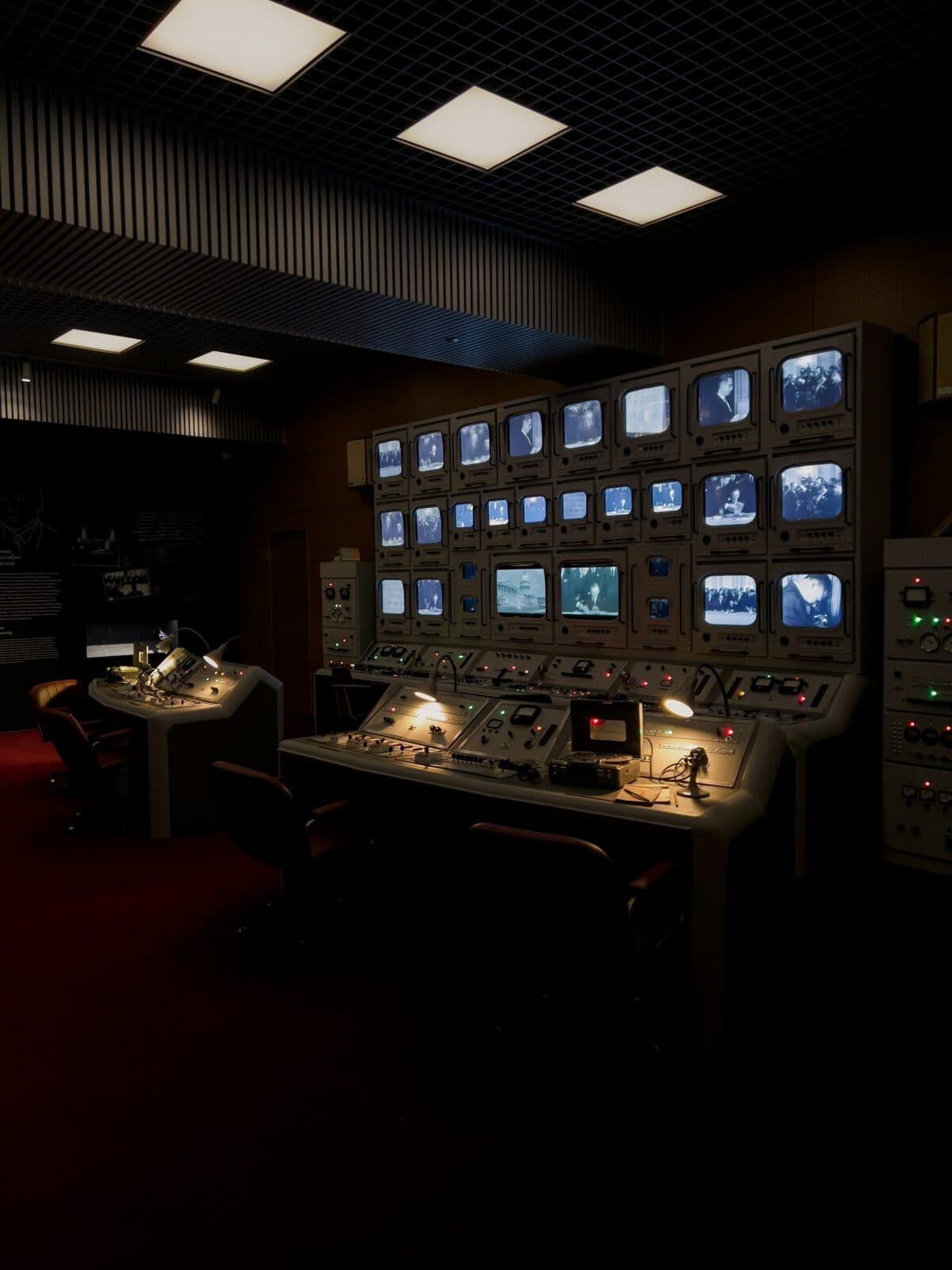
Artificial intelligence has transformed what a CCTV camera can do. A camera deployed 10 years ago recorded video for later review. A camera deployed today can detect a specific person crossing a virtual line, count the number of people in a room, read a vehicle number plate, alert when an object has been left unattended, and distinguish between a human being and an animal — all in real time, without a human watching the screen.
These capabilities are real, they are available today, and many of them are accessible at price points that mid-market Bangladesh enterprises can afford. But not all AI analytics are equally mature, equally accurate, or equally appropriate for deployment in Bangladesh's current regulatory and technology environment. Some are ready to deploy broadly. Some should be piloted carefully before full deployment. And some should be on a watch list for future consideration rather than immediate investment.
This guide cuts through the vendor marketing and gives Bangladesh enterprises a practical adoption framework for 2026.
AI Analytics Architecture: Edge vs. Server
Before discussing specific analytics, it is worth understanding the two primary architectural approaches to AI video analytics.
Server-Based Analytics
In the server-based model, cameras send video streams to a central server where AI software processes the video and generates analytics outputs. The cameras themselves are standard IP cameras without any AI processing capability — they are just video capture devices.
Server-based analytics allow more computationally intensive processing, because a powerful server with GPU (graphics processing unit) acceleration can process multiple video streams simultaneously. They also enable analytics that require comparison across multiple camera feeds — for example, tracking a person through a facility by correlating appearances across different cameras.
The challenges of server-based analytics in Bangladesh include: high server hardware cost (enterprise GPU servers cost BDT 10-20 lakh or more); network bandwidth requirements (every camera's full resolution stream must flow to the server continuously); and the need for reliable power and cooling for the analytics server infrastructure.
Edge AI (Camera-Embedded Analytics)
In the edge AI model, the AI processing happens inside the camera itself. Modern AI cameras from Hikvision (DeepInMind series), Dahua (WizMind series), Axis, and others contain dedicated AI processors (NPU — Neural Processing Units) that run analytics locally without sending full video streams to a server.
Edge AI cameras output only metadata (structured data about detected events — "person detected, coordinates X,Y, direction of movement") rather than continuous full-resolution video. This dramatically reduces network bandwidth requirements and server infrastructure costs.
The trade-off: edge AI cameras cost more than standard cameras (typically BDT 8,000-25,000 more per camera depending on analytics capability), and the analytics they can run are somewhat more limited than server-based systems because the embedded processor is less powerful than a GPU server.
For most Bangladesh enterprise deployments in 2026, edge AI is the more practical approach — it is cost-effective, works without high-bandwidth network infrastructure, and delivers the analytics that cover the majority of real operational needs.
Category 1: Mature Analytics — Adopt Now
The following analytics are technically mature, commercially available at accessible price points, have well-established use cases in the Bangladesh context, and deliver reliable performance when properly specified and installed.
Intrusion Detection (Perimeter Line Crossing and Area Intrusion)
Perimeter intrusion detection analytics define virtual zones or lines in the camera's field of view. When a person (or vehicle) crosses a defined line or enters a defined area, the camera generates an alert — without requiring a human to watch the monitor continuously.
Intrusion detection is the foundational AI analytics use case. It has been deployed at scale globally and in Bangladesh for several years, and accuracy has improved dramatically as AI models have matured. Current false alarm rates for human intrusion detection in adequately lit environments are acceptably low for operational deployment.
Bangladesh deployment context: Highly relevant for after-hours premises protection at commercial offices, factories, and warehouses. A factory's raw material store or finished goods warehouse is a common target for after-hours theft. Intrusion detection on cameras covering these areas provides immediate alert without requiring a guard to watch screens continuously. Also valuable at ATM vestibules for after-hours detection.
What you need: Edge AI cameras or cameras with supported server-side analytics. Proper lighting (IR illumination for night coverage). A monitoring platform that can receive and display alerts (guard monitoring workstation, mobile app for security manager).
Loitering Detection
Loitering detection identifies persons who remain in a specific area beyond a defined time threshold. A person standing in a corridor for 30 seconds is unremarkable. A person standing at the same ATM vestibule for 5 minutes is suspicious.
Loitering detection is particularly valuable for:
- ATM vestibule monitoring (detecting potential skimming device installation or attempted robbery surveillance)
- Car park monitoring (detecting vehicle theft preparation)
- Perimeter zone monitoring (detecting persons surveilling a building before an attack)
People Counting and Occupancy Monitoring
People counting analytics accurately count the number of individuals passing through a defined zone or present in a defined area at any given moment. This analytics category has reached very high accuracy rates (95%+ in good conditions) and serves multiple operational purposes:
- Fire safety compliance: Verifying that occupancy does not exceed building or floor fire exit capacity limits. Bangladesh's BNBC 2020 fire safety requirements include occupancy management.
- Retail analytics: Measuring footfall patterns, conversion rates, and staff-to-customer ratios in retail environments.
- Meeting room and workspace utilisation: Understanding which spaces are actually used versus underused — relevant for hot-desking workspace management in post-pandemic Dhaka office environments.
- Regulatory reporting: Some government facilities need to report on visitor volumes for management purposes.
People counting cameras require specific installation positions — typically overhead or at doorway choke points — for accurate counting. Side-mounted cameras at wide angles produce less accurate counts.
License Plate Recognition (ANPR)
Automatic Number Plate Recognition (ANPR) cameras read vehicle registration plates and output the plate number as machine-readable text. This enables automated vehicle access management, parking management, and security log generation without manual data entry.
In Bangladesh, ANPR must account for the specific characteristics of Bangladeshi vehicle registration plates — the font, layout, and plate condition that Bangladesh-context ANPR models are trained on. Cameras and software trained on European or Chinese plate formats perform poorly on Bangladesh plates. Verify that the ANPR solution your vendor proposes is trained on and tested with Bangladesh vehicle registration plates.
Bangladesh deployment context: Factories and industrial facilities where vehicle access management is required. Commercial building car parks. Government and embassy facilities with vehicle access control requirements. Bank premises where vehicle movements at cash delivery points need logging.
Leading ANPR solutions for Bangladesh include Hikvision's ANPR cameras (which include Bangladesh-context plate training in recent firmware) and dedicated ANPR solutions from vendors like Genetec (integrated with Security Centre) and Vigilant.
Object Left Behind / Abandoned Object Detection
Object left behind analytics identifies when an object (bag, package, box) is placed in a scene and the person who placed it moves away — triggering an alert. This analytics type is most relevant for transportation hubs, government facilities, and high-security commercial locations.
For Bangladesh's banking sector, abandoned object detection at branch entrances and ATM vestibules addresses a documented security concern.
Category 2: Adopt Selectively — Test with POC First
The following analytics are commercially available and technically capable, but require more careful evaluation before broad deployment. Adopt them through a Proof of Concept (POC) — a small-scale, controlled deployment that verifies performance in your specific environment before full rollout.
Facial Recognition
Facial recognition analytics compare detected faces against a database of known faces and generate alerts or access control decisions based on the match. The technology is mature — leading-edge facial recognition systems achieve accuracy rates above 99% in controlled conditions.
The challenges for Bangladesh deployment in 2026 are not primarily technical — they are regulatory.
PDPO 2025 compliance: Facial recognition captures and processes biometric data, which is "sensitive personal data" under PDPO 2025. Processing biometric data requires a specific lawful basis. Facial recognition for security purposes (matching against a known offender or banned person database) requires explicit legal authority or consent that is difficult to establish in a general commercial context.
Consent from the photographed: In a public or semi-public space (a shopping centre, a bank branch), individuals entering the space have not given consent to facial recognition. Operating facial recognition without a clear lawful basis is a PDPO 2025 violation.
Appropriate use cases in 2026: Facial recognition for employee access control (replacing fingerprint biometric) is supportable where employees are properly informed and appropriate privacy notices are in place. Facial recognition for VIP notification (recognising pre-enrolled valued customers) is supportable in retail environments where customers have specifically enrolled and consented. Broad surveillance facial recognition of un-enrolled individuals is not appropriate until clearer regulatory guidance is established.
Deploy facial recognition only after legal review of the specific use case and implementation of required PDPO 2025 disclosures and safeguards.
Crowd Density Monitoring
Crowd density analytics estimate the number of people per square metre in a defined area and alert when density exceeds a defined threshold. This is relevant for managing public safety at events, in transport hubs, and in high-footfall retail environments.
The use case is valid and the technology is reasonably mature. The limitation for Bangladesh is that crowd density monitoring typically requires either high-elevation camera positions (not always available) or a server-based analytics platform (adding cost and complexity). Deploy after a POC confirms that your camera positions deliver acceptable accuracy.
Category 3: Wait and Monitor — Not Ready for Bangladesh
The following analytics are commercially marketed by vendors but are not mature enough for reliable operational deployment in Bangladesh's current context. Monitor developments but do not invest significantly in 2026.
Behaviour Analysis and Intent Prediction
Some vendors market analytics that claim to identify "suspicious behaviour" or predict whether a person is about to commit an act of violence or theft based on their movement patterns or body language. The technology remains speculative. False positive rates in real-world deployments are extremely high, and the scientific basis for predicting intent from physical behaviour is contested.
Bangladesh enterprises should avoid investing in behaviour prediction analytics until the technology produces independent, peer-reviewed accuracy evidence from real-world deployments comparable to Bangladesh environments.
Emotion Recognition
Emotion recognition analytics claim to identify emotional states (anger, fear, sadness) from facial expressions and apply them for purposes such as customer satisfaction monitoring, security threat assessment, or workplace wellness. This technology faces significant accuracy challenges, particularly with the diversity of facial expression that is culturally influenced.
Emotion recognition also sits in the most sensitive area of PDPO 2025 personal data — using biometric data to infer psychological states. Regulatory approval for this use case is highly uncertain. Do not deploy.
Vendor Evaluation Framework for AI Analytics
When evaluating AI analytics vendors for Bangladesh deployment, apply this framework:
Accuracy benchmarks in relevant conditions: Ask for accuracy data from deployments in environments similar to yours — similar lighting, similar camera positions, similar subject characteristics. Global accuracy claims based on idealised test conditions are not reliable predictors of real-world performance.
Training data relevance: AI models are trained on datasets. A facial recognition model trained primarily on European faces will perform poorly on South Asian faces. An ANPR model trained on Chinese plates will perform poorly on Bangladesh plates. Verify that the training data includes Bangladesh-relevant subject characteristics.
False positive rate management: A system that generates 100 alerts per day, of which 5 are genuine security events, will be ignored by guards within days. Ask vendors for false positive rates from live deployments. For intrusion detection, less than 10 false alerts per camera per day (with proper configuration) is a reasonable benchmark.
Integration with your VMS: Analytics that cannot send events to your VMS or security management platform are operational dead ends. Verify integration compatibility before purchasing.
Local support: AI analytics platforms require configuration, tuning, and ongoing support. Verify that the vendor has a local (Bangladesh) support capability or that your integrator has the training to provide this support.
Bangladesh Market Readiness for AI Security
Bangladesh's enterprise security market is at the early-adopter stage for AI analytics. The leading adopters are large banks (deploying ANPR at ATM sites, people counting at branch entrances), garment factories (deploying intrusion detection at warehouse perimeters), and major commercial real estate operators (deploying people counting for occupancy management).
The mass market — mid-size commercial organisations, mid-market factories, SMEs — is 2-3 years behind the early adopters. This creates a window for organisations that move now to gain operational advantage over peers who are still deploying standard CCTV while their competitors are running AI-enhanced security operations.
The cost barrier to AI analytics entry has fallen substantially in 2025-2026. Hikvision DeepInMind and Dahua WizMind edge AI cameras deliver intrusion detection, loitering detection, and people counting at a premium of BDT 8,000-15,000 per camera over standard cameras — a cost that most enterprise deployments can absorb.
Talk to Our Expert
AI analytics selection is one of the most rapidly evolving areas in enterprise security. The advice that was current 12 months ago may already be partially outdated. We stay current with product developments, regulatory changes, and real-world deployment learnings from our project portfolio.
Talk to Our Expert — contact us to discuss which AI analytics are right for your specific facilities, use cases, and budget in 2026.
Filed under
- ai-video-analytics
- video-analytics
- anpr
- facial-recognition
- intrusion-detection
- people-counting
- edge-ai
- bangladesh-enterprise
- hikvision
- dahua
SSAL Expert Team
SSAL engineering team — Bangladesh-focused technical writing on security, fire-safety, ICT, and building technology.
Need Help Choosing the Right Solution?
SSAL engineers respond to RFQ submissions within 1 business day with a scoping call request.
- 48-hour site survey
- Free consultation
- 24/7 priority support