
Security System AMC: What to Look for in an Annual Maintenance Contract in Bangladesh
Author
SSAL Expert TeamPublished
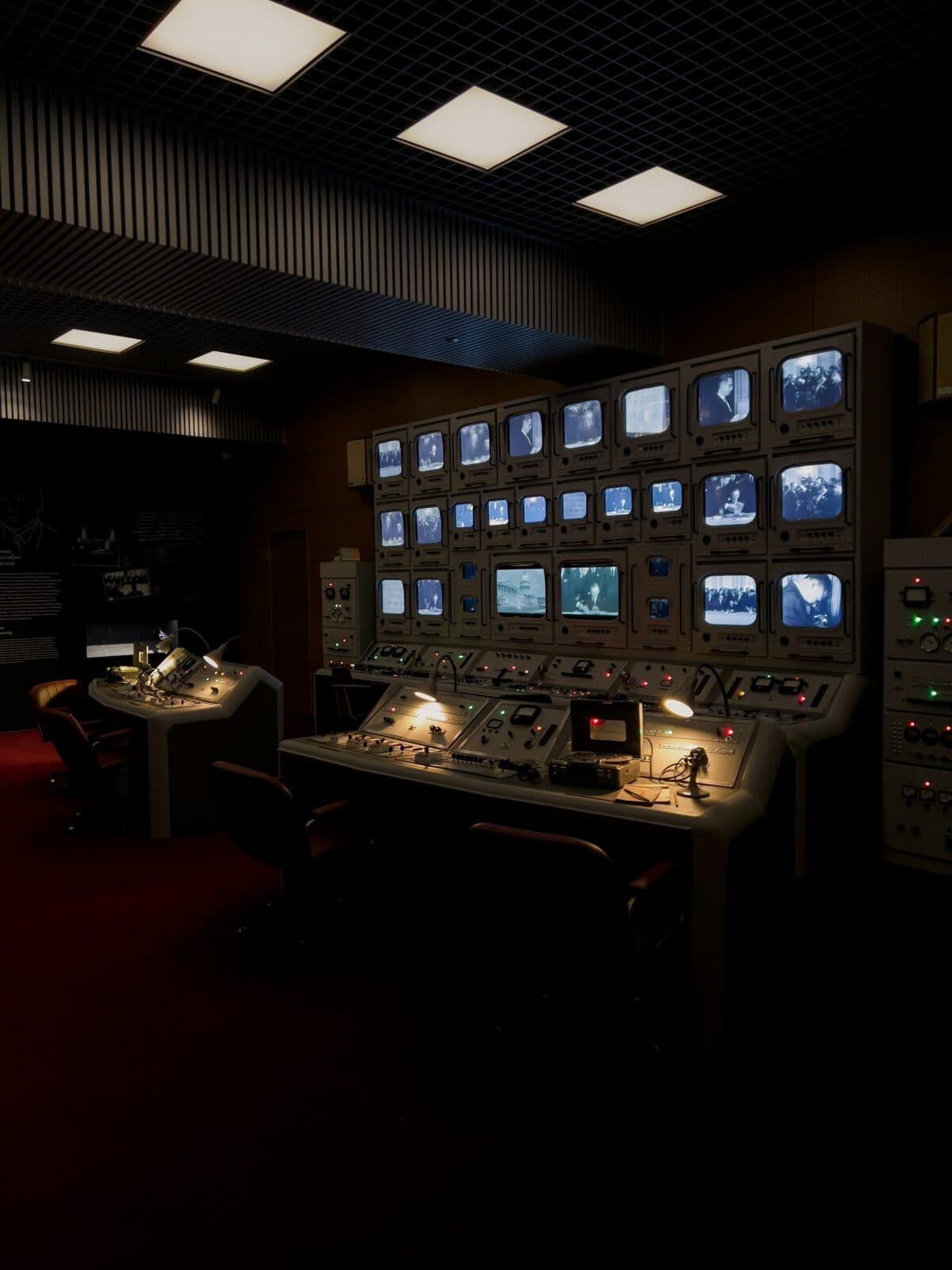
A security system is not a one-time purchase. It is an ongoing operational infrastructure that must perform reliably, day and night, every day of the year. Cameras that malfunction, access control readers that freeze, NVR hard drives that fail, fire alarm detectors that go into fault — these failures have real consequences for security, for regulatory compliance, and in some cases, for life safety.
The Annual Maintenance Contract (AMC) is the mechanism that keeps a security system performing. A well-structured AMC ensures regular preventive maintenance, rapid response to failures, and ongoing system optimisation. A poorly structured AMC — or no AMC at all — means your security system degrades progressively from the day it is commissioned until a significant failure triggers emergency remediation at high cost and disruption.
This guide explains what a good security system AMC covers, how to evaluate AMC tiers and SLA terms, what red flags to watch for in AMC contracts, and what questions to ask any provider before signing.
Why AMC Matters: Systems Degrade Without Maintenance
Physical security systems degrade in predictable ways without maintenance:
Camera degradation — Outdoor camera lenses accumulate dust, bird droppings, and spider webs. Dome covers become scratched and cloudy. Mounting brackets loosen in wind. IR illuminators dim over time. A camera that looked excellent at commissioning may deliver significantly degraded image quality 12 months later without cleaning and inspection.
NVR hard drive wear — Hard drives used in NVRs run continuously, 24 hours a day, 365 days a year. CCTV-specific drives (like Western Digital Purple or Seagate SkyHawk) are rated for this duty cycle, but they still fail — typically after 3-5 years of continuous operation. Without regular health monitoring, a failing drive may fail completely before anyone notices, leaving the system without any recording for days or weeks.
Access control reader drift — Biometric fingerprint readers accumulate dirt on their sensors over time, reducing recognition accuracy and increasing false rejection rates. Card readers can develop intermittent connection faults. Access control panels can accumulate configuration drift that gradually restricts legitimate access or grants access to locations it should not.
Fire alarm sensor ageing — Smoke detectors accumulate dust inside their sensing chambers over time, causing sensitivity drift — either increased false alarm rates or, dangerously, reduced sensitivity to actual smoke. Annual testing and cleaning is required to maintain accurate detection. BNBC 2020 and FSCD NOC conditions require documented annual maintenance of fire safety systems.
Software obsolescence — VMS software, access control management software, and BMS platforms receive regular updates from their manufacturers. Without updates, systems develop known software bugs, miss integration improvements, and eventually become unsupported. Supported software is also essential for cybersecurity — software updates include security patches.
What a Good AMC Covers
A comprehensive security system AMC should cover four core categories:
1. Preventive Maintenance Visits
Scheduled visits by qualified engineers to inspect, clean, test, and adjust all system components. Good AMC preventive maintenance visits include:
- Physical inspection of all cameras: lens cleaning, housing check, bracket tightening, field of view verification
- NVR/VMS health check: drive health diagnostic, recording continuity verification, storage utilisation check, firmware version check
- Access control system check: reader cleaning and function test, door controller status, software database integrity check, access log review for anomalies
- Fire alarm test: at minimum annual testing of all detector and call point devices with results logged (required for FSCD compliance)
- SPD (surge protection device) status check: indicator verification, replacement of consumed protection elements
- UPS battery health test: load test to verify runtime meets requirements
- Documentation: written service report for each visit, retained for compliance purposes
2. Corrective Maintenance (Reactive Repair)
When a system component fails between scheduled preventive visits, the AMC should provide corrective repair service. Key elements:
- Response time commitment (how soon after your call will an engineer arrive)
- Resolution time commitment (how soon after arrival will the fault be resolved)
- What is covered: labour for fault diagnosis and repair, including travel to site
- Parts coverage: whether the AMC includes replacement parts or charges for parts separately
3. Software Updates and Licence Management
For systems running VMS software (Milestone, Genetec, Dahua DSS, Hikvision iVMS), the AMC should include:
- Annual software support renewal (the manufacturer licence that entitles you to software updates)
- Application of software updates during scheduled visits or via remote access
- Notification of critical security patches that should be applied urgently outside the normal schedule
4. Cybersecurity Hygiene
Modern AMC contracts for IP-based security systems should include:
- Firmware update for all IP cameras (quarterly or as critical patches are released)
- Password rotation for system administrator accounts (annual)
- Review of remote access security (VPN configuration, user accounts)
AMC Tiers: Basic, Standard, and Premium
Most security system AMC providers offer tiered contracts. Understanding what each tier includes helps you select the right level for your organisation's needs.
Basic AMC (Reactive Only)
The basic tier provides corrective repair service when something fails. An engineer responds to your service call, diagnoses the fault, and repairs or replaces the failed component. There are no scheduled preventive maintenance visits.
Best for: Small installations with few components and low criticality — small retail shops, single-site SMEs where a day or two of system downtime is inconvenient but not operationally critical.
Not suitable for: Any organisation with compliance obligations (banks, RMG factories), any multi-site organisation, or any installation where security system failure has significant operational or safety consequences.
What to watch for: Basic AMC contracts often exclude parts — you pay separately for all replacement components. This can make reactive-only maintenance expensive when a major component (NVR, camera) fails.
Standard AMC (Quarterly Preventive Maintenance)
The standard tier includes scheduled preventive maintenance visits — typically quarterly (4 per year) — plus corrective repair service for failures between visits. Most good standard AMC contracts include:
- 4 preventive maintenance visits per year, each with a written service report
- Corrective response within 24-48 hours of service call during business hours
- Parts coverage for normal wear components (or parts at cost, depending on the contract structure)
Best for: Most commercial and industrial organisations — bank branches, factories, commercial offices, hospitals. The quarterly visit schedule keeps systems healthy and generates the maintenance records required for regulatory compliance.
Response time note: A 24-48 hour response window is acceptable for standard commercial installations. For organisations where security system failure has immediate operational impact (bank branches, large factories), this may not be fast enough. Upgrade to Premium.
Premium AMC (Monthly Visits + 4-Hour SLA)
The premium tier provides monthly preventive maintenance visits and an aggressive SLA — typically a 4-hour on-site response to critical failures during business hours, with emergency out-of-hours response also defined.
- Monthly preventive visits with written service reports
- 4-hour response time for critical failures (camera completely down, NVR failure, access control panel offline)
- Out-of-hours emergency response (typically 6-8 hours response for failures outside business hours)
- Priority parts availability: the provider maintains a spare parts buffer for your specific equipment
- Remote monitoring capability (where the provider monitors your system health remotely and alerts you to developing issues before they become failures)
Best for: Head offices with 24/7 security operations, critical infrastructure sites, organisations with explicit regulatory requirements for system uptime (data centres, financial trading floors), and any site where a single security system failure has immediate financial or safety consequences.
SLA Metrics: What the Numbers Mean
An AMC SLA (Service Level Agreement) is only as valuable as the metrics it contains and the consequences when those metrics are not met.
Response time — The time from your service call to when an engineer arrives on site. For critical failures, 4-hour response is the benchmark for a premium AMC in Dhaka. For standard commercial sites, 24 hours is typical. Verify that response time is measured from when you register the fault, not from when the provider's office opens the next morning.
Resolution time — The time from fault registration to system restoration. A simple component replacement may be resolved in the same visit as the response. A complex fault requiring component ordering may take longer. Good AMC contracts specify resolution time targets separately from response time, and specify what happens if resolution requires parts that are not in stock.
Uptime guarantee — Some premium AMC contracts specify a minimum system uptime percentage — typically 99% or higher on an annual basis. An uptime guarantee means that if your system is down for more time than the guarantee allows, the provider owes you a credit or service penalty. Verify that uptime is measured in a way that captures genuine failures, not just scheduled maintenance windows.
Exclusions from SLA — Most AMC contracts include exclusions: scheduled maintenance windows, failures caused by power outages beyond the UPS runtime, failures caused by civil disturbance or natural disaster, and failures caused by third-party interference (ISP outage affecting remote viewing). Understand the exclusions before signing.
What AMCs Typically Exclude
Read the exclusions section of any AMC carefully. Common exclusions include:
Vandalism — If cameras are deliberately damaged by intruders, the AMC typically does not cover replacement as a warranty or AMC claim. This is usually covered under your property insurance instead.
Acts of God — Flood damage, cyclone damage, lightning strike damage (where proper SPDs were not specified or were not installed). Some providers will repair this damage at discounted labour rates for AMC clients, but it is typically not covered within the AMC fee.
Consumables — Printer toner for access control credential printers, blank access cards, batteries for wireless detectors, and similar consumable items are typically excluded from parts coverage.
Civil works — If a repair requires drilling, channelling, or other construction work to route replacement cables, civil works costs are typically excluded and charged separately.
Software licence fees — Third-party software licences (VMS annual support, access control software licences) may or may not be included depending on the contract. Verify explicitly.
Upgrades — An AMC covers maintenance of the existing system, not upgrades to new models or expanded capacity.
Red Flags in AMC Contracts
Watch for these warning signs in AMC contract documents:
No specific response times defined — A contract that says "we will respond promptly" without a defined hour or day commitment is not enforceable. Require specific numbers.
No parts coverage and no parts pricing schedule — An AMC where all parts are extra-cost, with no defined pricing, exposes you to surprise costs. Require either parts inclusion or a pre-agreed parts pricing schedule.
Annual payment in full, advance — Small providers who require full annual AMC payment upfront and then become hard to reach have limited incentive to perform. Prefer quarterly payment or at least 50% advance with 50% at 6 months.
No service reports — If the AMC does not specify that written service reports will be produced for each visit, you will have no documentation for compliance purposes. This is a deal-breaker for regulated entities.
Sole technician providers — An AMC provider whose service capability depends on a single technician is fragile. If that technician is sick, travelling, or leaves the company, your AMC is effectively void. Require that the provider have minimum 2 qualified technicians who know your system.
Questions to Ask Your Security Integrator
Before signing any AMC, ask these questions:
- How many qualified technicians will service my account, and what are their brand certifications?
- What is your average response time for service calls in my area (Dhaka, Chattogram, etc.)?
- Can you show me a sample service report from a similar client's site?
- What parts do you hold in stock for my specific equipment brands?
- What is your process for out-of-hours emergency calls?
- What happens if you cannot resolve a fault within the SLA window?
- Does the AMC include firmware updates for cameras and NVR?
- How do you handle remote monitoring — do you proactively alert us to system health issues?
- What are the contract renewal terms, and how is the price adjusted annually?
- Can you provide references from 2-3 existing AMC clients in my industry?
SSAL AMC Programme Details
Our AMC programme is structured around three tiers: Standard (4 quarterly visits), Premium (monthly visits + 4-hour SLA), and a tailored Enterprise tier for large multi-site organisations. All tiers include:
- Written service reports for every visit, with documented findings and actions
- Firmware update as part of scheduled visits
- Remote monitoring for Premium and Enterprise clients
- Priority parts availability for client-specific equipment brands
- Dedicated account manager for all AMC clients
We hold authorised service status for Hikvision, Dahua, ZKTeco, Bosch, and Honeywell — meaning we use genuine manufacturer spare parts and have access to manufacturer technical support for complex faults.
Get Free Consultation
The cost of a good AMC is a fraction of the cost of a major system failure, a compliance audit finding, or an emergency all-hands remediation project. The right time to put an AMC in place is before you need it.
Get Free Consultation — contact us to discuss your security system maintenance requirements and receive a tailored AMC proposal.
Filed under
- amc
- annual-maintenance-contract
- security-maintenance
- cctv-maintenance
- access-control
- sla
- preventive-maintenance
- bangladesh
SSAL Expert Team
SSAL engineering team — Bangladesh-focused technical writing on security, fire-safety, ICT, and building technology.
Related Articles
Need Help Choosing the Right Solution?
SSAL engineers respond to RFQ submissions within 1 business day with a scoping call request.
- 48-hour site survey
- Free consultation
- 24/7 priority support