
Photoelectric vs. Ionization Smoke Detectors: A Buyer's Guide for Commercial Buildings
Author
SSAL Expert TeamPublished
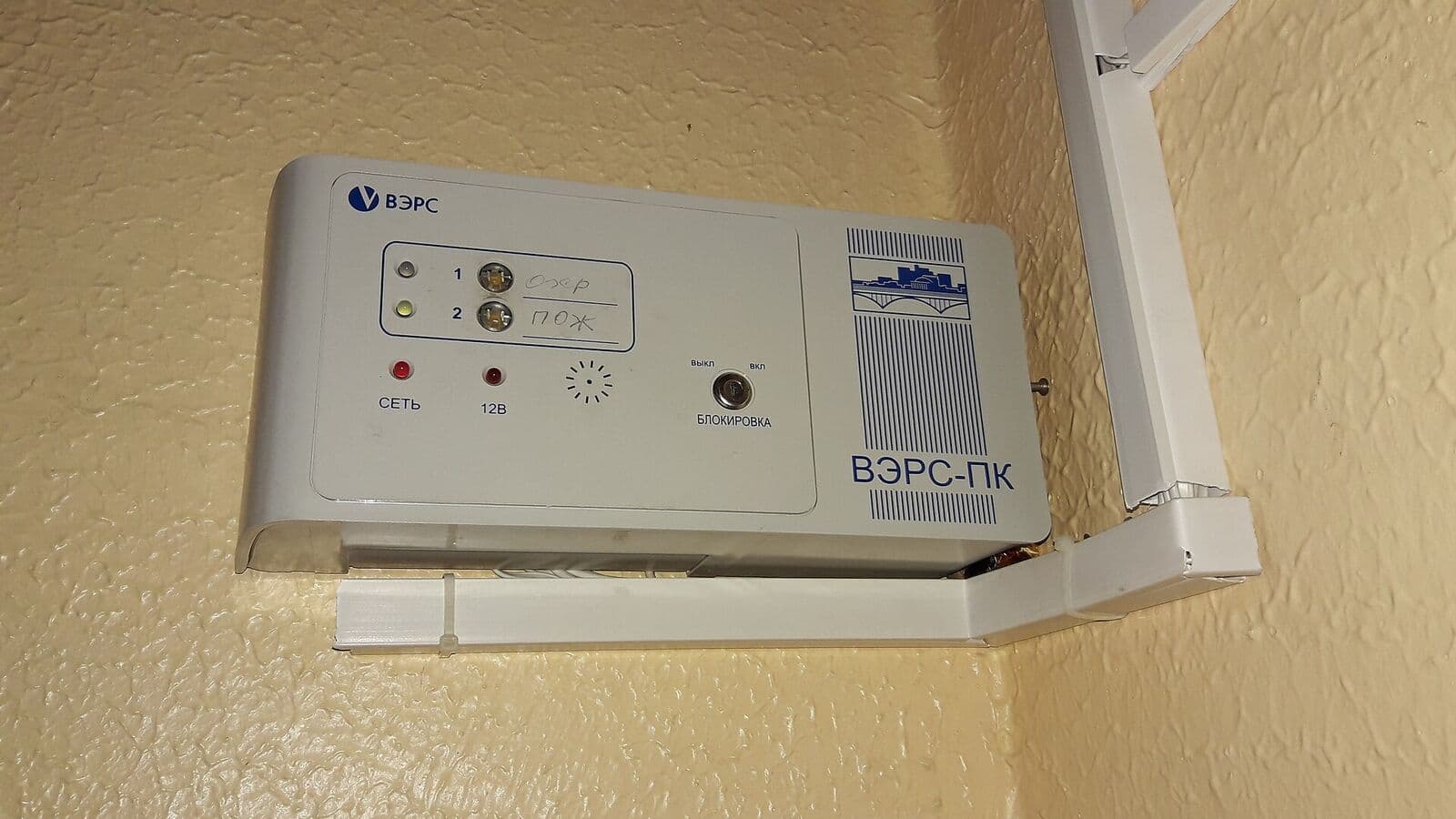
Not all smoke is the same, and not all smoke detectors respond equally to different types of smoke. The photoelectric detector and the ionization detector represent two fundamentally different approaches to smoke detection — each optimised for different fire types. Understanding this difference is not academic: choosing the wrong detector type for your environment can mean delayed detection of a growing fire or, conversely, chronic false alarms that lead operators to disable or ignore the alarm system.
This guide explains both technologies, compares their performance, and gives you specific guidance for commercial building applications in Bangladesh.
How Photoelectric Smoke Detectors Work
A photoelectric smoke detector contains a light source (LED) and a light sensor (photodiode) positioned at an angle to each other inside a detection chamber. Under normal conditions, the LED's beam passes across the chamber without reaching the photodiode — the geometry ensures the beam misses the sensor.
When smoke enters the chamber, the smoke particles scatter the LED's light in all directions. Some of this scattered light reaches the photodiode, which registers a change in light intensity. When the scattered light exceeds a defined threshold, the detector generates an alarm signal. This is the light-scattering or Tyndall effect principle.
What Photoelectric Detectors Detect Best
Photoelectric detectors respond fastest to large-particle smoke — the dense, visible smoke produced by slow-smouldering fires. Smouldering fires burn at low temperatures with incomplete combustion. They produce large quantities of visible smoke before producing significant heat or open flame. Common smouldering fire scenarios in commercial buildings include:
- Electrical cable insulation overheating
- Upholstered furniture ignited by a small heat source (cigarette, electrical fault)
- Paper-filled archive storage beginning to smoulder
- Wooden structural elements around overheating electrical fittings
These fires can produce life-threatening smoke concentrations for minutes or hours before transitioning to open-flame combustion. Early detection of smouldering fires is critically important for protecting occupants in sleeping areas and in Bangladesh's offices and commercial buildings where the fire load includes significant quantities of paper, fabric, and electrical cabling.
How Ionization Smoke Detectors Work
An ionization smoke detector contains a small quantity of a radioactive isotope — typically Americium-241 — between two electrically charged plates. The radioactive material ionizes the air between the plates, creating a small, continuous electrical current. When smoke enters the chamber, the smoke particles attach to the ionized air molecules, reducing the current. When the current drops below a defined threshold, the detector generates an alarm signal.
What Ionization Detectors Detect Best
Ionization detectors respond fastest to small-particle smoke — the nearly invisible aerosols produced by fast-flaming fires. Flaming fires burn with high heat and rapid combustion, producing small combustion particles. Common flaming fire scenarios in commercial buildings include:
- Petrol or solvent fires in storage areas
- Paper and cardboard fires that have progressed to open flame
- Cooking oil fires that have reached ignition temperature
- Electrical arc flash fires
Fast-flaming fires typically spread more rapidly than smouldering fires and require the fastest possible detection. Ionization detectors can provide 30–90 seconds earlier alarm than photoelectric detectors for fast-flaming fire scenarios.
The Regulatory Position on Ionization Detectors
Ionization detectors use Americium-241, a radioactive material. While the quantities involved are extremely small (and the health risk to building occupants negligible during normal use), the disposal of ionization detectors is subject to Bangladesh Atomic Energy Regulatory Authority (BAERA) requirements. This regulatory consideration has led many building specifiers in Bangladesh to default to photoelectric or multi-sensor detectors, which do not contain radioactive material and have no special disposal requirements.
Additionally, several countries have restricted or phased out ionization detectors for consumer and commercial applications due to environmental concerns about disposal. While no such restriction currently exists in Bangladesh, the trend in global fire safety standards is toward photoelectric and multi-sensor technology.
Multi-Sensor Detectors: Combining Both + Heat + CO
Modern commercial fire safety practice has largely moved beyond the photoelectric-vs-ionization debate toward multi-sensor detectors that combine multiple sensing technologies in a single unit.
A multi-sensor detector — also called a combination detector or multi-criteria detector — may combine:
- Photoelectric smoke sensing
- Heat sensing (thermistor-based temperature measurement)
- CO (carbon monoxide) sensing
The detector's on-board processor evaluates inputs from all sensing channels simultaneously and applies weighted logic algorithms to determine whether a genuine fire condition exists. Because a smouldering fire produces high smoke but lower heat, while a flaming fire produces high heat with different smoke characteristics, the multi-sensor algorithm can distinguish fire types and respond appropriately while rejecting false alarm conditions that would trigger a single-technology detector.
Why Multi-Sensor Is the Preferred Specification for Bangladesh Commercial Buildings
Multi-sensor detectors reduce false alarms significantly compared to single-technology detectors. In Bangladesh's commercial environment — where HVAC systems, cooking facilities, cleaning activities, and industrial processes create intermittent smoke-like or heat conditions — multi-sensor detectors' ability to reject non-fire conditions is operationally critical.
The SSAL recommendation: Specify multi-sensor (smoke + heat, or smoke + heat + CO) detectors as the default for all commercial and industrial applications in Bangladesh. Reserve photoelectric-only detectors for applications where heat sensitivity is not required and CO detection is not relevant. Use heat-only detectors in kitchens, boiler rooms, and dusty industrial areas where smoke detectors would generate false alarms from non-fire sources.
EN 54 Certification: The European Standard Referenced by BNBC
BNBC 2020 references EN 54 as the applicable standard for fire detectors used in Bangladesh. EN 54 is the European Committee for Standardisation's family of standards for fire detection and fire alarm systems.
The relevant EN 54 parts for detectors are:
- EN 54-7: Point-type smoke detectors (photoelectric and ionization)
- EN 54-5: Heat detectors (fixed temperature and rate-of-rise)
- EN 54-29: Multi-sensor fire detectors (combining smoke and heat)
An EN 54 certified detector has passed standardised performance tests at an accredited test laboratory, including:
- Sensitivity tests: Response to standard test fires (TF1–TF8) defined in the standard
- Immunity tests: Resistance to environmental conditions that cause false alarms (dust, airflow, temperature excursions)
- Stability tests: Performance retention over time
When specifying smoke detectors for Bangladesh commercial buildings, require EN 54-7, EN 54-5, or EN 54-29 certification as appropriate. Verify that the certificate is from an accredited test laboratory — not a self-declaration by the manufacturer. LPCB (Loss Prevention Certification Board), TÜV, and BSI are accredited certification bodies whose certificates are widely accepted by FSCD.
Air Conditioning Effects on Detector Performance and Placement
Bangladesh's near-universal reliance on air conditioning in commercial buildings creates specific challenges for smoke detector placement that must be addressed in every fire detection design.
The Dilution Problem
Air conditioning recirculates and dilutes room air. In an air-conditioned space, smoke generated near the floor level — from, for example, an overheating cable in a raised floor — may be repeatedly diluted as it rises and is mixed with clean recirculated air before reaching a ceiling-mounted detector. This dilution effect delays detector response.
In a strongly air-conditioned space with high air change rates (office buildings typically achieve 6–10 air changes per hour), smoke concentration at the detector may remain below the alarm threshold for several minutes longer than it would in a naturally ventilated space.
Solution: Position detectors in locations where smoke concentrates rather than dilutes. In air-conditioned spaces, smoke tends to concentrate:
- On the ceiling between air supply diffusers (where air movement is slower)
- Near air return grilles (where air from the room is drawn back — smoke concentrates here before being filtered out)
- In dead-air zones away from supply airstream
The 0.5 Metre Rule
Never position a smoke detector within 0.5 metres of an air conditioning supply diffuser. The air jet from the diffuser will dilute any smoke reaching the detector, significantly delaying response. This rule is specified in NFPA 72 and referenced in BNBC 2020.
HVAC Duct Smoke Detectors
Air conditioning systems can carry smoke from an alarming zone to other zones — potentially spreading smoke through the building before occupants in non-alarmed areas are aware. BNBC 2020 (aligned with NFPA 90A) requires duct smoke detectors in HVAC ducts in:
- All systems serving more than one floor
- All systems with airflow exceeding 944 litres/second (or 2,000 cfm)
Duct smoke detectors are sampling-type detectors that pull a sample of air from the duct through a sensing chamber. When they detect smoke in the duct air, they signal the fire alarm panel and the BMS shuts down the HVAC fan to prevent smoke distribution.
Placement Guidelines: Ceiling, Spacing, and Near HVAC
Standard Ceiling Mounting
Smoke detectors mount on the ceiling, positioned so that rising smoke (which rises to the ceiling in a normal fire scenario) reaches the detector quickly. The detector should be mounted flush with the ceiling surface or on a shallow base that does not extend more than 25 mm below the ceiling.
Spacing
As a general principle: one detector per 80 m² of floor area for ceiling heights up to 3.0 m. For ceiling heights between 3.0 m and 6.0 m, reduce the coverage area and increase detector density. For ceiling heights above 6.0 m (common in Bangladesh's factory floors and warehouses), spot-type smoke detectors are inadequate — use beam smoke detectors instead. See our dedicated guide: "Beam Smoke Detectors vs. Spot-Type Detectors."
Beams and Joists
In rooms with exposed structural beams, smoke can be trapped in pockets between beams and fail to travel to a detector in the adjacent bay. Mount detectors in each bay between beams, or mount detectors on the underside of beams if the beam depth exceeds 450 mm. Bangladesh's older commercial buildings and factories commonly have deep structural beams that create this problem.
Near Walls
Position detectors at minimum 300 mm from any wall (a dead-air zone exists at ceiling/wall junctions where air circulation is minimal). A detector too close to a wall receives less smoke than a centrally positioned unit.
Get Expert Help
Selecting and positioning smoke detectors for a commercial building in Bangladesh requires knowledge of EN 54 standards, BNBC requirements, and the practical implications of Bangladesh's climate and building construction characteristics for detector performance. SSAL's fire safety engineers specify EN 54 certified detectors from Bosch, Honeywell, and Siemens, and design detector layouts that comply with BNBC 2020 and support FSCD NOC applications.
Talk to Our Expert — contact SSAL's fire safety team today for a free consultation on your fire detection system design and product selection.
Filed under
- photoelectric smoke detector
- ionization smoke detector
- multi-sensor detector
- smoke detector guide
- EN 54
- fire alarm detector
- Bangladesh fire safety
SSAL Expert Team
SSAL engineering team — Bangladesh-focused technical writing on security, fire-safety, ICT, and building technology.
Related Articles
Addressable vs. Conventional Fire Alarm Systems: Which Is Right for Your Building?
Compare addressable and conventional fire alarm systems for Bangladesh buildings. Learn about device-level identification, wiring topology, and when to use each.
OpenBNBC 2020 Part 4 Fire Safety Requirements: What Every Building Owner in Bangladesh Must Know
Complete guide to BNBC 2020 Part 4 fire safety requirements for Bangladesh buildings. Occupancy classification, detectors, sprinklers, egress, and FSCD compliance.
OpenFM-200 vs. CO2 vs. Novec 1230: Choosing the Right Clean Agent Suppression for Your Server Room
Compare FM-200, CO2, Novec 1230, and IG-541 clean agent suppression systems for Bangladesh server rooms and data centres. Cost, safety, and environmental comparison.
OpenNeed Help Choosing the Right Solution?
SSAL engineers respond to RFQ submissions within 1 business day with a scoping call request.
- 48-hour site survey
- Free consultation
- 24/7 priority support