
Education Campus Security: A Complete Guide for Schools & Universities in Bangladesh
Author
SSAL Expert TeamPublished
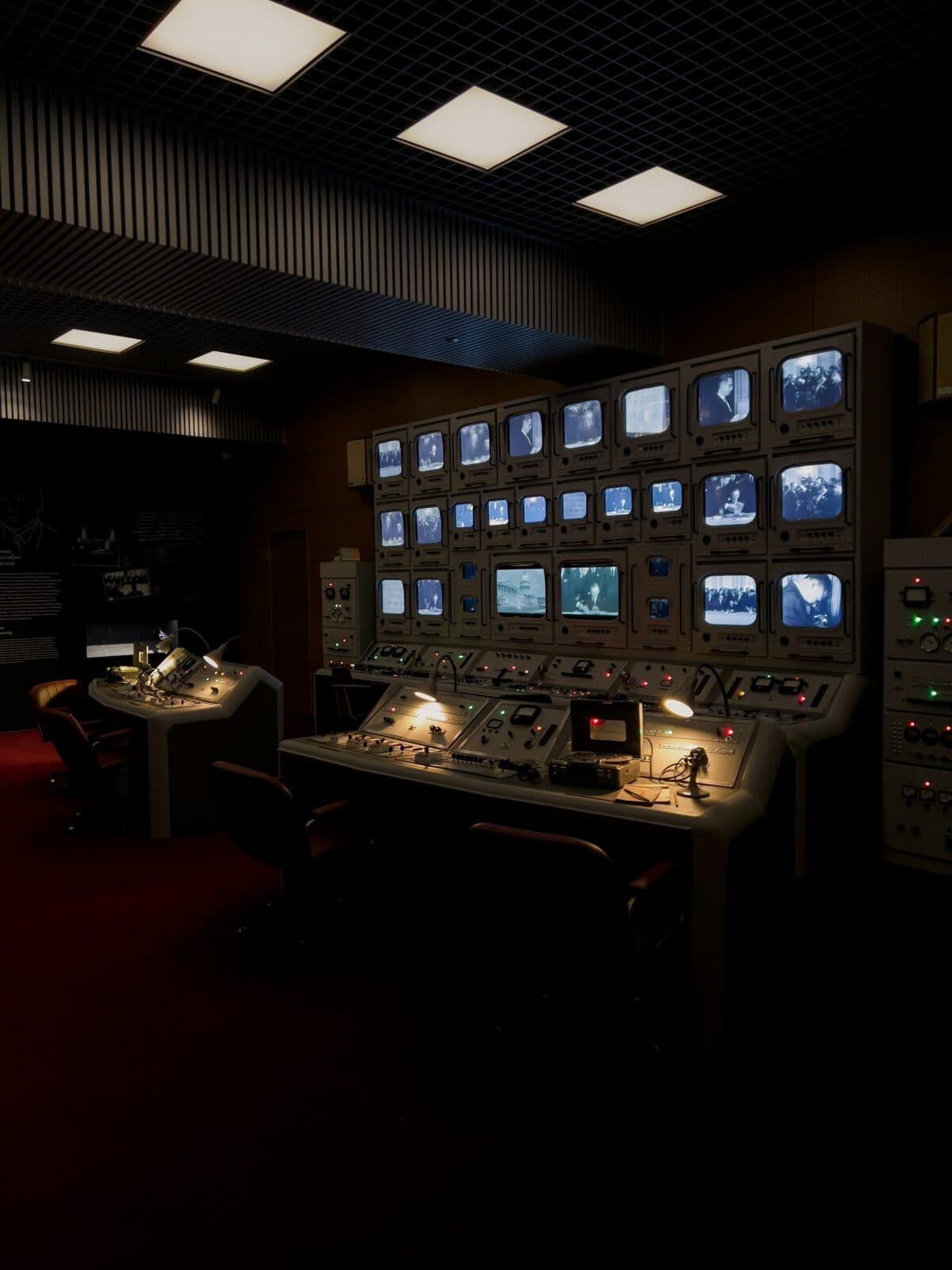
Educational institutions in Bangladesh face a security challenge that combines scale with sensitivity. A university campus may cover dozens of hectares, house thousands of students and staff, and include laboratories, libraries, administrative offices, residential halls, and sports facilities — each with different security requirements. A school must protect children in its care while maintaining an open, welcoming environment for parents and community. Neither institution can afford to operate like a fortress, but both must take security seriously.
Bangladesh's education sector has grown dramatically. Private universities have proliferated in Dhaka and other major cities. International schools serving diplomatic and expatriate communities operate to global safety standards. Government universities are expanding campuses to serve growing student populations. Each of these contexts brings specific security requirements that this guide addresses systematically.
Campus Security Challenges
Educational campuses present several characteristics that make security design more complex than a single commercial building.
Scale and multiple entry points: A large university campus may have 10–20 entry points, multiple building blocks, and significant outdoor areas. Controlling all entry points to the same standard as a single commercial building entrance is impractical. Security design must be proportionate to the risk level at each entry point rather than uniformly maximum.
Diverse population: Students, academic staff, administrative staff, maintenance workers, contractors, catering staff, and visitors all have legitimate reasons to be on campus, but with different access rights and different risk profiles. Access control must be granular enough to distinguish between these groups without creating unacceptable friction for the majority of daily users.
24-hour operation (for residential campuses): University campuses with student halls operate around the clock. This means after-hours security must be planned for — security staff, CCTV monitoring, and access control that enforces different rules at night than during the day.
High-value targets: University laboratories contain expensive equipment. Libraries contain rare books and computers. IT rooms contain servers and networking equipment. These high-value areas require specific security controls beyond general campus access management.
Child safety (for schools): Schools have a duty of care for children that imposes heightened security requirements compared to adult-only institutions. Visitor management for schools must prevent any unidentified adult from accessing students without explicit authorisation from school administration.
CCTV: Classroom Blocks, Entrances, Labs, Libraries, Car Parks
Effective university CCTV design starts with a zone-by-zone coverage plan.
Main campus entrance gates: High-resolution IP cameras at every vehicle and pedestrian entrance, capturing facial images of persons entering and number plates of vehicles. PTZ (Pan-Tilt-Zoom) cameras can follow individuals from the entrance into the campus for incident investigation. For campuses with ANPR at vehicle gates, cameras must be positioned for clean plate capture at the normal vehicle approach angle.
Building entrances: Every academic, administrative, and residential building should have CCTV at its main entrance. Fixed dome cameras positioned above the door capture all persons entering and exiting. For buildings with multiple entrances (including fire exits), each entrance should have coverage.
Laboratory areas: Laboratories present a higher theft risk than standard classroom space — equipment is expensive, relatively portable, and has ready resale value. Corridors serving laboratory floors should have CCTV coverage, and storage areas within labs (chemical stores, equipment rooms) may warrant individual cameras.
Libraries: Library CCTV focuses on the entrance/exit to deter theft and on the main study areas to deter anti-social behaviour. Camera placement must respect student privacy in study areas — cameras are positioned to cover circulation and entry/exit, not to monitor individual students at study carrels.
Computer labs and IT areas: Computer labs containing university-owned equipment are high-value areas warranting CCTV coverage of the room entrance and the main equipment areas.
Outdoor areas and car park: The campus car park and outdoor common areas (student union areas, sports courts, main thoroughfares) benefit from CCTV for both security and incident investigation purposes.
Areas that should NOT have CCTV: Toilets, changing rooms, prayer rooms, counselling and welfare rooms, and student health centre consultation areas must not have CCTV. Dormitory rooms must not have CCTV. Lecture halls where academic freedom is exercised may be sensitive — consult with the institution's leadership on whether CCTV in lecture halls is appropriate for their context.
For Bangladesh university campuses, Hikvision's EasyIP series (2–8 MP, H.265+) provides cost-effective coverage across large camera counts. Central NVR or SAN storage with a VMS providing campus security staff with live monitoring and playback capability.
Access Control: Staff-Only Areas, Server Rooms, and Exam Halls
University access control is appropriately deployed in a limited set of high-priority areas rather than across the entire campus. Attempting to card-control every building on a large campus creates enormous credential management overhead and antagonises the academic community.
Staff-only administrative areas: Bursary, HR, student records, and academic registry areas contain sensitive data and valuable equipment. Card access for staff, with visitor management for authorised guests.
IT and network rooms: Central IT infrastructure (servers, network equipment, campus Wi-Fi controllers) must be physically secured. Biometric plus card access for IT staff; documented access for authorised maintenance contractors.
Exam halls (during examination periods): During formal examinations, exam halls become restricted access — students must present credentials (student ID card) at the door to enter. Access control can be implemented with portable card readers (for temporary installation during exam periods) or permanent readers used only when exam-mode access restrictions are activated.
Research laboratories with controlled substances or high-value equipment: Specific laboratories handling chemicals, biological materials, or particularly expensive equipment may require card access beyond the building entrance.
Server rooms in each faculty building: Each academic building with significant IT infrastructure should have a secured room for that infrastructure.
Management of leaving students/staff: One of the most important features of campus access control is the process for deactivating credentials when a student graduates or a staff member leaves. An integration between the access control system and the student information system (SIS) that automatically deactivates credentials upon graduation or departure prevents the credential accumulation that renders access control databases quickly outdated.
Visitor Management for Schools
School visitor management has special requirements arising from the safeguarding duty of care for students. Every person who enters the school must be accountable — there should be no route by which an unidentified adult can access the school grounds or encounter students unsupervised.
Key elements of school visitor management:
Single entry point: Schools should design their access so that all visitors enter through a single controlled point — the main reception. All other gates should be locked from the outside during school hours (with panic hardware for emergency egress from inside).
Reception check-in: Every visitor signs in at reception, presents identification (NID or passport), states the purpose of visit and the staff member they are visiting. School administration staff record the visitor in the visitor log.
Pre-registered visitors: Parents collecting children (if not the usual parent/guardian) must be pre-registered by the primary contact — either in person or through the school's communication system. Unregistered persons cannot collect children without direct authorisation from the school principal.
Visitor badge: Visitors receive a printed or physical visitor badge that clearly identifies them as a visitor and is visible to all staff. Any adult on school premises without a visible staff badge or visitor badge is challengeable.
Video intercom at gate: A video intercom at the school's main entrance gate allows reception to verify the identity and purpose of visitors before granting entry — without requiring the reception staff to physically go to the gate. This is a significant safety improvement over unmanned gates.
For Bangladesh international schools and premium private schools, electronic visitor management systems with pre-registration workflow, digital ID capture, and badge printing are increasingly expected by parents and international accrediting bodies.
Emergency PA System Across Campus
A university campus PA system serves both routine communication (class change announcements, event notices) and emergency communication (fire alarm, security lockdown, medical emergency).
For a large university campus:
PA zone design: Each building should be one or more independent PA zones. Outdoor areas (main plaza, sports ground, residential zone, car park) should be separate zones. This enables targeted announcements — a fire alarm in the science block can be announced only to the science block and adjacent buildings, rather than causing unnecessary alarm across the entire campus.
Emergency override: Fire alarm integration with the PA system enables automatic evacuation announcements when fire alarms activate. The emergency announcement overrides any routine PA broadcast in the affected zones.
Outdoor PA for large open areas: University campuses with large outdoor areas (sports grounds, parade grounds, open campus plazas) require high-output weather-rated outdoor horn speakers or column speakers positioned for coverage of these areas. Ambient noise from outdoor environments requires higher-output speakers than indoor environments.
Microphone station coverage: PA microphone stations should be located at the campus security office, the administration building, and designated emergency management areas — providing coordinated campus-wide announcement capability from multiple locations with defined priority.
DSPPA's IP PA platform is SSAL's recommended solution for Bangladesh university campus PA systems, providing unlimited software-defined zones, IP backbone distribution across campus buildings, and integration with fire alarm systems.
Fire Safety: BNBC Requirements for Educational Occupancies
BNBC 2020 classifies educational buildings as Occupancy Class E (Educational). Specific requirements for educational occupancies include:
Automatic fire detection: Required in all educational buildings above specified floor area and height thresholds. Addressable fire alarm systems are appropriate for all multi-floor educational buildings.
Emergency evacuation systems: All educational buildings must have audible fire alarm devices throughout, with manual call points accessible at exits. For multi-floor buildings, addressable systems with voice alarm capability are recommended.
Evacuation drills: BNBC and FSCD require regular fire evacuation drills in educational institutions. Drill records must be maintained.
Travel distances to exits: BNBC 2020 specifies maximum travel distances to fire exits in educational occupancies. Building design must ensure these distances are met, and any additions or reconfigurations must be checked against the travel distance requirements.
Sprinkler systems: Required for educational buildings exceeding specified floor area or height thresholds under BNBC 2020.
FSCD NOC is required for all university buildings and major school buildings in Bangladesh. SSAL manages FSCD submission and NOC processes for educational institution clients.
Bangladesh University Context: DU, BUET, NSU, and BRAC University
Bangladesh's university landscape presents diverse security contexts:
Dhaka University (DU): Bangladesh's largest and most prestigious public university. A sprawling historic campus in central Dhaka with multiple faculties, student halls, and research facilities. DU's campus security programme focuses on perimeter management at key entry points, CCTV in administrative and laboratory areas, and emergency PA for the main campus areas.
Bangladesh University of Engineering and Technology (BUET): An engineering-focused public university with multiple laboratory buildings, a main library, and administrative facilities in central Dhaka. BUET's laboratory security requirements are heightened by the presence of expensive research equipment and specialised chemicals.
North South University (NSU): Bangladesh's first private university, located in Bashundhara with a modern purpose-built campus. NSU has adopted more modern security infrastructure than older public universities, with integrated CCTV, access control for administrative areas, and electronic visitor management.
BRAC University: A private university in Mohakhali with a concentration of buildings in a relatively compact urban campus. BRAC University's security focus includes controlled vehicle access, CCTV for campus common areas, and PA for campus-wide announcements.
Private universities generally have more flexibility to invest in modern security infrastructure than public institutions constrained by government procurement processes. SSAL works with both public and private universities, understanding the different procurement and budget environments.
Talk to Our Expert — Contact SSAL's education sector team to discuss your campus security requirements. We will assess your campus layout, student and staff population, and specific security concerns, and propose a security technology programme proportionate to your institution's needs and budget.
Filed under
- education security
- campus security
- school CCTV
- university access control
- emergency PA
- fire safety
- Bangladesh university
- BNBC
SSAL Expert Team
SSAL engineering team — Bangladesh-focused technical writing on security, fire-safety, ICT, and building technology.
Related Articles
Bangladesh Bank ICT Security Guideline v4.0: What Every Bank Security Manager Must Know
Complete guide to Bangladesh Bank ICT Security Guideline v4.0: CCTV, biometric access, 90-day retention, visitor management & compliance audit requirements.
OpenComplete Security Technology Guide for Bangladesh's Banking & Financial Sector
Complete guide to bank security technology in Bangladesh: Bangladesh Bank ICT v4.0, CCTV, biometric access, fire safety & ATM monitoring. Expert from SSAL.
OpenSecurity & Automation for Commercial Real Estate: A Developer's Guide to Smart Buildings
Complete guide for developers: multi-tenant access control, BMS energy management, structured cabling, parking, fire safety & Grade A office technology for Bangladesh.
OpenNeed Help Choosing the Right Solution?
SSAL engineers respond to RFQ submissions within 1 business day with a scoping call request.
- 48-hour site survey
- Free consultation
- 24/7 priority support