
Government & Public Sector Security: From Ministry Offices to Critical Infrastructure
Author
SSAL Expert TeamPublished
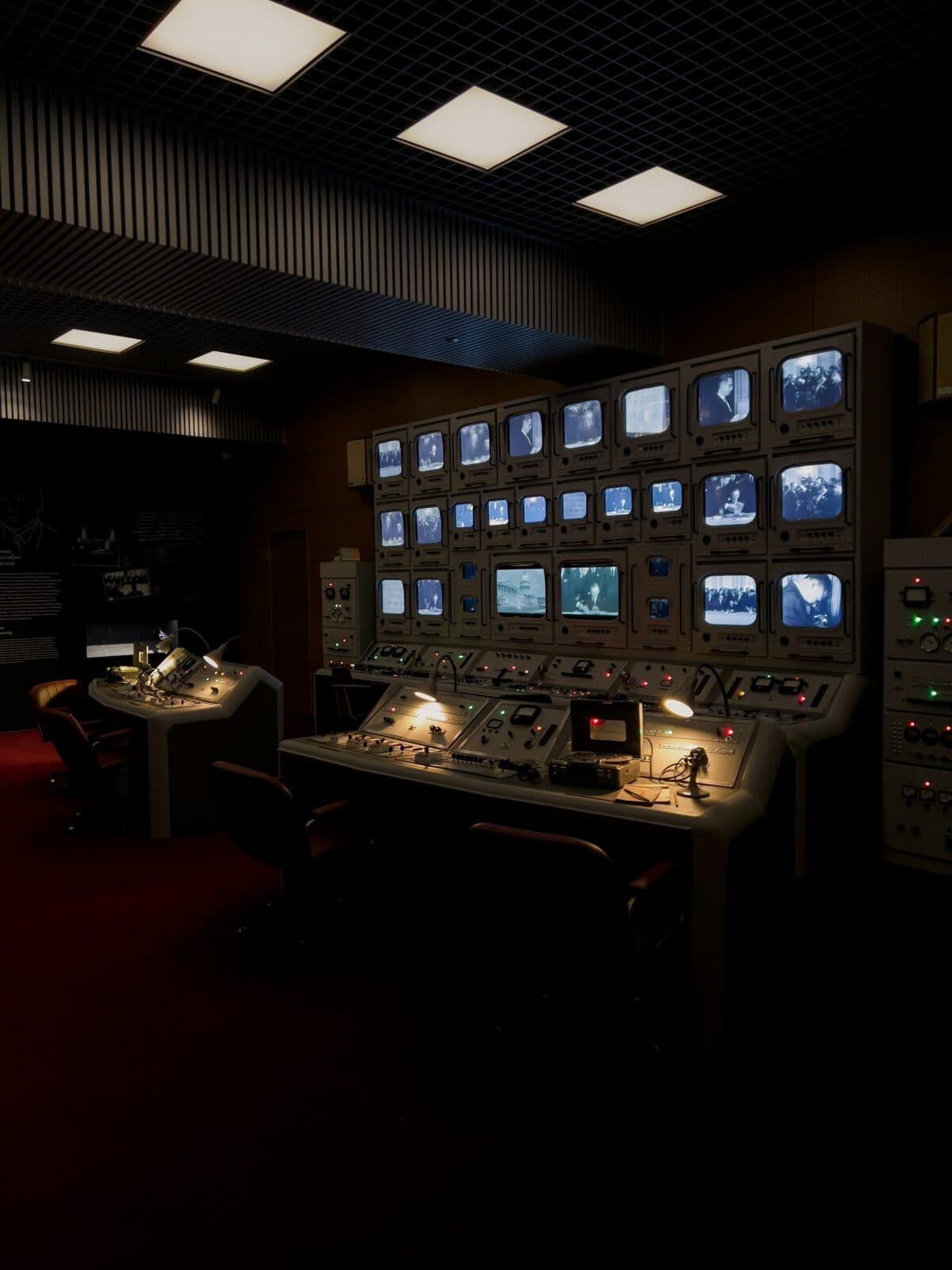
Government buildings and public sector facilities in Bangladesh represent some of the most security-sensitive environments in the country. Ministry offices handle policy documents and classified information. Courts and judicial facilities must be secure from interference. Power plants, water treatment facilities, and telecommunications infrastructure are critical to national functioning. Each category presents distinct security challenges and requires tailored technology solutions.
Unlike the private sector, government security procurement operates within a formal regulatory framework — the Public Procurement Act 2006 and the Public Procurement Rules (PPR) 2008 — that imposes specific requirements on how technology systems are specified, tendered, evaluated, and contracted. Understanding both the technical requirements and the procurement pathway is essential for any organisation seeking to support government security programmes.
Government Security Requirements in Bangladesh
Bangladesh government facilities span a wide range: ministry buildings in Dhaka's government zone (Segunbagicha, Agargaon), divisional and district offices across the country, courts and judicial complexes, police stations, and national critical infrastructure including power generation and transmission facilities, water treatment plants, and telecommunications exchanges.
Each category has its own risk profile:
Ministry and government office buildings: The primary security concern is unauthorised access to sensitive administrative areas, document security, and the safety of officials. Protests, demonstrations, and occasional direct threats require perimeter security management. Visitor control is particularly challenging in ministries that provide public services with high visitor volumes alongside restricted operational areas.
Courts and judicial complexes: Courts face specific security requirements: preventing weapons and contraband from entering court premises, managing prisoner movement, protecting judicial officers, and maintaining order in public areas. Security screening (X-ray and metal detection), access control for restricted areas, and CCTV for evidence are the core technology requirements.
Critical infrastructure: Power plants, substations, water treatment plants, and telecommunications facilities face threats ranging from physical sabotage to insider threats. Security requirements focus on perimeter integrity, detection of intrusion attempts, access control for critical areas, and 24/7 monitoring capability.
Ministry and Government Office Security: Access Control, CCTV, and Vehicle Barriers
CCTV for Government Offices
Government ministry buildings in Dhaka's government zone require comprehensive CCTV coverage. Specific coverage zones include:
- Main entrance and gate: High-resolution IP cameras capturing vehicle plates (ANPR) and facial images of pedestrian visitors
- Reception and lobby: Monitoring visitor flow and identifying individuals of interest
- Perimeter fence line: Detecting intrusion attempts along the building perimeter
- Restricted corridors and access points: CCTV correlated with access control events for sensitive floor areas
- Car park: Full coverage of government vehicle parking areas and visitor parking
For government applications, Axis Communications and Bosch cameras are commonly specified due to their cybersecurity credentials (cyber-hardened firmware, network encryption) and international government approvals. Hikvision and Dahua cameras are widely used in the Bangladesh government sector based on cost and domestic support availability — procurement decisions on brand should consider any government ICT security policy restrictions that may apply.
Video Management System (VMS) for a government complex should support centralised management from a Government Security Operations Centre (SOC), with role-based access for different agencies or departments sharing the installation. Milestone Systems and Genetec VMS platforms are widely used in government security environments internationally for their access control integration capability and cyber security posture.
Biometric Access Control for Restricted Government Areas
Government offices have a distinct access control challenge: they serve large numbers of public visitors to public service areas while maintaining strict access restriction to operational areas. The solution is layered access control — public areas freely accessible, and progressively more restricted access for different grades of operational areas.
Typical government access control architecture:
Public zone (lobby, ground floor public services): Open access with CCTV monitoring. Security guard presence at main entrance.
General staff zone (offices, meeting rooms): RFID card access for all civil service staff. Access logged to individual NID-linked staff ID cards.
Sensitive operational zone (ministerial offices, document rooms, classified briefing rooms): Biometric plus RFID two-factor access. Access limited to authorised grade and above. Visitor escort required with separate time-limited visitor credentials.
Critical server and communication rooms: Biometric access with audit logging. Extremely limited access list. Dual-custody for highest-security rooms.
Vehicle Access Control: ANPR and Boom Barriers
Government building perimeter security requires controlled vehicle access. The standard approach in Bangladesh government facilities combines a staffed vehicle checkpoint with technology:
ANPR (Automatic Number Plate Recognition): An ANPR camera reads the licence plate of every vehicle approaching the gate. The system checks the plate against the pre-approved vehicle register. Authorised vehicles are presented with a green indicator and the boom barrier opens automatically. Unregistered vehicles require manual processing by the guard.
Boom barriers: Heavy-duty automatic boom barriers (rated for repeated high-frequency operation) control vehicle access at all main vehicle entry points. For high-security facilities, anti-climb barriers prevent tailgating — the barrier remains down until the vehicle ahead has fully cleared the entry zone.
Under-vehicle inspection mirrors: Convex angled mirrors allow guards to inspect the underside of vehicles without requiring them to crouch beneath the vehicle — relevant for locations with heightened vehicle-borne threat concerns.
Intercom for visitor vehicles: Video intercom allows the guard room to communicate with visiting vehicles and verify identity before opening the barrier.
Critical Infrastructure Protection: Power Plants, Water Treatment, and Telecommunications
Critical national infrastructure (CNI) presents the most demanding security requirements in the government sector. Bangladesh's power generation facilities — managed by BPDB, EGCB, and independent power producers — water treatment plants managed by WASA (Water Supply and Sewerage Authority), and telecommunications infrastructure managed by BTCL and licensed private operators all qualify as CNI requiring enhanced security.
Defence-in-Depth Security Architecture
Critical infrastructure security follows a defence-in-depth model with multiple concentric security layers:
Outer perimeter (Layer 1): Physical fence or wall with perimeter intrusion detection (PIR or microwave beams along the fence line), CCTV with video analytics (perimeter breach detection), and security lighting that activates on motion detection.
Vehicle control (Layer 2): Bollards or crash-rated barriers at all vehicle entry points. Anti-ram protection is specified where vehicle-borne attack is a credible threat. ANPR at all vehicle entry points.
Building access control (Layer 3): Biometric multi-factor access at all building entrances. Security guard presence at main building entrance. All visitor access escort-controlled.
Critical equipment zone (Layer 4): Innermost protection for the most critical equipment — control rooms, switching equipment, turbines, or chemical treatment areas. Biometric dual-person access. CCTV with no-go zone analytics (alerts when anyone enters the critical zone without authorisation).
Cyber-physical integration (Layer 5): For modern CNI facilities with SCADA (Supervisory Control and Data Acquisition) systems controlling physical equipment, physical security must integrate with cybersecurity monitoring. Physical access events to SCADA control rooms are logged and correlated with cyber monitoring alerts.
Environmental and Perimeter Monitoring
CNI facilities require round-the-clock perimeter monitoring. In addition to CCTV, active perimeter detection technologies are used:
Microwave beam detectors: Active infrared or microwave beam pairs spanning the facility perimeter. Any interruption of the beam triggers an alarm. Suitable for straight fence runs in open terrain.
Vibration cable detectors: Sensitive cables attached to the perimeter fence detect climbing, cutting, or vehicle impact. Very difficult to defeat covertly.
Thermal CCTV cameras: Thermal imaging cameras detect human body heat signatures at ranges up to 500 metres in complete darkness. Particularly valuable for detecting intrusion attempts at night or in low-visibility conditions. Axis, Bosch, and FLIR produce thermal IP cameras suitable for CNI perimeter monitoring.
CCTV Command Centres for Government Campuses
Large government campuses — Bangladesh Secretariat, specific ministry complexes, judicial campus, hospital campuses under government authority — can justify a dedicated CCTV command centre. This is a staffed monitoring room equipped with a video wall showing camera feeds from across the campus, integrated with access control alarms and intrusion alarm events.
A government campus CCTV command centre typically includes:
Video wall display: LED or LCD display tiles arranged in a 3×2 or 4×3 array, managed by a video wall controller that can display any combination of camera feeds. For Bangladesh government applications, Samsung, LG, and Hikvision provide video wall solutions appropriate for command centre environments.
Operator workstations: Two to four operator positions with dual-monitor workstations running the VMS client and access control management interface. Operators monitor live feeds, respond to alarms, and initiate incident response procedures.
Communication integration: Radio communication, telephone, and intercom linking the command centre to security personnel in the field and to emergency services (police, fire).
Recording infrastructure: NVR or SAN storage for all camera channels, sized for the required retention period. For government facilities, 90-day retention is a reasonable baseline; specific security classifications may require longer retention.
Government Tender Requirements: Procurement Pathway
Government security system procurement in Bangladesh must comply with the Public Procurement Act 2006 and the PPR 2008, administered by the Central Procurement Technical Unit (CPTU). Key procurement requirements:
Technical specification development: The contracting entity's technical team (or a hired consultant) must develop detailed technical specifications before tender. Specifications must be generic — specifying technical performance requirements rather than named brands where possible — to ensure competitive bidding.
Tender evaluation: Bids must be evaluated against pre-published criteria. For security systems, evaluation typically includes: technical specification compliance, vendor experience and references, financial capacity, and price. The lowest-price-technically-compliant bid wins the evaluation (under the LCS — Least Cost Selection — methodology).
Performance security: Successful bidders must provide a performance bond (typically 5–10% of contract value) protecting the government entity against contractor non-performance.
Implementation oversight: For large government security projects, an independent technical consultant may be engaged to supervise installation quality and verify compliance with specifications.
SSAL has experience with government procurement processes in Bangladesh and can support government clients in developing technical specifications, responding to government tenders, and implementing security programmes under government contract management requirements.
Talk to Our Expert — Contact SSAL's government sector team to discuss your facility's security requirements. We will help you understand the technology options appropriate to your specific context, support specification development for procurement, and implement security systems that protect your facilities and meet government standards.
Filed under
- government security
- public sector
- ministry security
- critical infrastructure
- ANPR
- vehicle barriers
- Bangladesh government
SSAL Expert Team
SSAL engineering team — Bangladesh-focused technical writing on security, fire-safety, ICT, and building technology.
Related Articles
Bangladesh Bank ICT Security Guideline v4.0: What Every Bank Security Manager Must Know
Complete guide to Bangladesh Bank ICT Security Guideline v4.0: CCTV, biometric access, 90-day retention, visitor management & compliance audit requirements.
OpenComplete Security Technology Guide for Bangladesh's Banking & Financial Sector
Complete guide to bank security technology in Bangladesh: Bangladesh Bank ICT v4.0, CCTV, biometric access, fire safety & ATM monitoring. Expert from SSAL.
OpenSecurity & Automation for Commercial Real Estate: A Developer's Guide to Smart Buildings
Complete guide for developers: multi-tenant access control, BMS energy management, structured cabling, parking, fire safety & Grade A office technology for Bangladesh.
OpenNeed Help Choosing the Right Solution?
SSAL engineers respond to RFQ submissions within 1 business day with a scoping call request.
- 48-hour site survey
- Free consultation
- 24/7 priority support