
Network Infrastructure Planning for Bangladesh ISPs & Data Centres
Author
SSAL Expert TeamPublished
Bangladesh's internet service provider (ISP) market has grown dramatically over the past decade. From a market serving fewer than 100,000 broadband subscribers in 2010 to over 15 million broadband connections in 2025, the sector has expanded on the back of mobile broadband growth, urban fiber rollout, and the increasing digital infrastructure demands of Bangladesh's banking, RMG, and tech sectors. Data centres supporting these services have proliferated accordingly.
Planning network infrastructure for an ISP or data centre in Bangladesh requires understanding three distinct infrastructure layers: the last-mile and distribution network that connects subscribers to points of presence, the core network room design that houses routing and switching equipment, and the structured cabling and power infrastructure that makes everything work reliably in Bangladesh's demanding climate and power environment.
Last-Mile Connectivity Infrastructure
The "last mile" in telecommunications describes the connection between the ISP's distribution point and the individual subscriber — whether a home, office building, or factory. In Bangladesh, two primary last-mile technologies dominate:
Fiber-to-the-Building (FTTB) and Fiber-to-the-Home (FTTH)
Single-mode optical fiber is the preferred last-mile technology for premium ISP connectivity in Bangladesh's urban markets. Fiber provides bandwidth that copper cannot match — FTTH connections can deliver symmetrical 1 Gbps or higher to individual subscribers. Latency is lower and reliability is higher than any copper-based alternative.
Fiber last-mile infrastructure in Bangladesh cities typically follows this path:
Optical Distribution Network (ODN): Singlemode fiber from the ISP's distribution point (a roadside distribution cabinet, or an optical distribution frame in a building's basement) to individual subscribers, using a passive splitter network. Splitter ratios of 1:32 or 1:64 are common — a single fiber from the ISP distribution point serves 32 or 64 premises through a passive optical splitter.
Distribution cabinets: Roadside distribution cabinets (weatherproof, lockable, with adequate capacity for the local subscriber density) house the passive splitters, optical distribution frames, and (in some designs) active equipment such as optical line terminals (OLTs) for GPON (Gigabit Passive Optical Network) service delivery.
Building entry and in-building distribution: Fiber enters the building at a protected entry point, terminates at a floor distribution frame, and is distributed to individual premises via floor-level splice closures or a fully pre-terminated distribution system.
CommScope's SYSTIMAX and NOVUX fiber distribution products are widely used in Bangladesh ISP builds for in-building FTTH distribution. Legrand and Panduit also provide structured fiber distribution systems suited to Bangladesh market requirements.
Coaxial Cable and VDSL for Existing Infrastructure
Where fiber has not yet been deployed, ISPs may use coaxial cable (for areas with existing cable television infrastructure) or VDSL (Very-high-speed Digital Subscriber Line) over existing telephone copper pairs. These copper-based technologies are incrementally being replaced by fiber rollout, particularly in Dhaka's urban core, but remain relevant in areas where the economics of fiber installation are not yet justified by subscriber density.
Core Network Room Design
The ISP's core network room — housing the backbone routers, internet exchange points, peering connections, and MPLS core infrastructure — is the heart of the network. Its physical design determines the operational reliability and maintainability of the entire network.
Space Planning and Rack Layout
A core network room must be planned with both current requirements and 5–7 year growth in mind. Rack layout should follow hot aisle/cold aisle principles: racks are arranged in alternating hot-aisle (back of rack faces back of rack) and cold-aisle (front of rack faces front of rack) rows. Cold aisles receive cool air from the room's cooling system; hot aisles exhaust hot air back to the cooling units. This separation is fundamental to efficient cooling and is required in any well-designed network room.
Floor loading must accommodate the weight of fully populated 42U racks — a rack with servers and switches can weigh 500–1,000 kg. The structural loading of the network room floor must be verified against equipment weight before rack installation.
Raised floor vs. overhead containment: Raised floor design (400mm or 600mm above structural floor) allows under-floor cable routing and cold-air distribution through perforated floor tiles. Overhead containment (cable trays above racks, overhead cooling) is increasingly preferred for new data centre designs. Both approaches are used in Bangladesh ISP network rooms depending on building construction type and retrofit vs. new-build context.
Power Infrastructure
Reliable power is the most critical infrastructure element in any network room. Bangladesh's power supply environment — with scheduled load shedding in some areas and voltage fluctuations nationwide — makes this particularly challenging.
UPS (Uninterruptible Power Supply): Every critical network room must have a UPS that provides:
- Online double-conversion operation (the load always runs from UPS output, not directly from mains) for clean, regulated power
- Sufficient battery runtime for the intended backup period — typically 15–30 minutes for bridging to generator, or longer for sites without generator backup
- Automatic bypass in UPS fault mode to maintain power to the load
- Remote monitoring via SNMP for integration with the network operations centre (NOC)
Leading UPS brands for Bangladesh ISP network rooms include APC by Schneider Electric, Vertiv (formerly Emerson), and Eaton. All three provide UPS units with SNMP management cards enabling remote monitoring.
Generator backup: For critical network rooms, a diesel generator provides extended backup beyond the UPS battery capacity. The generator must start automatically when mains power fails and must be sized to power the entire critical load with appropriate diversity factor. Generator fuel management — ensuring adequate fuel stock, especially during extended grid outages that can occur during monsoon season — is an operational requirement.
Power Distribution Units (PDUs): Intelligent PDUs within each rack provide per-outlet power monitoring (current, voltage, power consumption) and remote control. This per-outlet monitoring is essential for understanding rack-level power consumption and for troubleshooting power issues without physically accessing the rack.
Structured Cabling for ISP Office Buildings
Beyond the network infrastructure itself, an ISP's office building (headquarters, regional offices, network operations centre) requires professional structured cabling for its internal data and voice connectivity.
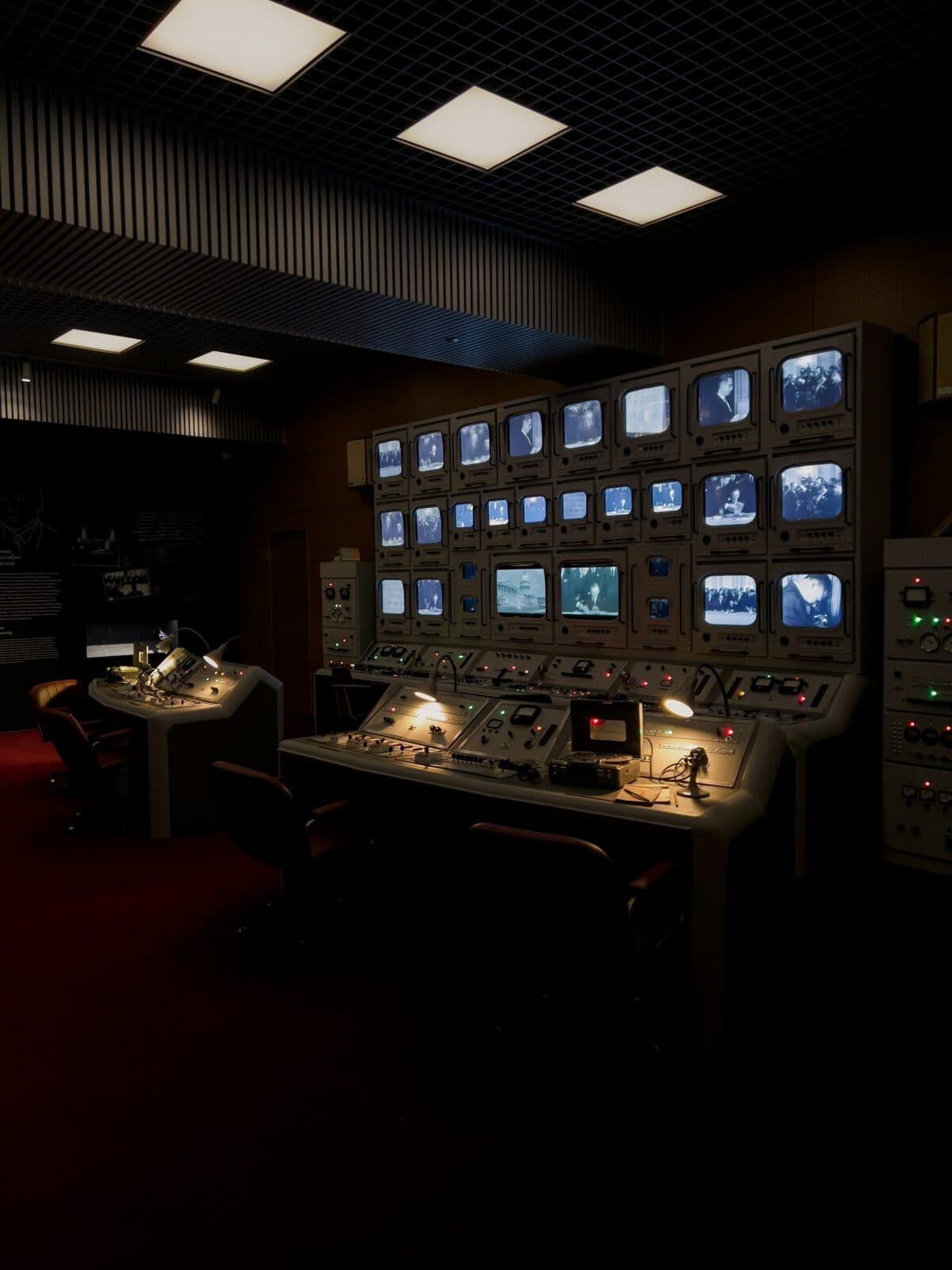
ISP NOC requirements: The Network Operations Centre is the operational heart of the ISP — the room from which network engineers monitor, manage, and troubleshoot the network 24/7. The NOC requires:
- High-density Cat 6A structured cabling at every workstation position (multiple network connections per position for network management workstations, monitoring displays, and out-of-band management connections)
- Dedicated fiber connections to the NOC from the main network room (high-bandwidth, low-latency backbone for NOC management traffic)
- KVM (Keyboard-Video-Mouse) over IP infrastructure for out-of-band access to headless servers and network equipment
- Display systems (video wall or multiple monitor arrays) for network topology and monitoring displays
Office areas: Standard Cat 6A structured cabling in office areas, meeting rooms, and common areas, per the standards described in the commercial building fit-out guide.
Outdoor fiber distribution: Where the ISP's office building connects to its own fiber distribution network, the outdoor fiber entries must be properly managed — weatherproof entry conduits, optical distribution frames with adequate splice tray capacity, and a proper earthing/grounding scheme for outdoor fiber that runs through exposed environments.
Outdoor Fiber Splicing and Distribution
Bangladesh ISP fiber network deployment in urban areas involves extensive outdoor fiber work — direct-buried cable in cable ducts along road corridors, aerial fiber on utility poles, and distribution closure installations at street-level distribution points.
Outdoor splice closures: Every splice point in the outdoor fiber network uses a weatherproof splice closure rated for direct burial or aerial installation (IP68 for direct burial, IP65 for aerial). Splice closures from brands such as Tyco/CommScope, 3M, or Furukawa provide the mechanical protection and weatherproofing needed for Bangladesh's climate.
Fiber route documentation: Every meter of outdoor fiber route should be documented in a GIS-based fiber route management system — recording precise GPS coordinates, depth of burial, duct occupancy, and splice closure locations. This documentation is essential for maintenance (locating faults quickly), network planning (understanding capacity availability), and regulatory compliance (BTRC may require route documentation for licensed operators).
Optical Time Domain Reflectometer (OTDR) testing: All outdoor fiber links must be OTDR-tested after installation to verify splice quality, measure link attenuation, and document baseline link performance. OTDR records provide the reference against which future fault events can be compared to determine fault location.
Power Backup for Network Rooms
The UPS and generator combination described above is the foundation of network room power reliability. Additional considerations for Bangladesh ISP environments:
Voltage regulation: Bangladesh's grid voltage is nominally 220V AC 50 Hz but can vary significantly — spikes, sags, and harmonic distortion are common, particularly in areas served by older distribution infrastructure. Network equipment power supplies are generally rated for a voltage range (e.g., 100–240V AC), but sustained low-voltage operation reduces equipment life. UPS double-conversion operation protects equipment from all grid power quality issues.
Phase balance for three-phase systems: Larger network rooms with 3-phase power feeds must ensure approximately balanced loads across all three phases. Unbalanced loading causes neutral current flow, potential overheating of the neutral conductor, and reduced efficiency of UPS systems.
Battery maintenance: UPS batteries degrade over time — typically 3–5 years for VRLA (Valve Regulated Lead Acid) batteries in Bangladesh's ambient temperature environment (higher temperatures accelerate battery aging). A proactive battery replacement programme, based on battery test results rather than calendar time alone, is essential for maintaining UPS backup capability.
BTRC Compliance Requirements for ISPs
Bangladesh Telecommunication Regulatory Commission (BTRC) licensing requirements for internet service providers impose operational standards that have infrastructure implications:
Network quality standards: BTRC sets minimum service quality standards for licensed ISPs, including minimum uptime requirements. Meeting these uptime standards requires the redundant infrastructure described in this article.
Legal intercept capability: BTRC requires that licensed ISPs maintain technical capability for lawful interception of communications — the ability to provide specific subscriber communications data to law enforcement agencies under judicial order. The technical infrastructure for lawful intercept must be integrated into the ISP's network architecture.
Emergency service access: BTRC requires that ISPs maintain connectivity for emergency services. Network infrastructure must support emergency service traffic even during network congestion or partial failures.
Licence renewal documentation: BTRC licence renewal requires submission of technical documentation demonstrating that the ISP's infrastructure meets the standards specified in the licence conditions. Network room design documentation, structured cabling certification records, and UPS/generator maintenance records are typically required as supporting evidence.
Bangladesh ISP Growth Context
Bangladesh's ISP market was served by approximately 2,300 licensed ISPs as of 2025 — a large number reflecting the relative ease of obtaining ISP licences and the disaggregated nature of the local last-mile market. The market is consolidating, with larger ISPs (BDCOM, Amber IT, Link3 Technologies) gaining market share through network investment and service quality differentiation.
The growth of cloud computing adoption among Bangladesh enterprises — driven by banking digital transformation, RMG sector digitisation, and the growth of the IT/ITES sector — is increasing demand for high-quality, low-latency connectivity between enterprise locations and cloud data centres. This demand is driving ISP investment in fiber infrastructure and data centre-grade network rooms in tier-1 cities.
SSAL's network infrastructure team designs and implements structured cabling, fiber distribution, and network room infrastructure for ISPs, data centres, and enterprise network environments across Bangladesh. Our CommScope-certified cabling teams provide installation and test certification to the highest industry standards.
Get Free Consultation — Contact SSAL's network infrastructure team to discuss your ISP or data centre infrastructure requirement. We will assess your network architecture, propose a structured cabling and power infrastructure design, and provide a project implementation plan appropriate to your timeline and budget.
Filed under
- ISP network infrastructure
- Bangladesh ISP
- structured cabling
- fiber distribution
- BTRC
- data centre
- network room
- UPS
SSAL Expert Team
SSAL engineering team — Bangladesh-focused technical writing on security, fire-safety, ICT, and building technology.
Related Articles
Bangladesh Bank ICT Security Guideline v4.0: What Every Bank Security Manager Must Know
Complete guide to Bangladesh Bank ICT Security Guideline v4.0: CCTV, biometric access, 90-day retention, visitor management & compliance audit requirements.
OpenComplete Security Technology Guide for Bangladesh's Banking & Financial Sector
Complete guide to bank security technology in Bangladesh: Bangladesh Bank ICT v4.0, CCTV, biometric access, fire safety & ATM monitoring. Expert from SSAL.
OpenSecurity & Automation for Commercial Real Estate: A Developer's Guide to Smart Buildings
Complete guide for developers: multi-tenant access control, BMS energy management, structured cabling, parking, fire safety & Grade A office technology for Bangladesh.
OpenNeed Help Choosing the Right Solution?
SSAL engineers respond to RFQ submissions within 1 business day with a scoping call request.
- 48-hour site survey
- Free consultation
- 24/7 priority support