
Self-Monitoring vs. Professional Central Station Monitoring: A Cost & Response Comparison
Author
SSAL Expert TeamPublished
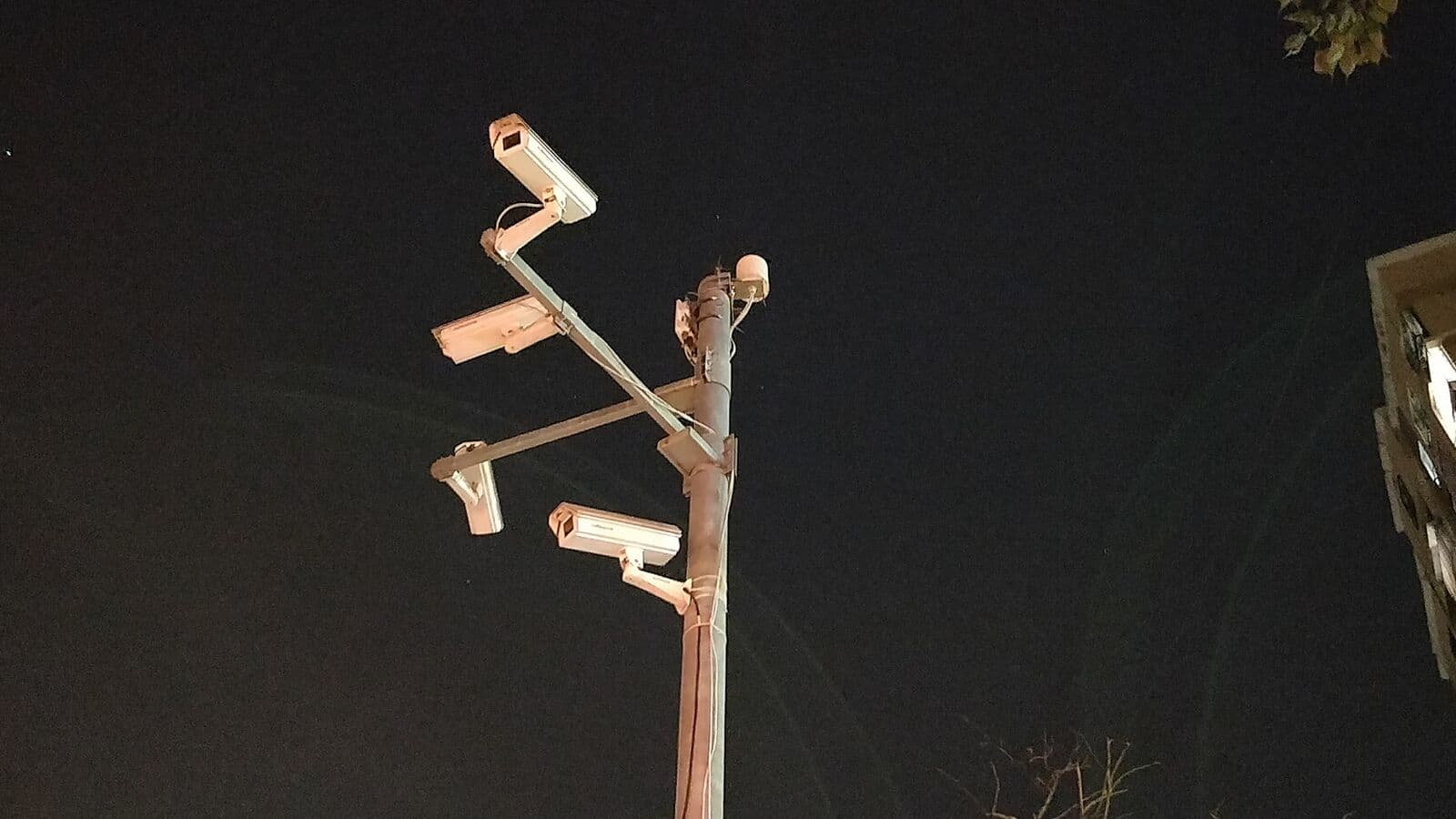
Installing an intrusion alarm system is step one. Monitoring that alarm — ensuring that someone responds when it activates — is step two. Without effective monitoring, an alarm system that triggers at 02:00 while your building is empty is just noise. By the time you wake up, check your phone, and determine that the alarm is genuine, an intruder may have been in your building for 10–15 minutes.
The monitoring question has two broad answers: self-monitoring (you or your team receive the alerts) or professional central station monitoring (a 24-hour staffed monitoring centre receives alerts and coordinates response). Both have legitimate use cases, and both have significant limitations that you need to understand before deciding.
Self-Monitoring via App: How It Works
Modern alarm systems — particularly cloud-connected panels from brands like Ajax, Bosch (with Sidekick app), and Honeywell — provide smartphone applications that notify the building owner or security manager when an alarm triggers. The notification arrives as a push notification within seconds of the alarm activation.
The app typically shows:
- Which zone alarmed (which detector or sensor triggered)
- The time of the event
- Live camera feed (if the system is integrated with a VMS)
- Event history and alarm log
The user receives this notification and must decide what to do: investigate remotely via camera, call someone at the building, call police, or physically attend the site.
Advantages of Self-Monitoring
Zero monthly cost: No recurring monitoring fee. Once the system is installed, self-monitoring via app costs nothing beyond data usage.
Direct control: The building owner receives alerts directly. There is no intermediary. If you want to investigate before calling police, you can. If you can see on the camera that it is a false alarm caused by an air conditioning unit, you can dismiss it without logging an unnecessary police call.
Flexibility: You can share app access with multiple people — the security manager, the building owner, the operations director. Any authorised user can receive alerts and respond.
Critical Limitations of Self-Monitoring
It relies entirely on you: If you are asleep, your phone is on silent, your notification settings have been overridden, or you are in a poor coverage area, the alert may not reach you in time. Unlike a central station with dedicated operators watching screens, you have other responsibilities.
Human response time is unpredictable: A professional monitoring operator responds to an alarm within 30–60 seconds of receipt, following a defined protocol. Your personal response time might be 30 seconds if you happen to be awake and checking your phone, or 15 minutes if you are asleep. This variation is a significant security gap.
No defined escalation procedure: What happens when you see an alarm notification at 02:00? Do you call the police directly? Call a guard? Call a colleague? Unless you have a written and practiced protocol, self-monitoring creates ambiguity that costs response time.
Alarm fatigue: Businesses that self-monitor high-frequency false-alarm systems quickly train themselves to ignore notifications. When the alarm that activates most nights at 02:30 because of the HVAC system turns out to be a real intrusion, the owner who has dismissed 200 previous alerts may assume it is another false alarm.
Professional Central Station Monitoring: How It Works
A professional central station (also called an Alarm Receiving Centre or ARC) is a 24-hour staffed facility where trained operators monitor alarm systems for multiple clients. When your alarm activates, the panel sends an alarm signal to the central station via IP and/or GSM. An operator at the central station receives the signal on their console within seconds.
The operator follows a defined response protocol:
- Acknowledge the alarm — logged with a time-stamp
- Verify the alarm — attempt to contact the building, check camera images if integrated, cross-reference other sensors
- Escalate — if the alarm is verified as genuine, contact the client's designated key holder, dispatch contracted security response, and notify police
- Document — create a full event record with all actions taken and their times
The entire process from alarm receipt to police notification takes 2–5 minutes at a professional central station following a verified-response protocol.
Advantages of Professional Monitoring
Consistent response: The same protocol is followed every time, by every operator, regardless of the time of day or how tired the operator is.
Guaranteed acknowledgement: A central station SLA guarantees that every alarm signal is acknowledged within a defined time (typically 30–60 seconds). The alarm is never missed because the operator was asleep.
Trained operators: Central station operators are trained in alarm interpretation, false alarm identification, and emergency coordination. They know the difference between a single PIR trigger (possible false alarm) and simultaneous glass break + PIR + door contact (likely genuine intrusion).
Police and response coordination: Professional monitoring centres in Bangladesh typically have established relationships with local police stations and private security response services. A central station call requesting a police response is taken more seriously than an individual's call.
Insurance evidence: Many insurance policies for commercial properties in Bangladesh require professional monitoring as a condition of coverage. Some insurers offer premium reductions for professionally monitored, certified alarm systems.
False Alarm Handling: A Critical Difference
False alarms are the most operationally significant challenge in alarm monitoring. Research consistently shows that the vast majority of commercial alarm activations are false — typically 90–95% of activations have an innocent explanation (HVAC, animals, employee error, communication faults).
How Self-Monitoring Handles False Alarms
With self-monitoring, you receive every alarm notification and must personally determine whether it is genuine. Early in the system's operation, you take each alarm seriously and respond. Over time — if false alarms are frequent — you begin to pre-judge alarms and may not respond promptly when a genuine intrusion occurs.
How Professional Monitoring Handles False Alarms
Professional central stations use verified response protocols to reduce unnecessary police dispatch:
Sequential contact verification: Before dispatching police, the operator contacts designated key holders in a defined sequence. If the key holder confirms the alarm is false (they forgot to disarm, they left a window open), the operator stands down without dispatching police. This prevents unnecessary police responses and the associated charges or relationships damage.
Cross-zone verification: The operator only dispatches police if multiple zones have alarmed, or if both a motion detector and a door contact have triggered in the same area. A single-zone alarm from a PIR may indicate a false alarm; a glass break followed by a PIR in the same zone is very likely genuine.
Camera verification: If the alarm system is integrated with CCTV and the central station has video access, the operator can view the alarmed zone in real time before making a dispatch decision. This visual verification dramatically reduces unnecessary dispatches.
Response Time Comparison
| Scenario | Self-Monitoring | Professional Monitoring |
|---|---|---|
| Alarm notification received | Immediate (push notification) | Immediate (ARC console) |
| Alarm assessed | Variable: 30 sec to 10+ min | 30–60 seconds (operator assessment) |
| Key holder contacted | Immediately (if owner) | Within 2 minutes (per protocol) |
| Police notified (genuine alarm) | Variable: 1–20+ minutes | 2–5 minutes |
| Documentation created | None (unless manual) | Automatic, time-stamped |
| Response at 03:00 on a public holiday | Highly variable | Same as any other time |
The fundamental advantage of professional monitoring is consistency and speed at any hour. The response to a genuine intrusion at 03:00 on Eid morning is identical to the response at 14:00 on a Tuesday — trained operators, defined protocols, immediate escalation.
Cost Comparison
Self-Monitoring Costs
- Monthly monitoring fee: BDT 0
- Your time to respond to alarms: Variable (hidden cost)
- Risk of delayed response during genuine intrusion: High
Professional Monitoring Costs in Bangladesh
Professional monitoring rates in Bangladesh vary based on the scale of the installation and the service level:
- Basic alarm monitoring (signal receipt + key holder notification): BDT 800–2,000 per month
- Enhanced monitoring (with video verification): BDT 2,000–5,000 per month
- Full managed service (monitoring + response guard dispatch): BDT 5,000–15,000+ per month
When evaluating the cost difference, consider:
- The value of the assets being protected
- The cost of a single burglary incident (stock loss, damage, business interruption)
- The probability that a self-monitored alarm will receive a prompt response at 03:00 on any given night
For a business with BDT 5 million of stock in a warehouse, a BDT 2,000 monthly monitoring fee costs BDT 24,000 per year — a 0.5% of asset value annual cost for professional response assurance.
Bangladesh Context: Professional Monitoring Centre Availability
Professional alarm monitoring services are available in Dhaka from a small number of established security companies. The market is less mature than in India or the Middle East, and the monitoring infrastructure is less standardised. When evaluating a professional monitoring service in Bangladesh, ask:
- Is the monitoring centre staffed 24 hours, 7 days, 365 days including public holidays?
- What is the operator-to-client ratio during the overnight shift?
- What communication protocol is used between the panel and the ARC (SIA DC-09, Contact ID)?
- What is the maximum guaranteed alarm acknowledgement time (per the SLA)?
- Is the monitoring centre UPS-backed with generator backup?
- What are the key holder notification procedures and maximum notification time?
- Can we see the monitoring centre and meet the operations manager?
Any professional monitoring service that cannot answer all of these questions clearly should be viewed with caution.
The Recommendation
Self-monitoring is appropriate for: Small, low-risk businesses with modest asset values where the owner is available and alert. Residential properties. Secondary monitoring — receiving alerts in addition to a professional centre, not as a replacement.
Professional monitoring is appropriate for: Any commercial business with significant assets. Banks and financial institutions. Healthcare facilities. Government and public buildings. Any site where the insurance requires it. Any business that cannot guarantee a reliable personal response at any hour.
For most enterprise deployments in Bangladesh, professional monitoring combined with self-monitoring app access (so the owner also receives notifications) provides the best of both approaches: guaranteed professional response plus direct owner visibility.
Get Expert Help
SSAL designs alarm systems that integrate with professional monitoring centres and provides the panel programming and communication setup required for central station operation. We advise on monitoring service selection and can connect you with reputable monitoring providers in Bangladesh that meet professional standards.
Talk to Our Expert — contact SSAL today to discuss your alarm monitoring requirements and design a complete detection and response solution for your facility.
Filed under
- alarm monitoring
- central station monitoring
- self-monitoring
- alarm response
- monitoring centre
- Bangladesh alarm
- false alarm
- professional monitoring
SSAL Expert Team
SSAL engineering team — Bangladesh-focused technical writing on security, fire-safety, ICT, and building technology.
Related Articles
Enterprise Alarm System Buying Guide: What Bangladesh Security Managers Need to Know
A complete alarm panel buying guide for Bangladesh security managers. Zone sizing, power backup, IP/GSM communication, VMS integration, and key vendor questions to ask.
OpenReducing False Alarms in Commercial Security Systems: Best Practice Guide for Bangladesh
Cut false alarms in your Bangladesh commercial alarm system. Best practices for detector selection, entry delay, cross-zone logic, and maintenance in heat and humidity.
OpenGlass Break Detectors vs. Motion Sensors: Do You Need Both for Complete Protection?
Learn how acoustic glass break detectors work versus motion sensors. Discover why layered protection with both technologies is essential for Bangladesh showrooms and banks.
OpenNeed Help Choosing the Right Solution?
SSAL engineers respond to RFQ submissions within 1 business day with a scoping call request.
- 48-hour site survey
- Free consultation
- 24/7 priority support