
How Motion Sensors Work: PIR vs. Microwave vs. Dual-Technology Detectors Explained
Author
SSAL Expert TeamPublished
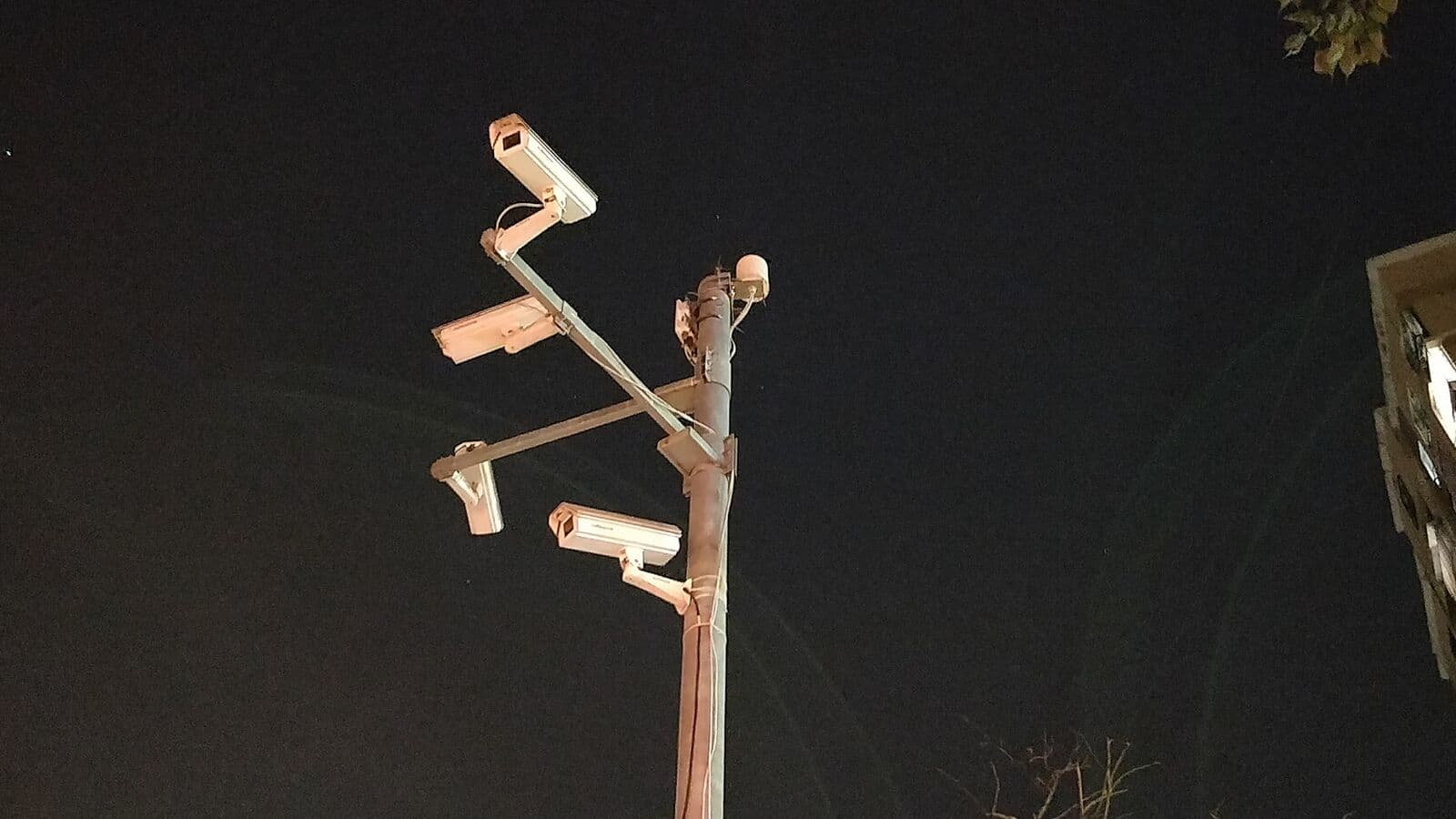
Motion sensors are the core detection technology of any intruder alarm system. They are also among the most misunderstood components in commercial security — selected, installed, and configured by people who know they need "a motion sensor" without fully understanding how different technologies work, where each excels, and where each will fail.
This guide explains the three principal motion sensor technologies used in commercial security — Passive Infrared (PIR), Microwave, and Dual-Technology — and gives you the knowledge to specify the right detector for each location in your facility. We also address Bangladesh's specific environmental conditions, which significantly affect detector performance.
Technology 1: Passive Infrared (PIR) Detectors
The Passive Infrared detector is the most widely deployed motion sensor in commercial and residential security systems worldwide. Its name tells you its fundamental operating principle: it is passive (it emits no energy — it only detects) and it detects infrared radiation — heat.
How PIR Detectors Work
All objects above absolute zero temperature emit infrared radiation. Humans emit a characteristic infrared signature at approximately 9–10 micrometres wavelength, corresponding to normal body temperature of 36–37°C. A PIR detector's Fresnel lens divides the detector's field of view into multiple detection zones — alternating sensitive and insensitive zones created by the geometry of the lens segments.
When a person walks across the detector's field of view, they move from a sensitive zone to an insensitive zone and back to a sensitive zone. This creates a rapid fluctuation in the infrared signal reaching the pyroelectric sensor. The detector's electronics analyse this signal pattern and, when it matches the expected pattern of a moving human, generate an alarm.
Critically, the PIR does not detect static heat sources. A person standing perfectly still in the detector's field of view will eventually stop triggering the sensor (though this takes much longer with modern detectors than older generations). The detector is designed to respond to the change in infrared signal caused by movement, not the infrared signal itself.
PIR Detection Range and Coverage Patterns
PIR detectors are available in several coverage pattern configurations:
Wide-angle (curtain of protection): A broad field of view — typically 90° to 110° horizontal — covering the full width of a room. Standard Fresnel lens detectors covering 12 m × 12 m are the most common commercial specification.
Long-range (corridor or narrow-angle): A narrow beam, typically 5°–15° wide and up to 25–40 metres long. Used in long corridors, loading docks, and perimeter zones where deep detection is needed.
Curtain detectors: Generate a flat curtain of detection zones in a vertical plane. Used to protect specific windows, door openings, or access points rather than covering an entire room.
360-degree ceiling-mount detectors: Provide full-circle coverage from a ceiling position. Suitable for open-plan offices and retail spaces where wall mounting is impractical.
Anti-Masking Technology
Masking is a deliberate defeat technique. An intruder sprays the PIR detector lens with paint, covers it with tape, or places an object in front of it, blinding the detector without triggering an alarm. Anti-masking PIR detectors use an additional sensing element to detect when the lens is obstructed. If the anti-masking element detects a blockage, it generates a tamper alarm rather than simply ceasing to function. Specify anti-masking capability for all PIR detectors in commercial applications.
Bangladesh Environmental Considerations for PIR Detectors
Bangladesh's climate creates specific challenges for PIR detector performance that security managers must understand.
Heat
PIR detection relies on the contrast between the target's infrared signature and the background temperature. In an air-conditioned office at 22°C, a person at 37°C creates a clear 15°C contrast — easy to detect reliably. In a non-air-conditioned industrial space where the ambient temperature reaches 38–40°C during summer, the contrast between a person's body temperature and the background drops to near zero. A PIR detector optimised for cool climates will produce false positives (reacting to heated air and surfaces) and false negatives (failing to detect persons who blend into the thermal background).
Solution: Specify PIR detectors with temperature-compensated thresholds — models that adjust their detection threshold dynamically based on ambient temperature. Leading manufacturers (Bosch Blue Line, Honeywell DualCor) design detectors specifically for tropical and high-temperature environments. These models typically operate reliably up to 50°C ambient without loss of detection performance.
Humidity
High humidity alone does not directly impair PIR performance. However, condensation inside the detector housing — which occurs when a poorly sealed detector is moved between air-conditioned and non-air-conditioned environments — can damage the pyroelectric sensor element and the Fresnel lens. Specify a detector with an IP rating appropriate for the installation environment: IP44 or better for non-conditioned spaces, IP55 for outdoor or semi-outdoor applications.
Air Conditioning Air Movement
Air conditioning creates two specific PIR problems:
- A strong stream of cold air directed at a PIR detector lowers the sensor temperature and can cause spurious sensitivity changes.
- Warm air currents passing through a cold-air zone (a draught across an air conditioning vent) create a thermal gradient that some detectors misread as a human heat signature.
Position PIR detectors away from air conditioning vents and ducts. Never mount a detector directly in an airstream. If the only suitable mounting position is near an HVAC vent, specify a dual-technology detector (see below) to eliminate HVAC-caused false alarms.
Technology 2: Microwave Detectors
Microwave motion detectors emit a continuous microwave signal (typically at 10.525 GHz or 24.125 GHz) and monitor the return signal for changes caused by movement. This is the same Doppler effect used in radar speed cameras. When a moving object changes the reflected microwave signal's frequency, the detector triggers.
Key Differences from PIR
Active detection: Unlike PIR, microwave detectors actively emit energy. This means they can detect movement in complete darkness and are not affected by thermal background temperature. A microwave detector works equally well in a 45°C industrial space or a -10°C cold store.
Through-wall detection: Microwave signals penetrate non-metallic materials including glass, drywall, plywood, and thin concrete. A microwave detector can detect movement through a thin wall partition — a capability that is both an advantage (detecting intruders behind obstructions) and a disadvantage (causing false alarms from movement in adjacent spaces).
Sensitivity to all movement: Microwave detectors respond to any moving object — not just humans. Air conditioning airflow, swaying trees visible through a window, passing vehicles, and flying insects can all trigger a microwave detector. This makes microwave-only detectors prone to false alarms in many commercial environments.
Applications for Microwave Detectors
Standalone microwave detectors are rarely used in modern commercial alarm systems because of their false alarm vulnerability. However, microwave detection technology is incorporated into dual-technology detectors (see below) where the microwave component benefits from PIR validation. Long-range microwave barriers — two-element systems creating a microwave beam between a transmitter and receiver — are used for outdoor perimeter detection, where their weather resistance and through-foliage penetration is an advantage.
Technology 3: Dual-Technology (Dual-Tech) Detectors
A dual-technology detector combines two independent sensing technologies — almost universally PIR and microwave — in a single housing. The AND logic principle governs how alarms are generated: both technologies must trigger simultaneously before an alarm is signalled.
Why AND Logic Reduces False Alarms
Consider the sources of false alarms for each technology independently:
- PIR false alarms: thermal drafts, direct sunlight, small animals, HVAC airflow
- Microwave false alarms: nearby vibrations, air movement, vehicles outside
When both technologies must trigger simultaneously, the combination of their false alarm sources becomes very rare. A thermal draft that triggers the PIR is unlikely to simultaneously create a Doppler shift that triggers the microwave. A passing vehicle outside that triggers the microwave is unlikely to simultaneously create a thermal event that triggers the PIR. Dual-tech detectors typically reduce false alarm rates by 80–90% compared to single-technology PIR in challenging environments.
What Dual-Tech Cannot Do
Dual-technology AND logic makes the detector harder to trigger accidentally — but it also makes it slightly harder to trigger by a real intruder. If an intruder moves extremely slowly (less than 0.1 m/s) they may not generate sufficient Doppler signal to trigger the microwave, even though the PIR detects them. In practice, normal human movement at any reasonable walking speed consistently triggers both technologies. But in applications where the intruder model includes persons moving deliberately slowly to defeat detection, single-technology PIR with anti-masking may actually provide more reliable detection than dual-tech.
For the vast majority of commercial security applications in Bangladesh, dual-technology detectors in air-conditioned offices, server rooms, retail back offices, bank vaults, and similar environments provide the best balance of detection reliability and false alarm resistance.
Coverage Patterns: Choosing the Right Lens
The correct lens and mounting position determines how well any detector covers your intended zone.
Mounting Height
Standard PIR and dual-tech detectors are designed for mounting at 2.0–2.4 metres. At this height, the Fresnel lens geometry creates detection zones at floor level where an intruder walks. Mounting too high (above 2.5 m) raises the detection zones above intruder-relevant height, reducing reliability. Mounting too low creates detection zones at waist height, which miss low-crawling intruders and are vulnerable to defeat by approaching below the detection plane.
Corner Mounting
Corner-mounted detectors cover two adjacent walls with a single unit. Most manufacturers provide a dedicated corner-mount lens or bracket for this configuration. Corner mounting is particularly effective in small rooms where a single detector in the corner can cover the full floor area.
Outdoor PIR and Dual-Tech
Outdoor motion detectors face additional challenges: wind-blown vegetation, small animals, rain, and wide temperature variation. Outdoor-rated PIR detectors incorporate digital signal processing (DSP) to distinguish human movement patterns from environmental noise. Specify IP55 or IP65 rated units for outdoor mounting. For perimeter applications around Bangladesh's industrial sites and RMG factories, outdoor dual-tech detectors with temperature compensation and pet immunity are the appropriate specification.
Pet Immunity: When It Matters
Pet immunity (also marketed as pet tolerance or animal immunity) refers to detector designs that ignore heat signatures from animals below a defined weight threshold — typically 25 kg, 38 kg, or 55 kg depending on the model. This is achieved through a combination of lens geometry that creates an elevated detection zone (small animals on the floor are outside the detection zone) and signal processing that filters out thermal signatures inconsistent with human posture.
In a Bangladesh commercial context, pet immunity is relevant primarily for:
- Residential buildings with guard dogs that move freely at night
- Warehouses with rat and animal activity
- Industrial sites where stray animals are common
For typical commercial office environments in Dhaka, standard (non-pet-immune) detectors perform adequately because there are no animals present after hours. Specify pet immunity when the site assessment reveals an animal presence risk.
Selecting the Right Detector for Each Zone
| Zone | Recommended Technology | Reason |
|---|---|---|
| Air-conditioned office | PIR (standard) or Dual-tech | Low false alarm risk in conditioned environment |
| Non-air-conditioned warehouse | Dual-tech (temperature-compensated) | High ambient temperature requires dual-tech validation |
| Server room / data centre | Dual-tech with anti-masking | High-value asset; anti-masking protects against defeat |
| Corridor (long, narrow) | PIR long-range or Dual-tech corridor lens | Match lens to space geometry |
| Retail showroom (large open space) | PIR 360° ceiling mount or multiple wide-angle | Full coverage without gaps |
| External storage area | Outdoor dual-tech IP65 | Weather and wildlife tolerance |
| Bank vault anteroom | Dual-tech with anti-masking + volumetric microwave | Maximum security, multiple technologies |
Get Expert Help
Specifying motion sensors for a commercial security system requires detailed knowledge of the space, the environmental conditions, the threat model, and the capabilities of each detector type. Getting it wrong means either excessive false alarms (which lead to alarm fatigue and system bypass) or genuine detection gaps.
SSAL's intrusion alarm team has designed detection systems for banks, government buildings, hospitals, data centres, RMG factories, and commercial properties across Bangladesh. We survey your site, specify the right detector types and positions, and install and commission systems to the standards required for Bangladesh Bank compliance, FSCD inspection, and insurance certification.
Get Free Consultation — contact SSAL today for a free site survey and intrusion detection design review.
Filed under
- PIR detector
- microwave detector
- dual-technology sensor
- motion sensor
- intrusion alarm
- anti-masking
- Bangladesh security
- alarm system
SSAL Expert Team
SSAL engineering team — Bangladesh-focused technical writing on security, fire-safety, ICT, and building technology.
Related Articles
Enterprise Alarm System Buying Guide: What Bangladesh Security Managers Need to Know
A complete alarm panel buying guide for Bangladesh security managers. Zone sizing, power backup, IP/GSM communication, VMS integration, and key vendor questions to ask.
OpenReducing False Alarms in Commercial Security Systems: Best Practice Guide for Bangladesh
Cut false alarms in your Bangladesh commercial alarm system. Best practices for detector selection, entry delay, cross-zone logic, and maintenance in heat and humidity.
OpenGlass Break Detectors vs. Motion Sensors: Do You Need Both for Complete Protection?
Learn how acoustic glass break detectors work versus motion sensors. Discover why layered protection with both technologies is essential for Bangladesh showrooms and banks.
OpenNeed Help Choosing the Right Solution?
SSAL engineers respond to RFQ submissions within 1 business day with a scoping call request.
- 48-hour site survey
- Free consultation
- 24/7 priority support