
IP PBX vs. Cloud PBX vs. Traditional Analog PABX: Which Is Right for Your Bangladesh Enterprise?
Author
SSAL Expert TeamPublished
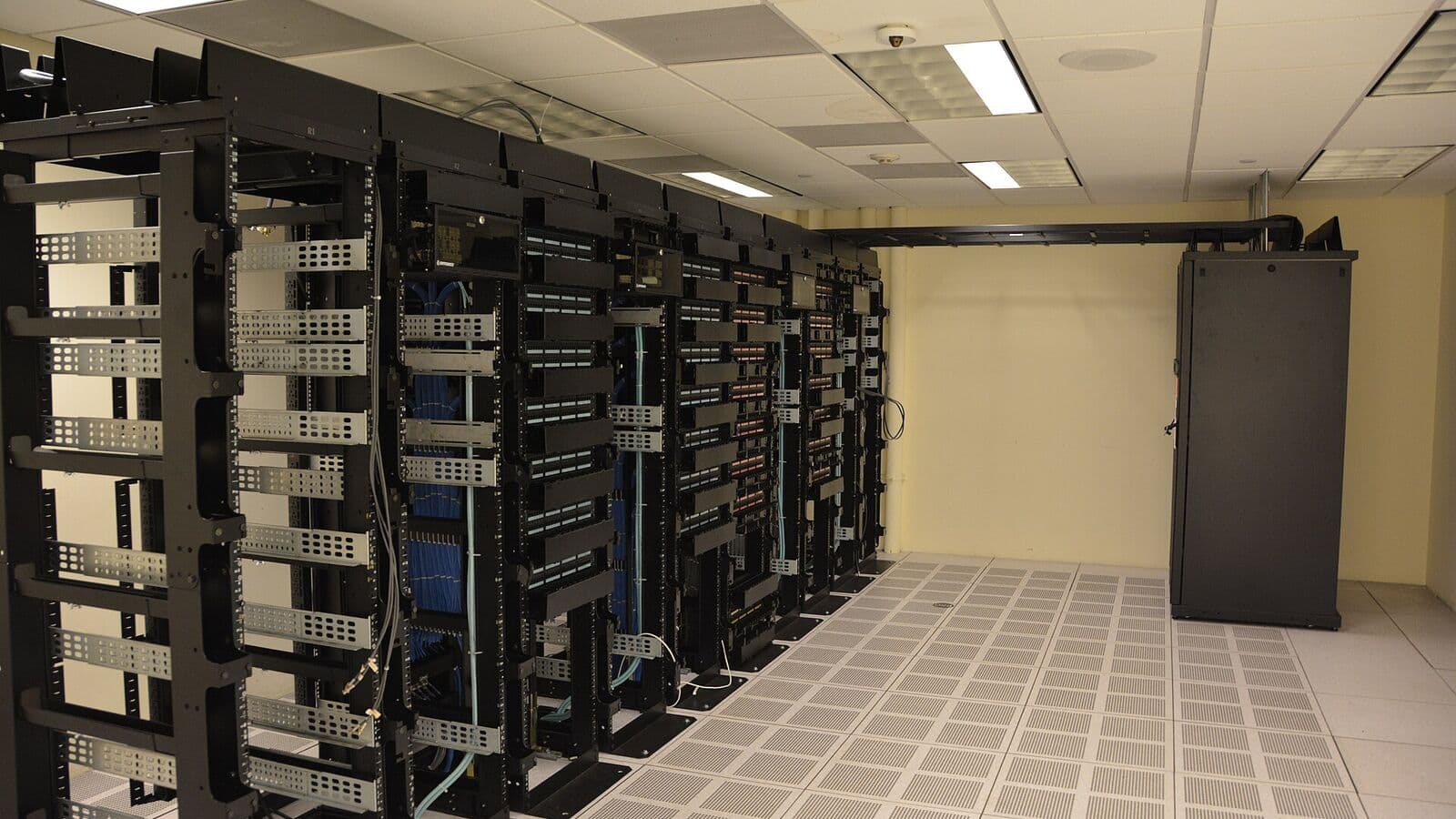
If you are responsible for your organisation's telephone system in Bangladesh — whether for a bank with 30 branches, a hospital with 500 extensions, or a garment factory with separate production and administrative offices — you are almost certainly facing a telephony infrastructure decision in the next 1–3 years. Traditional analog PABX systems are reaching end-of-life. Service and spare parts for older systems are increasingly expensive or simply unavailable. And the vendors have moved on: the world of business telephony has fundamentally shifted to IP (Internet Protocol) platforms.
But which IP platform is right for you? The market offers three broad architectures: on-premise IP PBX systems, cloud-hosted PBX (UCaaS — Unified Communications as a Service), and hybrid approaches. Each has distinct advantages and trade-offs that matter specifically in Bangladesh's technology environment.
This guide explains each architecture honestly, compares total cost of ownership, and tells you which scenario suits which type of Bangladesh organisation.
Traditional PABX: Why It Is Being Left Behind
A traditional PABX (Private Automatic Branch Exchange) is a circuit-switched telephone switch. It uses Time-Division Multiplexing (TDM) technology to route voice calls over dedicated circuits — physical copper pairs for extensions, E1/T1 or ISDN lines for trunk connections to the PSTN (Public Switched Telephone Network).
What Traditional PABX Does Well
Traditional PABX systems from Panasonic, NEC, Alcatel-Lucent, and similar vendors are rock-solid reliable. They operate independently of data networks — a PABX failure is a telephone failure, not a network failure. Many Bangladesh organisations installed these systems in the late 1990s and 2000s and have been running them for 20+ years with minimal intervention.
They are also deeply familiar to local technicians. Every major city in Bangladesh has engineers who know how to program and maintain the major PABX brands, making service readily available.
Why Traditional PABX Is No Longer the Right Choice for New Installations
Hardware end-of-life: The major PABX vendors have stopped new product development on their TDM platforms. Replacement cards, expansion modules, and proprietary handsets are increasingly difficult to source in Bangladesh. A PABX failure that requires an obsolete card can strand your telephone system while you search for a used replacement.
No integration capability: Traditional PABX systems cannot integrate with modern unified communications platforms — Microsoft Teams, Zoom, CRM systems, or customer contact centre software. They operate as closed telephony islands. In 2026's hybrid work environment, this isolation is a serious operational limitation.
High ongoing cost: Maintaining PSTN trunk lines from BTCL or private operators for all outgoing calls carries per-minute or per-call costs that SIP trunking (over VoIP) can reduce by 40–70%.
No mobility: PABX extensions are fixed to physical desk positions. Remote workers, home office users, and mobile employees cannot use PABX features without being physically present in the office.
For organisations with existing traditional PABX systems, the question is not whether to migrate to IP — it is which IP architecture to migrate to.
On-Premise IP PBX: Control and Reliability
An IP PBX (Private Branch Exchange using Internet Protocol) is a telephone exchange system that runs on IP network infrastructure rather than dedicated circuit-switched circuits. Calls between extensions travel as Voice over IP (VoIP) packets on the data network. Connections to the PSTN are made via SIP trunks — IP-based telephone lines that carry calls over internet or private data connections.
Modern IP PBX systems come in two forms: purpose-built hardware appliances (like the Grandstream UCM series and Yeastar P-Series appliances) and software-based systems that run on standard servers or virtual machines (like 3CX).
Advantages of On-Premise IP PBX for Bangladesh
Independence from internet reliability: This is the most critical advantage for Bangladesh. Broadband internet quality varies significantly across Dhaka's different areas, and outside Dhaka, reliable high-speed internet is not universal. An on-premise IP PBX operates entirely on your local LAN. Internal calls between extensions are completely unaffected by internet connectivity. External calls can use either SIP trunks (requiring internet) or retained analog PSTN lines as a backup — many Bangladesh IP PBX installations keep 2–4 analog PSTN lines as a failover when internet connectivity is disrupted.
One-time capital investment: On-premise IP PBX is a capital expenditure with a long service life (typically 7–12 years before replacement is considered). After the initial investment, the recurring costs are primarily SIP trunk subscription (replacing PSTN line rental) and basic maintenance. There is no per-user monthly subscription fee that compounds over time.
Feature richness at no additional cost: Modern IP PBX platforms include, as standard, features that traditional PABX vendors charged premium prices for: voicemail, auto-attendant (IVR), call queuing, call recording, conferencing, ring groups, and detailed call reporting. These features are configured via software — no additional hardware cards required.
Data privacy and compliance: For Bangladesh Bank-regulated financial institutions, having call data and call recordings stored on-premise (within the institution's own infrastructure) simplifies data protection compliance under the PDPO 2025 (Personal Data Protection Ordinance) and satisfies Bangladesh Bank's data sovereignty requirements.
Scalability: Modern IP PBX appliances scale from 20 to 2,000+ extensions by adding software licences rather than additional hardware cards. Expansion is simple and predictable.
On-Premise IP PBX Limitations
Higher upfront cost: Hardware purchase, licensing, installation, and commissioning represent a larger upfront investment than cloud PBX's subscription model. For organisations with capital budget constraints, this can be a barrier.
IT resource requirement: An on-premise IP PBX requires someone with IP networking and telephony knowledge to manage it — for software updates, user adds/changes/deletes, and troubleshooting. Smaller organisations without dedicated IT staff may find this onerous.
Physical space and power: The IP PBX appliance or server requires rack space in the network room, UPS protection, and IT maintenance. Cloud PBX eliminates these requirements.
Cloud PBX (UCaaS): Anywhere, Anytime Telephony
A cloud-hosted PBX — delivered as UCaaS (Unified Communications as a Service) — moves the PBX software from your premises to a vendor's data centre. You pay a monthly per-user subscription. Your telephone extensions become software clients on computers and smartphones, with optional physical IP desk phones. Calls are delivered over your internet connection.
UCaaS platforms include Microsoft Teams Phone (formerly Teams Direct Routing), RingCentral, Zoom Phone, and regional providers. In Bangladesh, some IP PBX vendors (including Yeastar) also offer hosted/cloud versions of their on-premise platforms.
Advantages of Cloud PBX
Zero upfront hardware cost: The monthly per-user subscription is the only cost — no PBX hardware to buy, no server to maintain, no rack space needed. For a startup or organisation with limited capital, this is attractive.
Anywhere access: Cloud PBX users can make and receive calls on their office number from any device, anywhere with internet access — smartphone, laptop, or IP desk phone in a home office. This is ideal for hybrid work models.
Automatic software updates: The cloud provider manages software updates, security patches, and feature additions. You always have the latest version without IT effort or maintenance windows.
Geographic number flexibility: Cloud PBX numbers are software-defined — you can have Dhaka, Chittagong, and Sylhet numbers on the same cloud PBX platform, with calls distributed to users regardless of their physical location.
Cloud PBX Limitations for Bangladesh
Internet dependency: This is the fundamental challenge for cloud PBX in Bangladesh. Every call — including internal extension-to-extension calls within your own office — travels over the internet to the cloud provider's servers and back. If your internet connection drops, your telephone system stops. In Dhaka's business districts, internet reliability from major ISPs (Grameenphone Enterprise, Robi, BTCL fiber) is generally good. But outside Dhaka, or in buildings with unreliable internet connections, cloud PBX is a precarious choice.
Ongoing subscription cost: Per-user monthly costs of USD 15–35 (BDT 1,600–3,800) per user add up significantly over time. For a 200-user organisation, annual cloud PBX cost is USD 36,000–84,000 (BDT 39–91 lakh) per year — recurring, indefinitely. An on-premise IP PBX for the same 200 users might cost BDT 25–35 lakh total installed, with much lower annual running costs.
Latency and voice quality: Cloud PBX calls travel from your office to the cloud provider's data centre (which may be in Singapore, India, or the US) and back. Round-trip delay adds to the inherent VoIP delay and can exceed 200ms in suboptimal conditions — where human voice quality perception begins to degrade.
Data sovereignty: Call data and recordings stored on cloud servers outside Bangladesh may create compliance complications under PDPO 2025 and Bangladesh Bank regulations.
Hybrid Architecture: The Best of Both Worlds
A hybrid IP PBX architecture combines on-premise IP PBX for internal reliability with cloud SIP trunking for external connectivity and mobility features.
In a typical hybrid deployment:
- An on-premise IP PBX (Grandstream UCM, Yeastar P-Series) handles all internal extension-to-extension calls on the local LAN
- SIP trunks from a Bangladesh VoIP provider (or directly from a carrier like Grameenphone Enterprise) carry external calls at significantly lower cost than PSTN lines
- Mobile app clients (softphones) on employee smartphones connect to the on-premise PBX via a secure VPN or SIP-TLS connection, allowing remote work
- A small number of backup analog PSTN lines provide telephony continuity if internet connectivity fails
This architecture is the most popular choice for medium-to-large Bangladesh enterprises (50–500 users). It delivers the reliability and cost efficiency of on-premise IP PBX while providing the mobility and external call cost savings of internet-based trunking.
Total Cost of Ownership Comparison
The following TCO comparison is for a 100-user Bangladesh enterprise over 5 years:
| Cost Element | Traditional PABX | On-Premise IP PBX | Cloud PBX |
|---|---|---|---|
| Initial hardware + software | BDT 25 lakh | BDT 18 lakh | BDT 0 |
| Installation + commissioning | BDT 3 lakh | BDT 3 lakh | BDT 0.5 lakh |
| Monthly PSTN line rental (20 lines) | BDT 2 lakh/year | — | — |
| Monthly SIP trunk (20 channels) | — | BDT 0.8 lakh/year | BDT 0.8 lakh/year |
| Monthly cloud subscription | — | — | BDT 18 lakh/year |
| Annual maintenance/support | BDT 2 lakh/year | BDT 1 lakh/year | BDT 0 |
| 5-Year Total Cost | BDT 58 lakh | BDT 29 lakh | BDT 94 lakh |
This comparison illustrates clearly why on-premise IP PBX is the most economical choice for most Bangladesh enterprises of this size. Cloud PBX is nearly twice the 5-year cost, and even compared to traditional PABX — which many organisations are migrating away from — it is more expensive.
For very small organisations (under 20 users), or for organisations whose primary use case is mobile/remote workers, cloud PBX's lower upfront cost and flexibility may justify the higher total cost.
Recommended Platforms for Bangladesh
Grandstream UCM6300 series: Hardware appliance IP PBX. Supports 50–3,000 users depending on model. Includes built-in call recording, video conferencing, and IPPBX features. Competitive pricing makes it the most widely deployed SME IP PBX in Bangladesh. Well-supported by local technicians.
Yeastar P-Series: Available as hardware appliance, software edition, or cloud edition. Yeastar's cloud management platform provides remote management capability for IT teams managing multi-site deployments. Strong Bangladesh distributor and support presence.
3CX: Software-based IP PBX that runs on Windows or Linux servers, or as a cloud-hosted instance. Excellent Microsoft Teams integration. Per-simultaneous-call licensing model is cost-effective for larger deployments. Requires more IT expertise than appliance-based alternatives.
Avaya: For large enterprises (500+ users) and contact centres, Avaya's IP Office and Aura platforms provide carrier-grade scalability, advanced contact centre features, and extensive integration capabilities. Higher cost, but appropriate for Bangladesh's largest banking, telecom, and commercial enterprises.
Making the Right Choice
Your decision should be guided by these factors:
- Internet reliability at your location: If internet is consistently reliable (Dhaka Grade A building with enterprise ISP), cloud PBX is viable. If internet reliability is a concern, on-premise IP PBX is the safer choice.
- Organisation size: Under 20 users — cloud or simple appliance. 20–500 users — on-premise IP PBX with SIP trunks. 500+ users — enterprise IP PBX or hybrid.
- Budget structure: Capital budget available — on-premise. No capital budget, OPEX only — cloud.
- Regulatory environment: Bangladesh Bank regulated — on-premise for data sovereignty. Less regulated — either works.
- Remote work importance: Heavy remote work — cloud or hybrid. Primarily office-based — on-premise.
Get Free Consultation — Contact SSAL to discuss your specific situation. Our unified communications team has deployed IP PBX systems for Bangladesh banks, hospitals, factories, and commercial enterprises, and can recommend the right architecture for your organisation's size, budget, and requirements.
Filed under
- IP PBX
- Cloud PBX
- analog PABX
- VoIP
- UCaaS
- Yeastar
- Avaya
- Bangladesh
- enterprise telephony
SSAL Expert Team
SSAL engineering team — Bangladesh-focused technical writing on security, fire-safety, ICT, and building technology.
Related Articles
Two-Way Radio Systems for Large Facilities: Why Digital Radios Beat Smartphones in Bangladesh's Industrial Sector
Why digital two-way radios (DMR, Motorola, Hytera) outperform smartphones for Bangladesh RMG, hotels & industrial facilities: push-to-talk reliability, battery life & coverage.
OpenVideo Conferencing for Enterprise: From Boardroom Hardware to Unified Platform Solutions
Complete guide to enterprise video conferencing: room hardware, MTR & Zoom Rooms, bandwidth needs, camera selection & Bangladesh internet considerations. Poly, Yealink, Crestron.
OpenWhat Is VoIP and How Can It Reduce Your Business Phone Bill by Up to 60%?
Learn how VoIP works and how it reduces Bangladesh business phone bills by 40-60%. Compare PSTN vs VoIP costs, SIP protocol basics & implementation requirements.
OpenNeed Help Choosing the Right Solution?
SSAL engineers respond to RFQ submissions within 1 business day with a scoping call request.
- 48-hour site survey
- Free consultation
- 24/7 priority support