
LED vs. LCD Video Walls: The Definitive Technical Comparison for Command Centres
Author
SSAL Expert TeamPublished
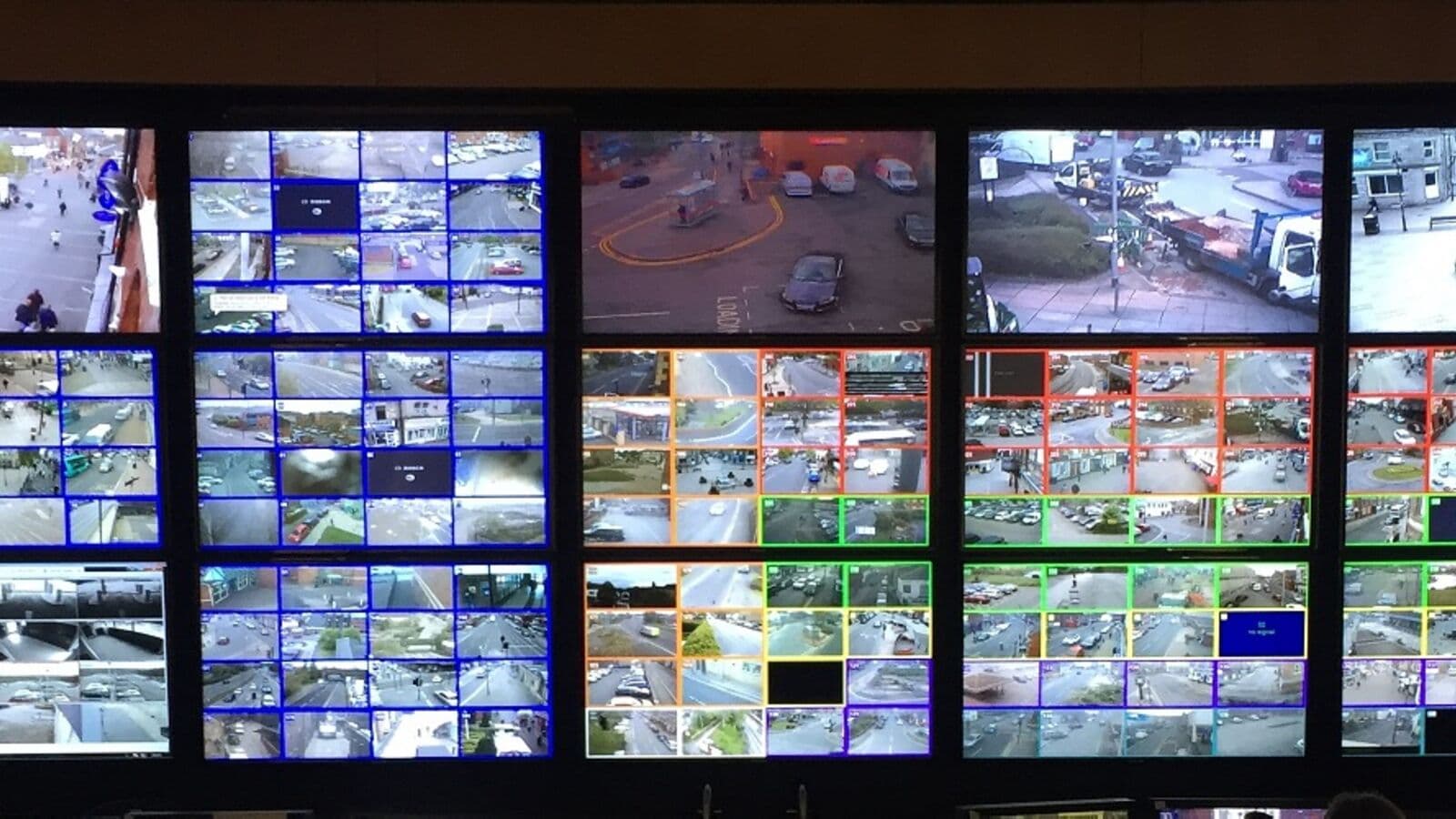
When you commission a video wall for a command and control centre, you are making a decision that will shape how your operators work for the next 7–15 years. The display technology you choose determines not just visual quality, but operational reliability, maintenance costs, operator fatigue, and the quality of information your team processes under pressure.
In 2026, two technologies dominate the command centre video wall market: direct-view LED and LCD panel arrays. Both have matured considerably. Both have compelling use cases. And both have significant weaknesses that make them the wrong choice for certain applications. This guide cuts through the manufacturer marketing to give you the technical reality of each technology.
Understanding LCD Video Walls
How LCD Video Walls Work
LCD (Liquid Crystal Display) video wall panels are narrow-bezel commercial displays assembled in a grid. Each panel generates its own backlight (typically LED edge-lit or direct LED backlit), which shines through a liquid crystal layer and colour filter to produce the visible image. The panels are tiled together — physically bolted side-by-side and stacked — to create a larger composite display surface.
Modern LCD video wall panels are purpose-built commercial units with ultra-narrow bezels to minimise the visible gap between adjacent panels. They differ from consumer televisions in their commercial-grade construction, 24/7 operation ratings, calibration stability, and support contracts.
The Bezel Problem: Still Visible, Still Relevant
The defining limitation of LCD video walls has always been the bezel — the physical frame around each panel that creates a visible seam in the display surface. At any tile junction in an LCD video wall, you see a gap in the image.
The best current LCD video wall panels achieve bezel-to-bezel gaps of approximately 1.7–3.5 mm (the "bezel width" refers to the width of the gap between adjacent panels, combining the outer edge of each panel's frame). Samsung's IF series and LG's dvLED-alternative LCD panels achieve 1.7 mm gaps at the extreme performance end.
Is 1.7 mm visible? Yes — clearly and unavoidably, especially when displaying continuous images like maps, live video feeds, and dashboards that cross panel boundaries. Operators in command centres learn to read across the gaps, but the seams represent a persistent visual interruption. For content that is primarily text and data (which aligns naturally with panel boundaries), the gap is much less intrusive.
LCD Operational Specifications
Brightness: LCD video wall panels typically deliver 450–1,000 nits of brightness. High-brightness models (for high-ambient-light environments) reach 1,500 nits. For standard command centre environments with controlled lighting, 500–700 nits is adequate.
Operation life: Commercial LCD video wall panels are rated for 60,000–70,000 hours of operation — approximately 7–8 years of 24/7 operation. In practice, backlight degradation becomes visible before end-of-life, and calibration drift between adjacent panels over time creates visible luminance and colour non-uniformity in the video wall.
Resolution: A 2×2 LCD video wall using 55-inch 1080p panels produces a composite 3840 × 2160 (4K) image. A 3×3 configuration with 1080p panels produces 5760 × 3240. Higher-resolution configurations require careful source and graphics card selection to drive them effectively.
Refresh rate: LCD panels for video walls typically support 60 Hz refresh, adequate for standard monitoring and playback content. High-speed video and motion content is handled cleanly at this rate.
LCD Video Wall: Best Applications
LCD video wall technology is most appropriate for:
- Control rooms where content is primarily data, text, and static or slow-moving imagery
- Budget-constrained projects where seamless display is not a functional requirement
- Environments with high ambient light where LCD brightness gives it an advantage
- Situations requiring high-resolution display at lower cost per square metre than LED
Understanding Direct-View LED Video Walls
How Direct-View LED Works
Direct-view LED (dvLED) video walls generate light directly from millions of individual LED elements mounted on circuit boards. There is no backlight, no liquid crystal layer, and no bezel between tiles. Each LED pixel produces its own light.
The resolution of a dvLED video wall is determined by "pixel pitch" — the distance in millimetres from the centre of one LED cluster to the centre of the next. A P2 (pixel pitch 2 mm) video wall has LED clusters 2 mm apart; a P1.5 panel has clusters 1.5 mm apart. Smaller pixel pitch = higher resolution per square metre = more suitable for close viewing distances.
Pixel Pitch Explained: Finding the Right Resolution
Pixel pitch selection is determined by the minimum viewing distance in your installation. The widely used formula is:
Minimum Comfortable Viewing Distance (metres) = Pixel Pitch (mm) × 2–3
A P2.0 display should be viewed from at least 4–6 metres for a comfortable, seamless image. At closer distances, the individual pixels become visible. A P1.5 display is comfortable from approximately 3–4.5 metres. A P1.0 (sub-millimetre) display can be viewed from as close as 2–3 metres.
For a command centre where operators sit 4 metres from the video wall, P2.0 represents an appropriate specification. For a boardroom where executives will examine the wall from 2 metres in a small room, P1.5 or finer is needed. Over-specifying pixel pitch (using P1.5 for a 6+ metre viewing distance) adds cost without perceptible benefit; under-specifying (using P3.0 for a 3-metre viewing distance) creates visible pixelation that operators find fatiguing.
LED Technology Types: SMD vs. COB vs. MicroLED
SMD (Surface Mount Device) LED: The current mainstream technology for direct-view video walls in the P1.5–P3 range. Individual red, green, and blue LED chips are packaged in a single SMD component and mounted on the display module. SMD provides good brightness and colour at moderate cost, with well-established manufacturing and repair processes.
COB (Chip on Board): LED chips are mounted directly on the circuit board without individual packaging, enabling denser pixel arrangements (below P1.5) and better mechanical robustness. COB panels handle accidental contact better than SMD and are gaining adoption in high-traffic environments. We cover COB vs. SMD in detail in our dedicated comparison article.
MicroLED: The emerging premium technology — individual LED elements at sub-100-micron scale assembled into seamless tile modules. MicroLED delivers the highest achievable resolution, longest operational life (100,000+ hours), and best black level performance. Currently at premium pricing positioning; suitable for highest-specification boardroom and executive installations.
Seamless: The Key Advantage
The defining advantage of direct-view LED over LCD is the absence of visible seams. LED display modules tile together — physically bonded to adjacent modules with no visible gap in the display surface. The image runs continuously across the entire video wall without interruption.
This seamlessness matters profoundly for content that spans the full display: real-time maps in police or operations control rooms, live CCTV feeds from multiple cameras shown simultaneously, situational awareness displays where geography or continuity of information is essential. On a seamless LED wall, a map of Bangladesh shows as a continuous image. On a 3×3 LCD wall, that map is interrupted by 4 horizontal and 4 vertical seams.
Direct-View LED Operational Specifications
Brightness: Commercial dvLED panels deliver 800–3,000 nits depending on configuration. High-brightness outdoor-facing or high-ambient-light versions reach 5,000+ nits. For controlled-lighting command centres, 800–1,200 nits is standard; for boardrooms with ambient light, 1,500 nits is common.
Operation life: LED elements are rated at 80,000–100,000 hours (Unilumin, Absen) and MicroLED reaches beyond 100,000 hours. At 24/7 operation, 80,000 hours represents approximately 9 years — and LED brightness decreases gradually and uniformly rather than abruptly failing.
Black levels: LED video walls achieve deeper blacks than LCD in dark environments because LED elements at minimum drive level produce less light than LCD backlights (which have minimum luminance floors above true black). This improves contrast ratio and image depth, particularly for security camera feeds that frequently include dark scenes.
Modularity and repair: If an LED module fails, the specific module is replaced without affecting the rest of the wall. LCD video wall panels must be fully replaced if the panel fails — a more expensive and more disruptive repair.
Side-by-Side Comparison
| Specification | LCD Video Wall | Direct-View LED |
|---|---|---|
| Seamless display | No (1.7–3.5 mm bezel gaps) | Yes — completely seamless |
| Brightness | 500–1,500 nits | 800–3,000 nits |
| Panel life | 60,000–70,000 hours | 80,000–100,000 hours |
| Pixel pitch | N/A (native panel resolution) | P1.0 to P4.0 (selectable) |
| Cost per m² | Lower (BDT 150,000–350,000/m²) | Higher (BDT 400,000–1,200,000/m²) |
| Maintenance | Panel replacement required | Module-level hot-swap replacement |
| Calibration | Regular calibration needed for uniformity | Factory-calibrated modules; AI calibration systems |
| Power consumption | Lower per m² | Higher per m², but more efficient per nit |
| Viewing angle | 178° horizontal/vertical | 160°+ horizontal/vertical |
Bangladesh Command Centre and Boardroom Context
Bangladesh's security and monitoring infrastructure is expanding rapidly. National police control rooms, bank monitoring centres, telecom NOCs (Network Operations Centres), and utility control rooms are all investing in video wall infrastructure.
For Bangladesh Bank-regulated financial institutions, monitoring control rooms that operate 24/7 require display systems with proven operational ratings. The Bangladesh Bank's operational resilience guidelines (referenced in ICT Security Guideline v4.0) imply continuous monitoring capability — making 80,000-hour LED ratings significantly more appropriate than 60,000-hour LCD panels for primary monitoring installations.
For corporate boardrooms in Dhaka's premium office towers — where the video wall serves as much a prestige statement as a functional display — seamless direct-view LED has become the expected standard for large installations above BDT 10 million. For smaller boardroom applications (below 4 m width), high-quality LCD in 1.7 mm bezel configuration remains a cost-effective choice.
Unilumin — SSAL's preferred LED video wall partner — manufactures LED display systems used in control rooms across Southeast Asia, with product lines from P0.9 (MicroLED) to P4 for outdoor applications. Samsung's IFH-R series and LG's LAEC series represent the LCD video wall benchmark in commercial specifications.
Making the Decision
For command centres and control rooms requiring 24/7 operation, seamless display of maps and live feeds, and long operational life: direct-view LED is the professional standard and the correct choice. The higher initial capital cost is offset by lower maintenance costs over the system's life and the superior operational capability.
For boardrooms, meeting rooms, and lower-budget monitoring applications where cost efficiency is a priority and content is primarily data and text: LCD video wall in ultra-narrow bezel configuration delivers professional results at substantially lower capital cost.
The critical question is not "LED or LCD?" but "what does the content require, and what can the organisation sustain operationally?" Answer those questions honestly, and the technology choice follows naturally.
SSAL's Video Wall Design and Installation Expertise
SSAL designs and installs video wall systems for command centres, boardrooms, and public display applications across Bangladesh. We carry Unilumin direct-view LED systems, Samsung and LG LCD video walls, and the Absen LED range — giving us the product portfolio to recommend the right technology for any application.
Our design process includes viewing distance analysis, pixel pitch calculation, content source planning, and structural assessment to ensure the wall can be safely and cleanly installed in your space.
Ready to specify a video wall for your command centre or boardroom?
[Get Free Consultation] — Our video wall specialists will assess your space and recommend the optimal technology and configuration.
[Talk to Our Expert] — Discuss your specific monitoring or presentation requirements with a display specialist.
Filed under
- LED-video-wall
- LCD-video-wall
- command-centre
- pixel-pitch
- direct-view-LED
- MicroLED
- Unilumin
- Samsung
- Bangladesh
SSAL Expert Team
SSAL engineering team — Bangladesh-focused technical writing on security, fire-safety, ICT, and building technology.
Related Articles
Need Help Choosing the Right Solution?
SSAL engineers respond to RFQ submissions within 1 business day with a scoping call request.
- 48-hour site survey
- Free consultation
- 24/7 priority support