
Modular vs. Traditional Data Centres: Why Bangladesh Enterprises Are Choosing Prefab
Author
SSAL Expert TeamPublished
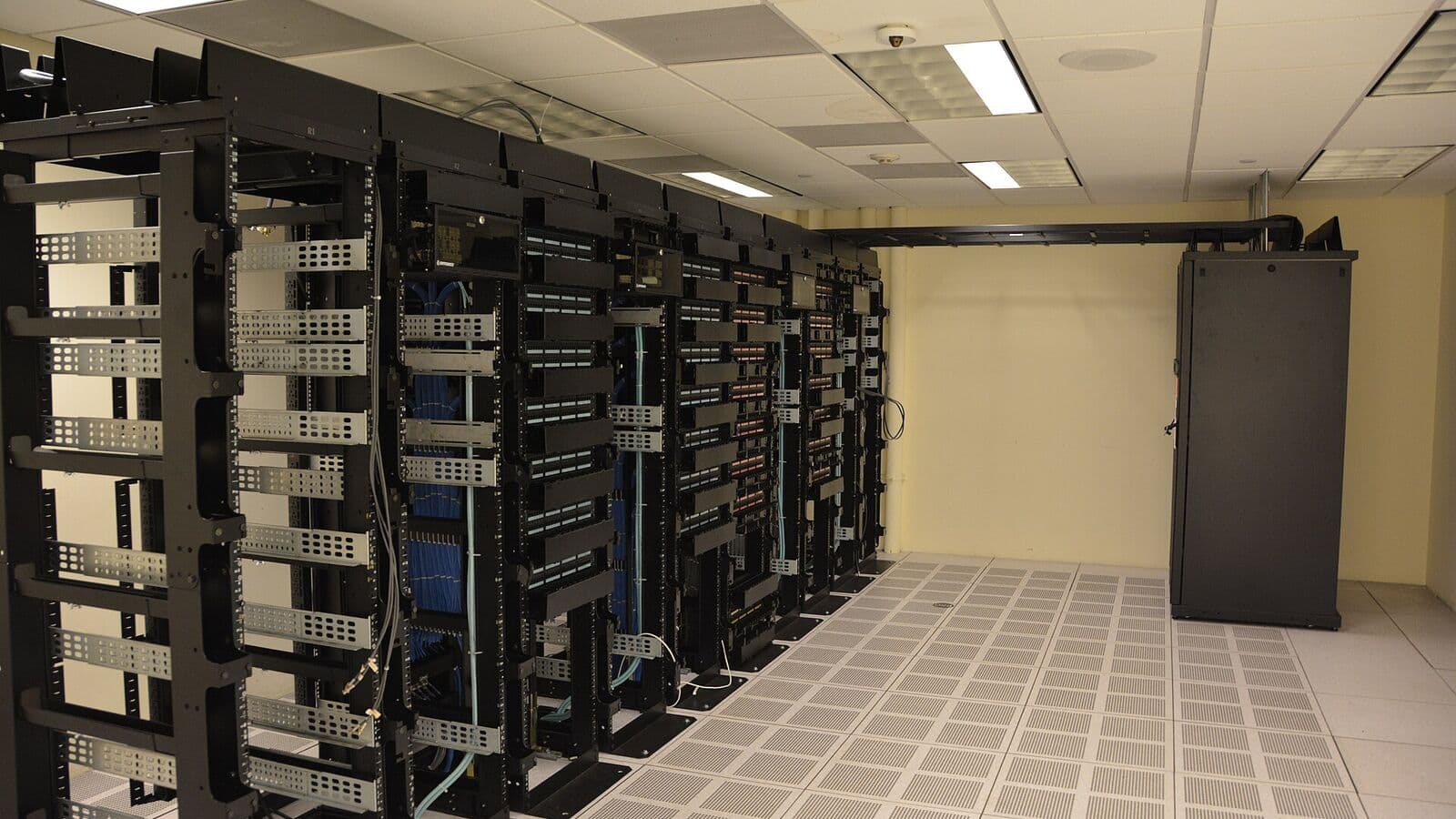
The decision to build or expand a data centre is one of the most consequential infrastructure investments a Bangladesh enterprise makes. The cost is substantial, the operational stakes are high, and the technology landscape continues to evolve faster than traditional construction timelines can accommodate. Get the deployment approach wrong and you face a two-year construction programme that delivers a facility already obsolete in its cooling and power density capabilities by the time it opens.
This is driving a clear trend in Bangladesh's enterprise IT infrastructure market: organisations that previously defaulted to traditional purpose-built data centres are choosing modular, prefabricated alternatives. The drivers are deployment speed, scalability, energy efficiency, and — for regulated industries — alignment with Bangladesh Bank's Tier III requirements under the ICT Security Guideline v4.0.
This article provides an honest, technical comparison of both approaches.
Traditional Data Centre Construction: The Established Model
The Development Timeline
A traditionally constructed data centre — one built from civil engineering works upward, with HVAC, power, and IT infrastructure installed progressively — follows a well-established development timeline:
Design and approval: 3–6 months for architectural and MEP (Mechanical, Electrical, Plumbing) engineering design, landlord approvals, and in the case of new-build, planning permissions.
Civil construction: 6–12 months for structural works, raised floor installation, cable containment, and building envelope completion.
MEP installation: 4–8 months for UPS installation, generator connections, precision air conditioning units, fire suppression system, structured cabling, and security systems.
IT equipment installation and testing: 3–4 months for rack installation, network infrastructure, and commissioning of all mechanical and electrical systems.
Total timeline: 18–24 months from design initiation to first live load. This timeline is relatively consistent regardless of facility size within the range of most Bangladesh enterprise data centres (20 kW to 1 MW IT capacity).
The Traditional Approach's Limitations
The 18–24 month timeline is a fundamental planning problem in an environment where IT capacity requirements can change significantly in the time between commissioning a design and going live. Bangladesh's banking sector, for example, has experienced rapid digital banking growth — institutions that estimated their 3-year capacity requirements in 2022 found those estimates exceeded by 2024.
Traditional data centres are also expensive per kW of installed capacity because they are designed and built as one-off structures — every element is custom-specified and constructed in situ rather than manufactured at scale. The civil works alone — raised floor construction, cable containment installation, wall and ceiling completion — add costs that modular approaches eliminate by delivering factory-built modules with these elements already integrated.
PUE (Power Usage Effectiveness — the ratio of total facility power to IT equipment power, where 1.0 is theoretical perfection and lower is better) for traditionally constructed facilities in Bangladesh ranges from 1.8–2.5, driven primarily by inefficient cooling approaches (computer room air conditioning units operating in non-optimal configurations) and the power quality management overhead of Bangladesh's grid environment. This means that for every 1 kW of IT load, 0.8–1.5 kW is consumed in cooling, lighting, and power management overhead.
Modular Prefabricated Data Centres: The Modern Alternative
What "Modular" Actually Means
Modular data centres are pre-engineered, factory-manufactured systems delivered to site in complete, tested modules. The three primary form factors are:
Container-based modular: Data centre infrastructure (racks, cooling, power distribution, fire suppression) pre-installed within ISO shipping containers or custom enclosures. Delivered as a weatherproof unit that can be positioned and connected to site power and network infrastructure.
Row-based modular: Self-contained IT rows — a set of equipment racks enclosed in a sealed cooling unit — designed to be deployed within an existing building shell or combined with purpose-built shelter structures.
Data centre in a box: Complete micro-data centres incorporating power, cooling, network, and security in a single cabinet-scale unit. Appropriate for edge computing and branch office server requirements rather than enterprise-scale deployments.
For enterprise applications requiring 20 kW to 500 kW IT capacity, container-based and row-based modular approaches are the relevant options.
Deployment Timeline: 90 Days to Live
The critical advantage of modular data centres is deployment speed. Factory manufacturing of modular units proceeds simultaneously with site preparation — foundation work, power connection, network fibre routing — rather than sequentially. When the module arrives on site, the majority of the complex manufacturing and testing work is already complete.
A standard modular data centre deployment follows this timeline:
Order and manufacturing: 60–80 days for factory build and factory acceptance testing (FAT).
Site preparation: Concurrent with manufacturing — typically 30–45 days for foundation, power connection point preparation, and access route clearance.
Delivery and installation: 5–10 days for module delivery, positioning, and connection.
Site acceptance testing and go-live: 7–14 days.
Total: 90–110 days from order placement to live operation. This is 6–8 times faster than traditional construction.
For Bangladesh enterprises facing urgent capacity requirements — driven by regulatory deadlines (Bangladesh Bank's data localisation requirements), business growth exceeding predictions, or an existing facility failure — this speed is not merely a convenience; it is the enabling factor for business continuity.
Scalability: Growing With Your Business
The Traditional Data Centre's Scalability Trap
Traditional data centres are typically designed for a target capacity — a specific number of racks, a specific kW IT load, a specific cooling and power infrastructure scale. Reaching that design capacity requires upgrading the facility — which typically means additional civil works, new HVAC equipment, upgraded power infrastructure — another 12–18 month project.
Designing ahead of requirements to avoid this constraint is expensive: an organisation builds to 500 kW capacity when current requirement is 50 kW, paying for 10× the infrastructure it currently needs to avoid the future upgrade pain. This "overbuild" approach locks capital in unused infrastructure for years.
Modular Scalability: Add Modules as Demand Grows
Modular data centres are designed from the outset for incremental expansion. An initial deployment of 40 kW in a single container module is expanded to 80 kW, then 160 kW, then 400 kW by adding modules alongside the original. Each additional module connects to the same site power and network infrastructure (which is designed with expansion in mind from the start).
This "pay-as-you-grow" model aligns capital expenditure with actual business growth. An organisation starts with a BDT 8 million modular data centre investment at 40 kW and adds BDT 6 million modules as capacity requirements grow — versus committing BDT 35 million upfront to a traditional facility designed for a 5-year capacity forecast that may or may not materialise.
Energy Efficiency: PUE 1.3–1.5 vs. 1.8–2.5
Modular data centres typically achieve PUE 1.3–1.5 through design advantages not easily replicated in traditionally constructed facilities:
Hot aisle/cold aisle containment: Factory-integrated modular systems include complete hot and cold aisle containment by default. Traditional data centres frequently have imperfect containment due to construction compromises. Containment directly reduces cooling energy by preventing mixing of hot exhaust air with cool supply air.
Right-sized cooling: Modular cooling units are sized precisely for the module's IT load, operating at higher efficiency than oversized traditional CRAC (Computer Room Air Conditioning) units that cycle on and off inefficiently.
Higher operating temperatures: Modern servers operate reliably at inlet air temperatures up to 27°C (ASHRAE A2 class). Modular systems designed to this standard reduce cooling energy compared to legacy facilities maintaining 18–20°C inlet temperatures.
Economiser cooling: Modular systems designed for Bangladesh's climate can incorporate indirect economiser cooling — using ambient air (after heat exchange) to assist mechanical cooling during cooler nights and the dry season, reducing compressor run time and energy consumption.
For a 40 kW modular data centre at PUE 1.4 versus a traditional facility at PUE 2.0:
- Modular: 40 kW IT × 1.4 = 56 kW total power consumption
- Traditional: 40 kW IT × 2.0 = 80 kW total power consumption
- Annual energy saving: 24 kW × 8,760 hours = 210,240 kWh/year
- At BDT 8.5 per kWh (commercial tariff): BDT 1,786,000/year in energy savings
Over 10 years, this energy saving amounts to BDT 17.86 million — exceeding the capital cost difference between modular and traditional approaches in most cases.
Bangladesh Bank Regulatory Driver: Tier III for Primary Data Centres
Bangladesh Bank's ICT Security Guideline v4.0 requires banks to maintain their primary data centre at Tier III standard (TIA-942) and their disaster recovery data centre at Tier II. Tier III requires concurrent maintainability — all components have redundant capacity and can be maintained without taking the data centre offline.
Achieving Tier III certification in a traditionally constructed facility requires extensive N+1 redundancy across power (dual UPS paths, dual generator feeds), cooling (N+1 CRAC units, redundant chiller plant), and network (dual diverse paths). This redundancy adds significantly to construction cost and complexity.
Quality modular data centre systems are designed to Tier III standards by default — factory manufacturing allows precise implementation of redundancy requirements that are difficult to achieve consistently in field construction. Modular deployments targeting Bangladesh Bank compliance achieve TIA-942 Tier III certification more reliably than equivalent traditional construction because the redundancy architecture is engineered and validated at the factory rather than assembled under site conditions.
Cost Comparison: USD per kW Installed
The meaningful cost metric for data centre comparison is capital cost per kW of IT capacity installed:
Traditional data centre construction (Bangladesh market, 40 kW initial build):
- Civil works and building modification: USD 120,000–200,000
- Precision cooling (CRAC units, chiller): USD 80,000–140,000
- Power (UPS, generator, switchgear): USD 100,000–180,000
- IT infrastructure (racks, PDUs, cabling): USD 40,000–60,000
- Design, management, commissioning: USD 50,000–80,000
- Total: USD 390,000–660,000 for 40 kW = USD 9,750–16,500 per kW
Modular prefabricated data centre (40 kW single module):
- Module cost (factory manufactured, Tier III spec): USD 180,000–280,000
- Site connection (power, network, foundation): USD 30,000–60,000
- Installation and commissioning: USD 20,000–40,000
- Total: USD 230,000–380,000 for 40 kW = USD 5,750–9,500 per kW
At scale (100+ kW), modular systems achieve USD 4,000–7,000 per kW installed — 40–60% below traditional construction costs for equivalent Tier III specification.
SSAL's Modular Data Centre Offering
SSAL designs and deploys modular data centre solutions for Bangladesh enterprises, banks, and telecommunications organisations. Our modular systems are TIA-942 compliant, Bangladesh Bank ICT guideline-aligned, and designed for Bangladesh's specific power quality and climate conditions.
We provide the full programme: needs assessment, capacity planning, site assessment, module specification, project management, installation, commissioning, and ongoing managed services.
Ready to evaluate modular data centre options for your organisation?
[Get Free Consultation] — Request a data centre capacity assessment and modular vs. traditional comparison for your specific requirements.
[Download Our Data Centre Planning Guide] — A practical guide to Bangladesh data centre requirements under the Bangladesh Bank ICT Security Guideline.
Filed under
- modular-data-centre
- prefab-data-centre
- Bangladesh-Bank
- Tier-III
- PUE
- data-centre-Bangladesh
- scalability
- TIA-942
SSAL Expert Team
SSAL engineering team — Bangladesh-focused technical writing on security, fire-safety, ICT, and building technology.
Related Articles
Tier I vs. Tier II vs. Tier III Data Centres: What Redundancy Level Does Your Business Need?
Compare Tier I, II, III, and IV data centre tiers. Uptime, downtime hours, redundancy requirements, Bangladesh Bank Tier III mandate, and cost vs ROI analysis.
OpenHow to Choose a UPS System for Your Server Room: A Buyer's Guide for IT Managers
Choose the right UPS for your server room. UPS types, kVA sizing, runtime calculation, VRLA vs lithium-ion batteries, N+1 redundancy, and Bangladesh power quality guide.
OpenNeed Help Choosing the Right Solution?
SSAL engineers respond to RFQ submissions within 1 business day with a scoping call request.
- 48-hour site survey
- Free consultation
- 24/7 priority support