
How to Choose a UPS System for Your Server Room: A Buyer's Guide for IT Managers
Author
SSAL Expert TeamPublished
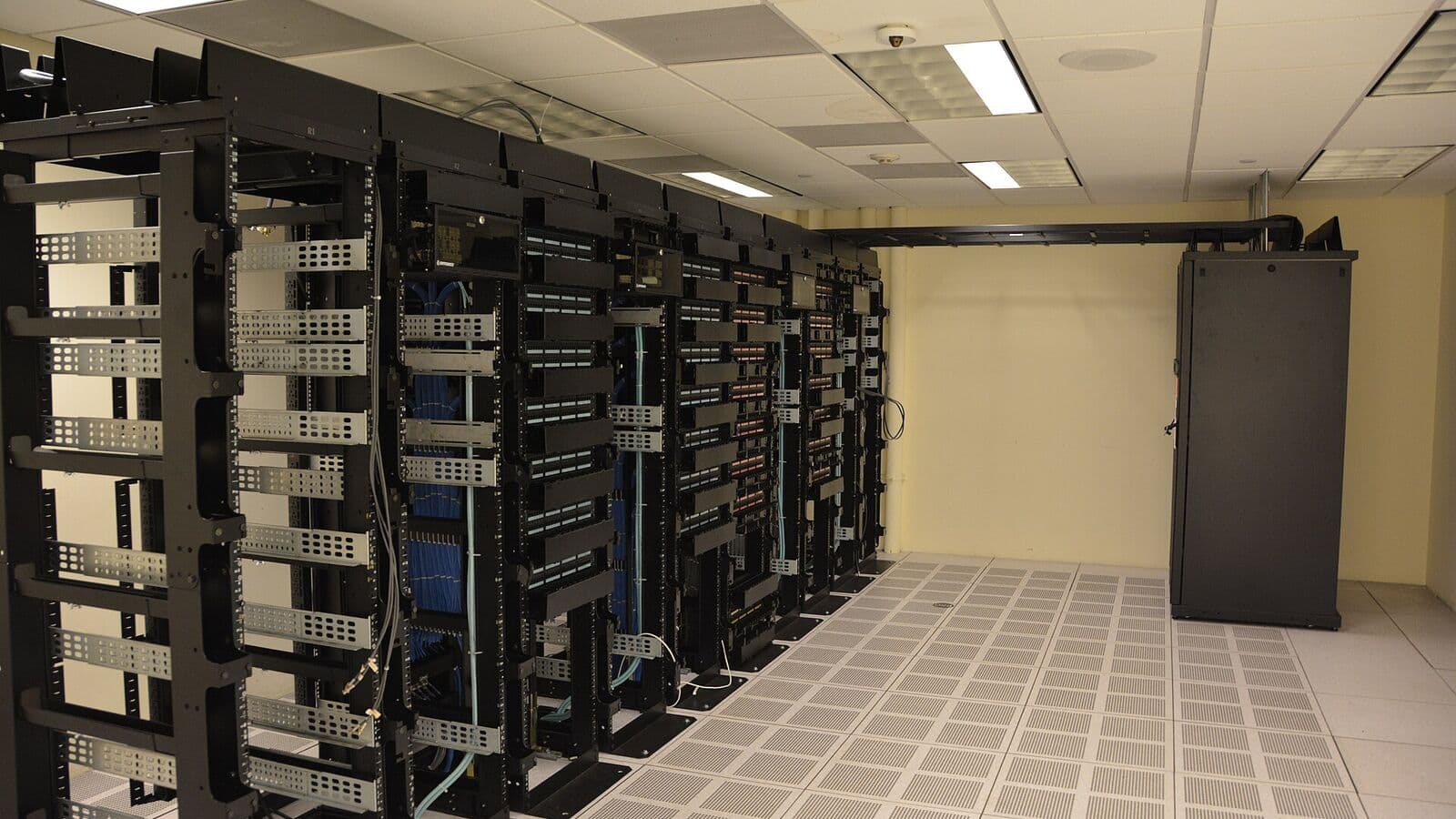
The UPS (Uninterruptible Power Supply) is the most critically important single component in your server room or data centre. When mains power fails — and in Bangladesh, it will — the UPS is what stands between your IT systems and an uncontrolled shutdown. When power quality degrades — voltage sags, brownouts, frequency fluctuations — the UPS is what protects your equipment from the damage those conditions cause.
Despite this importance, UPS systems are routinely under-specified, poorly sized, or purchased on price without adequate technical evaluation. The result is a UPS that either fails to provide adequate runtime during an outage, inadequately conditions power quality, or fails prematurely because it is running at a load fraction that degrades battery life.
This guide provides the technical framework for selecting a UPS correctly — from topology selection through sizing calculation to battery chemistry and redundancy configuration.
Understanding UPS Topologies
Three distinct UPS operating topologies exist, with fundamentally different power quality protection characteristics.
Offline / Standby UPS
In a standby (offline) UPS, the load is powered directly from mains supply under normal conditions. The UPS monitors mains power and switches to battery-inverter operation when mains fails or degrades below threshold. The switchover time is typically 5–25 milliseconds — fast enough for most IT equipment, but not zero.
Standby UPS provides basic protection against complete power failure and extreme voltage excursions. It does not protect against:
- Voltage sags (brief voltage dips) shorter than the detection time
- Frequency variations
- Mains noise and harmonic distortion
- Brownouts that remain within detection threshold
Appropriate for: Small office and workstation protection in environments with good power quality. Not appropriate for server rooms or data centres in Bangladesh's grid environment.
Line-Interactive UPS
A line-interactive UPS adds automatic voltage regulation (AVR) to the standby architecture. An autotransformer with voltage taps continuously adjusts the output voltage to compensate for voltage sags and swells within a defined range (typically ±15–20% of nominal), without switching to battery. The battery-inverter only engages for complete power failures or extreme voltage conditions.
Line-interactive provides substantially better power quality protection than standby. It handles the most common Bangladesh power quality problems — voltage sags from load switching on the distribution network, brownouts during peak demand periods — without battery involvement, extending battery life significantly.
Appropriate for: Small to medium server rooms where power quality issues are primarily voltage-level problems (not frequency issues or severe waveform distortion). Common choice for organisations with up to 20 kVA UPS requirements in Bangladesh.
Online Double-Conversion UPS
In an online double-conversion UPS, the load is always powered from the inverter. Mains power continuously charges the battery (through the rectifier/charger) and the inverter outputs clean, regulated power to the load. The mains supply never directly powers the load — it only charges batteries.
This architecture provides complete isolation of the load from mains power quality problems:
- Zero switchover time on mains failure (the inverter was already powering the load)
- Perfect voltage regulation regardless of input voltage
- Complete frequency control
- Elimination of mains noise and harmonic distortion
- Galvanic isolation from neutral-earth voltage issues
Appropriate for: All server rooms and data centres — particularly critical in Bangladesh's power grid environment. The complete power conditioning and zero-transfer-time characteristics make double-conversion the only appropriate topology for business-critical IT infrastructure.
UPS Sizing: The Critical Calculation
Step 1: Determine Total IT Load
Calculate the total watt (W) load of all equipment the UPS will protect. For server room sizing, do not rely on equipment nameplate ratings (these show maximum possible draw, not actual operating load). Use one of these approaches:
Actual measurement: Use a clamp meter or smart PDU (Power Distribution Unit) to measure actual current draw at the distribution level. Multiply measured current (A) × voltage (V) = actual watts. This is the most accurate approach.
Specification sheet method: Use manufacturer-specified typical operating power from datasheets (not maximum nameplate rating). Sum the typical operating power for all servers, storage, networking equipment, and KVM switches.
Rule of thumb estimate: If measurement and datasheets are unavailable, use 60–65% of the total nameplate rating as an estimate of actual draw. This is a rough estimate only.
Step 2: Convert to kVA
UPS capacity is rated in kVA (kilovolt-amperes) rather than kW (kilowatts) because the UPS must handle the apparent power of the load, which includes reactive components from motors and other inductive loads.
kVA = kW ÷ Power Factor
Modern server power supplies have power factors of 0.95–0.99. Network equipment varies more widely. A conservative assumption of 0.85–0.90 power factor across the IT load is appropriate for most server room calculations.
If total IT load is 20 kW with a power factor of 0.90: kVA = 20 kW ÷ 0.90 = 22.2 kVA
Round up to the next standard UPS capacity: a 25 kVA or 30 kVA unit.
Step 3: Apply Load Factor for Battery Life and Efficiency
UPS systems achieve optimal efficiency at 70–80% of rated capacity. Operating at very low load (below 30%) reduces efficiency and, for VRLA batteries, may prevent the battery from receiving adequate conditioning charge.
Size your UPS to operate at 60–80% of rated capacity under current IT load, with headroom for planned expansion. A 20 kW IT load on a 25 kVA UPS represents 80% loading — at the higher end of the optimal range. A 30 kVA UPS at the same load represents 67% — ideal for efficiency and provides meaningful expansion headroom.
Step 4: Runtime Calculation
Runtime — how long the UPS powers the load during a mains failure — depends on battery capacity. The basic formula:
Runtime (hours) = Battery Capacity (Ah) × Battery Voltage ÷ Load (W) × Efficiency Factor (0.85)
For a standard 25 kVA UPS with 180 Ah battery at 240V DC bus, at 20 kW load: Runtime = (180 Ah × 240 V ÷ 20,000 W) × 0.85 = 1.836 hours ≈ 1 hour 50 minutes
For longer runtime requirements (common in Bangladesh where generator start delays and grid failures can extend beyond 30 minutes), extended battery cabinets add capacity. Most enterprise UPS systems support parallel battery cabinets.
Specify runtime based on your generator start time plus a safety margin. If your generator starts within 30 seconds and is fully loaded within 2 minutes, 5–10 minutes of UPS runtime is theoretically sufficient — but specifying 15–30 minutes provides meaningful safety margin and accommodates generator start failures.
Battery Types: VRLA vs. Lithium-Ion
VRLA (Valve-Regulated Lead-Acid) Batteries
VRLA batteries are the traditional UPS battery technology — sealed lead-acid batteries that require no water maintenance and can be installed in any orientation. They are widely used, well-understood, and available from multiple manufacturers with strong local support in Bangladesh.
Advantages: Proven technology, lower purchase cost, wide availability, straightforward recycling, temperature tolerance (-15°C to +50°C storage).
Limitations: Shorter operational life (3–5 years typical service life in Bangladesh's temperature environment), heavier and more space-consuming than lithium alternatives, sensitive to high ambient temperature (every 10°C above 25°C halves battery life — a significant consideration for server rooms that occasionally lose cooling).
For Bangladesh server rooms, VRLA battery rooms or UPS battery sections should be maintained at 20–25°C for optimal battery life. Batteries in rooms that regularly reach 30–35°C should be replaced on a 3-year cycle rather than the 5-year cycle appropriate for well-controlled environments.
Lithium-Ion UPS Batteries
Lithium-ion batteries (specifically LiFePO4 chemistry for UPS applications) offer several operational advantages over VRLA:
Service life: 8–12 years versus 3–5 years for VRLA. Over a 10-year UPS operational life, VRLA requires 2–3 battery replacement cycles (at 40–60% of original UPS cost each time); lithium-ion requires zero or one.
Temperature tolerance: Lithium-ion retains capacity better at elevated temperatures than VRLA, reducing the operational penalty from suboptimal cooling.
Weight and size: Approximately 60% lighter and 50% smaller volume than equivalent VRLA battery capacity — relevant for server rooms with constrained floor space or structural loading limits.
Higher purchase cost: Lithium-ion UPS systems cost approximately 40–60% more than equivalent VRLA systems at time of purchase. Over the full 10-year operational life including battery replacements, lithium-ion is frequently cost-neutral or cost-advantaged.
For Bangladesh enterprises planning a 10+ year UPS investment, lithium-ion deserves serious evaluation — particularly for larger deployments where battery replacement costs are significant.
Redundancy Configurations
N+1 Redundancy
N+1 redundancy means the total UPS capacity installed equals required capacity (N) plus one additional UPS unit. If the IT load requires 40 kVA of UPS capacity, an N+1 configuration deploys two 40 kVA units (or four 20 kVA units), allowing any single unit to fail or be taken offline for maintenance without affecting the load.
N+1 is the minimum appropriate redundancy level for any data centre or server room operating business-critical systems. In Bangladesh's power grid environment — where the combination of utility reliability, generator maintenance requirements, and UPS battery condition management creates multiple potential single points of failure — N+1 UPS redundancy is not optional for systems that cannot tolerate unplanned downtime.
2N (Fully Redundant) Configuration
2N redundancy deploys twice the required UPS capacity in two independent paths. The IT load is divided equally between the two paths (A and B power feeds); each path has sufficient capacity to carry the entire load if the other path fails. This configuration is the standard for Tier III and Tier IV data centres.
2N adds significant capital cost but provides the highest possible protection against power path failure. For Bangladesh Bank-regulated primary data centres, 2N UPS architecture is consistent with Tier III compliance requirements.
Bangladesh Power Quality Issues: The Justification for Online Double-Conversion
Bangladesh's electricity grid — supplied by the Bangladesh Power Development Board (BPDB) and private power generators — presents several power quality characteristics that make online double-conversion UPS essential for IT infrastructure:
Voltage sags: Frequent brief voltage dips (2–15% below nominal) caused by large load switching events on distribution networks. Common during industrial shift changes and in areas near industrial loads.
Brownouts: Sustained voltage below nominal (5–20% low) during peak demand periods, particularly during summer months when air conditioning load is highest. Line-interactive AVR handles moderate brownouts; severe brownouts may still cause switchover to battery.
Frequency deviations: Bangladesh's grid frequency (nominally 50 Hz) can deviate ±1–2 Hz from nominal under load conditions. This affects equipment with frequency-sensitive power supplies and motor loads. Online double-conversion outputs a stable 50 Hz regardless of input frequency.
Generator quality: Backup generators in Bangladesh buildings are frequently diesel gensets with manual or automatic transfer. Generator output during startup typically has poor voltage and frequency stability for the first 10–30 seconds — acceptable conditions for a UPS on battery, but potentially damaging to directly connected IT equipment.
For all of these reasons, online double-conversion is the only topology that provides adequate protection for server room and data centre loads in Bangladesh's specific power quality environment.
Recommended Brands for Bangladesh
APC by Schneider Electric: The dominant enterprise UPS brand globally, with strong local support in Bangladesh. The APC Symmetra series (for large data centre applications) and Smart-UPS VT series (for mid-range server rooms) are well-supported with local spare parts and certified service partners.
Eaton: The second major enterprise UPS brand, with the Eaton 9SX and Eaton 9PX series covering mid-to-large server room requirements. Eaton has a strong Bangladesh distribution network.
Schneider Electric (Galaxy series): Schneider's Galaxy series targets large-scale data centre deployments. The Galaxy VS (10–150 kVA) and Galaxy VL (100–500 kVA) cover enterprise data centre requirements with excellent energy efficiency (up to 99% in ECO mode).
SSAL's UPS Design and Supply Service
SSAL provides UPS system design, supply, installation, commissioning, and maintenance for server rooms and data centres across Bangladesh. We carry APC, Eaton, and Schneider Electric product lines and provide the full sizing calculation, battery life analysis, and redundancy architecture appropriate for your specific IT load and availability requirements.
Our UPS assessments include Bangladesh power quality analysis — examining your site's actual power quality characteristics to validate the UPS specification against the real-world conditions your infrastructure will face.
Ready to specify the right UPS for your server room?
[Get Free Consultation] — Request a UPS sizing assessment and product recommendation for your IT load.
[Talk to Our Expert] — Discuss your server room power protection requirements with a power systems specialist.
Filed under
- UPS
- server-room
- data-centre
- power-protection
- Bangladesh
- APC
- Eaton
- Schneider
- double-conversion
- battery-backup
SSAL Expert Team
SSAL engineering team — Bangladesh-focused technical writing on security, fire-safety, ICT, and building technology.
Related Articles
Modular vs. Traditional Data Centres: Why Bangladesh Enterprises Are Choosing Prefab
Modular prefab data centres deploy in 90 days vs 18-24 months for traditional builds. PUE, scalability, Bangladesh Bank Tier III compliance, and cost per kW comparison.
OpenTier I vs. Tier II vs. Tier III Data Centres: What Redundancy Level Does Your Business Need?
Compare Tier I, II, III, and IV data centre tiers. Uptime, downtime hours, redundancy requirements, Bangladesh Bank Tier III mandate, and cost vs ROI analysis.
OpenNeed Help Choosing the Right Solution?
SSAL engineers respond to RFQ submissions within 1 business day with a scoping call request.
- 48-hour site survey
- Free consultation
- 24/7 priority support