
Tier I vs. Tier II vs. Tier III Data Centres: What Redundancy Level Does Your Business Need?
Author
SSAL Expert TeamPublished
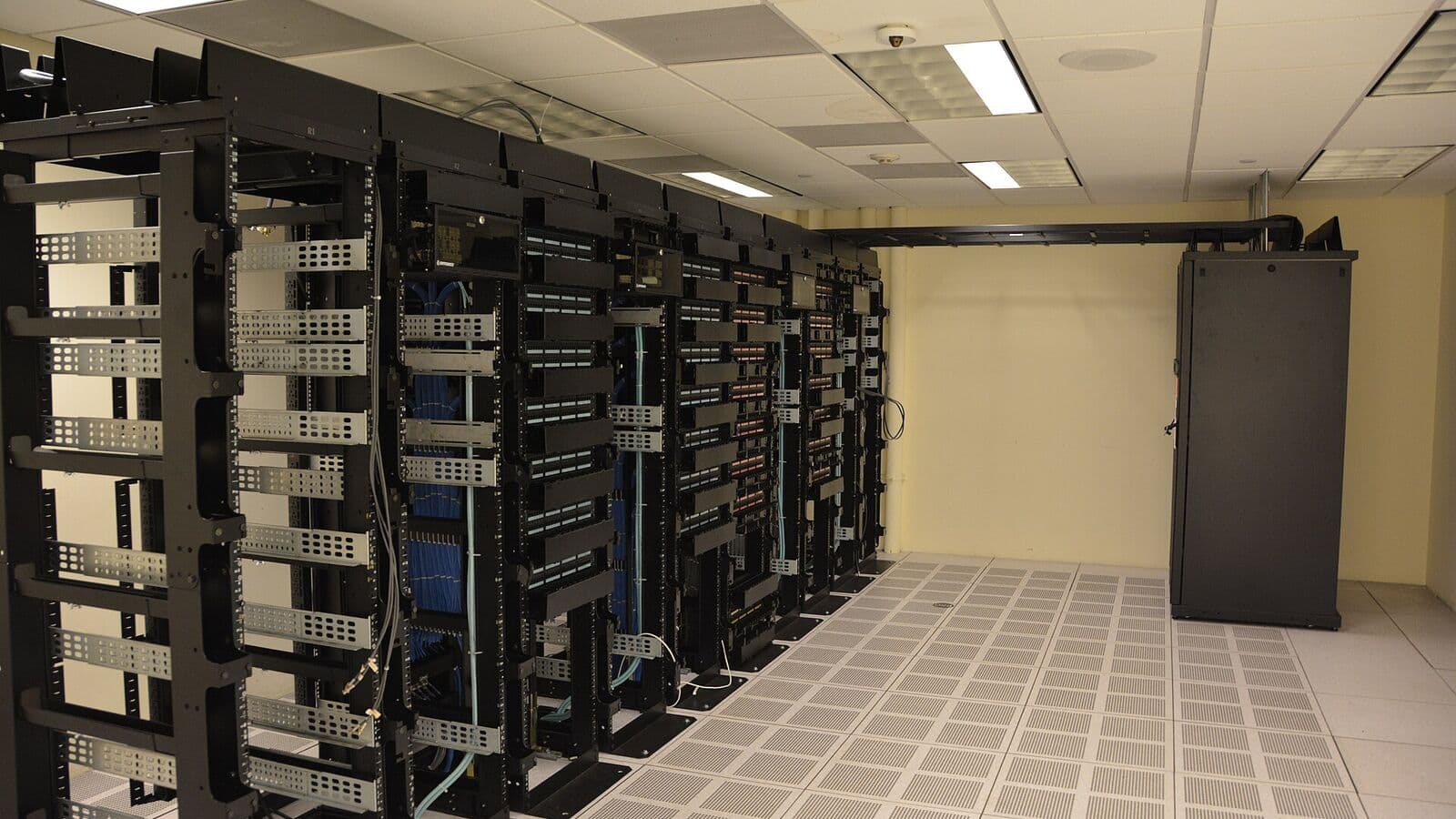
The Tier classification system for data centres — defined by the Uptime Institute and later incorporated into the TIA-942 standard — provides a universal framework for specifying and evaluating data centre infrastructure. Each Tier level defines a specific combination of redundancy, reliability, and operational capability, expressed in terms of expected annual downtime.
Understanding Tier levels is not just academic. For Bangladesh Bank-regulated institutions, Tier classification is a regulatory requirement. For all enterprises, understanding what level of infrastructure redundancy your business can tolerate losing — and what it costs to prevent that loss — is a fundamental business continuity question.
This guide explains each Tier level in precise technical terms and provides the business decision framework for selecting the right Tier for your organisation.
The Tier Classification Framework
The Uptime Institute's Tier classification was developed to provide a common language for data centre infrastructure quality. Each Tier is a defined set of infrastructure requirements — not a certification of any specific product or vendor, but a specification of the overall facility's capability.
Tier I: Basic Capacity
Technical definition: A Tier I data centre has a single path for power and cooling. All components required for IT operation are present but have no redundancy. Planned and unplanned maintenance requires full shutdown of the IT systems.
Uptime rating: 99.671% per year = 28.8 hours of downtime per year
Key characteristics:
- Single UPS system (no redundant unit)
- Single cooling path (one CRAC unit; failure means loss of cooling)
- Single generator (or no generator)
- No raised floor required; basic environmental controls
- Planned maintenance requires IT shutdown
Who it suits: Very small organisations with IT loads that are genuinely non-critical — where losing all systems for hours at a time would be an inconvenience rather than a business-stopping event. Small office file servers, non-critical development environments.
Not appropriate for: Any Bangladesh enterprise with revenue-generating or customer-facing IT systems. The 28.8 hours of annual downtime represents complete inability to operate those systems for over a day per year.
Tier II: Redundant Capacity Components
Technical definition: A Tier II data centre has a single active path for power and cooling, but redundant components are present. N+1 (n plus one) redundancy means that the number of components required plus one additional component is installed. If one component fails, the remaining components maintain operation. Planned maintenance still requires IT system downtime.
Uptime rating: 99.749% per year = 22 hours of downtime per year
Key characteristics:
- N+1 UPS (if 40 kVA required, at least 80 kVA installed across two units)
- N+1 cooling (if two CRAC units required, at least three installed)
- Generator present (single)
- Redundant power distribution components (PDUs, transfer switches)
- Raised floor common but not required
Planned maintenance requires scheduled downtime — you cannot replace a UPS battery or a CRAC unit without shutting down IT systems, because there is only a single distribution path through the facility.
Who it suits: Small to medium organisations with important but not mission-critical IT. Disaster recovery sites, development environments, small branch offices, and small enterprises where a planned weekend maintenance window for system downtime is manageable.
Bangladesh Bank guidance: Tier II is the minimum requirement for disaster recovery (DR) secondary sites under the Bangladesh Bank ICT Security Guideline v4.0.
Tier III: Concurrently Maintainable
Technical definition: A Tier III data centre has multiple active paths for power and cooling, with N+1 redundancy across all components. Any single component can be removed for maintenance without affecting IT system operation. There is no single point of failure. Unplanned component failures do not cause downtime.
Uptime rating: 99.982% per year = 1.6 hours of downtime per year
Key characteristics:
- N+1 redundancy in all power and cooling subsystems
- Dual power paths to IT equipment (A and B feeds from independent UPS systems)
- Multiple cooling paths (N+1 CRAC units; any single unit can fail without loss of cooling)
- Concurrent maintainability: any component can be replaced without IT downtime
- Raised floor standard for underfloor airflow distribution
- Dual generator feeds (N+1 generator configuration common)
- 2N UPS configuration for highest availability (see Tier IV approach)
Concurrently maintainable is the defining concept. A Tier III facility can replace a failed UPS battery string, service a CRAC unit, or upgrade a network switch without scheduling an IT shutdown window. The redundant path carries the load while the maintenance is performed.
Who it suits: Any organisation with business-critical IT that cannot tolerate planned downtime. Banks, financial institutions, healthcare providers, e-commerce platforms, telecommunications operators.
Bangladesh Bank mandate: Tier III is required for primary (production) data centres of Bangladesh Bank-regulated institutions under the ICT Security Guideline v4.0. This requirement makes Tier III the de facto minimum specification for the Bangladesh banking sector's data centre infrastructure.
Tier IV: Fault Tolerant
Technical definition: A Tier IV data centre has completely independent, physically isolated dual power and cooling paths. Either complete path can fail without affecting IT operation. 2N redundancy throughout — two completely separate systems, each capable of carrying the full load independently.
Uptime rating: 99.995% per year = 0.4 hours (26 minutes) of downtime per year
Key characteristics:
- 2N power: two complete, independent UPS systems, each capable of full load
- 2N cooling: two complete, independent cooling systems
- No single points of failure — even a complete power path or cooling path failure is tolerated
- Physically separate routing of power and cooling paths (fire compartmentalisation)
- Continuous fault tolerance without manual intervention
Who it suits: National critical infrastructure, stock exchanges, central bank systems, major telecommunications network nodes. The cost premium over Tier III is very significant — typically 50–80% higher capital cost for similar IT capacity.
Bangladesh context: Tier IV is rarely specified for private enterprise data centres in Bangladesh. The cost is typically justified only for national infrastructure organisations, the largest financial institutions, and providers of critical shared services.
Uptime and Downtime: The Business Impact Calculation
The difference between Tier levels becomes concrete when you calculate the cost of downtime for your specific business:
| Tier | Annual Downtime | Monthly Downtime |
|---|---|---|
| Tier I | 28.8 hours | 2.4 hours |
| Tier II | 22 hours | 1.8 hours |
| Tier III | 1.6 hours | 8 minutes |
| Tier IV | 26 minutes | 2.1 minutes |
For a bank with 50,000 online transactions per hour at an average value of BDT 5,000 each, one hour of core banking downtime represents BDT 250 million in delayed or failed transactions. At that scale, even Tier III's 1.6 hours of annual downtime is a significant operational and reputational risk — which is why major banks invest in Tier IV or multi-site Tier III architectures.
For a smaller enterprise processing BDT 2 million in online orders per day, one hour of e-commerce downtime costs approximately BDT 83,000 in lost sales (plus recovery costs and customer relationship damage). At this scale, the difference between Tier II (22 hours/year = BDT 1.83 million in downtime cost) and Tier III (1.6 hours/year = BDT 133,000 in downtime cost) is a BDT 1.7 million annual saving that justifies significant capital investment in Tier III infrastructure.
Cost vs. Uptime ROI Analysis for Bangladesh Enterprises
Tier classification affects capital cost primarily through redundancy. Each step up in Tier approximately doubles the redundant infrastructure investment:
Representative costs for a 40 kW IT load data centre (Bangladesh market):
| Tier | Approximate Capital Cost | Annual Downtime | Annual Downtime Cost (BDT 500,000/hr example) |
|---|---|---|---|
| Tier I | BDT 8–12 million | 28.8 hours | 14,400,000 |
| Tier II | BDT 12–18 million | 22 hours | 11,000,000 |
| Tier III | BDT 20–30 million | 1.6 hours | 800,000 |
| Tier IV | BDT 35–50 million | 0.4 hours | 200,000 |
The incremental cost of upgrading from Tier II to Tier III (approximately BDT 8–12 million) recovers in annual downtime savings within 1 year for organisations where downtime costs BDT 500,000 or more per hour. For most mid-to-large Bangladesh enterprises, downtime costs at this level are realistic.
Bangladesh Bank Requirement: Tier III for Primary, Tier II for DR
Bangladesh Bank's ICT Security Guideline v4.0 establishes explicit data centre infrastructure requirements for scheduled banks and financial institutions:
Primary Data Centre: Must meet Tier III (TIA-942) standards — concurrent maintainability, N+1 redundancy, dual power paths, no single points of failure.
Disaster Recovery Data Centre: Must meet Tier II standards — redundant components, independent from primary site, capable of assuming operations within the RTO (Recovery Time Objective) specified in the institution's business continuity plan.
Site separation: Primary and DR sites must be geographically separated — different buildings, different power grids, different network access points. The distance requirement depends on the specific risk assessment, but must address shared risk scenarios (same flood zone, same power substation).
These requirements apply to all Scheduled Banks under Bangladesh Bank supervision and have been progressively tightened under successive ICT guideline versions. Compliance audits assess not just design intent but operational evidence — documentation of successful DR failover tests, maintenance log records demonstrating concurrent maintainability, and UPS test records.
SSAL's Data Centre Tier Compliance Service
SSAL designs, supplies, and installs data centre infrastructure for Bangladesh enterprises and financial institutions requiring TIA-942 Tier II and Tier III compliance. Our design process includes a Gap Analysis against current TIA-942 requirements, a Compliance Design that addresses identified gaps, and commissioning documentation appropriate for Bangladesh Bank audit review.
For Bangladesh Bank-regulated institutions, we provide the complete documentation package: design certification, equipment specifications, installation records, and test reports — the evidence portfolio your compliance team needs for regulatory submissions.
Ready to assess your data centre's Tier compliance?
[Get Free Consultation] — Request a Tier compliance gap analysis for your primary or DR data centre.
[Download Our Bangladesh Bank Data Centre Compliance Checklist] — Verify your current infrastructure against key Bangladesh Bank ICT Security Guideline requirements.
Filed under
- data-centre-tier
- Tier-III
- TIA-942
- uptime
- redundancy
- Bangladesh-Bank
- data-centre-compliance
- server-room
- concurrent-maintainability
SSAL Expert Team
SSAL engineering team — Bangladesh-focused technical writing on security, fire-safety, ICT, and building technology.
Related Articles
Modular vs. Traditional Data Centres: Why Bangladesh Enterprises Are Choosing Prefab
Modular prefab data centres deploy in 90 days vs 18-24 months for traditional builds. PUE, scalability, Bangladesh Bank Tier III compliance, and cost per kW comparison.
OpenHow to Choose a UPS System for Your Server Room: A Buyer's Guide for IT Managers
Choose the right UPS for your server room. UPS types, kVA sizing, runtime calculation, VRLA vs lithium-ion batteries, N+1 redundancy, and Bangladesh power quality guide.
OpenNeed Help Choosing the Right Solution?
SSAL engineers respond to RFQ submissions within 1 business day with a scoping call request.
- 48-hour site survey
- Free consultation
- 24/7 priority support