
The Business Case for Upgrading from Cat5e to Cat6A: ROI Analysis for Bangladesh Enterprises
Author
SSAL Expert TeamPublished
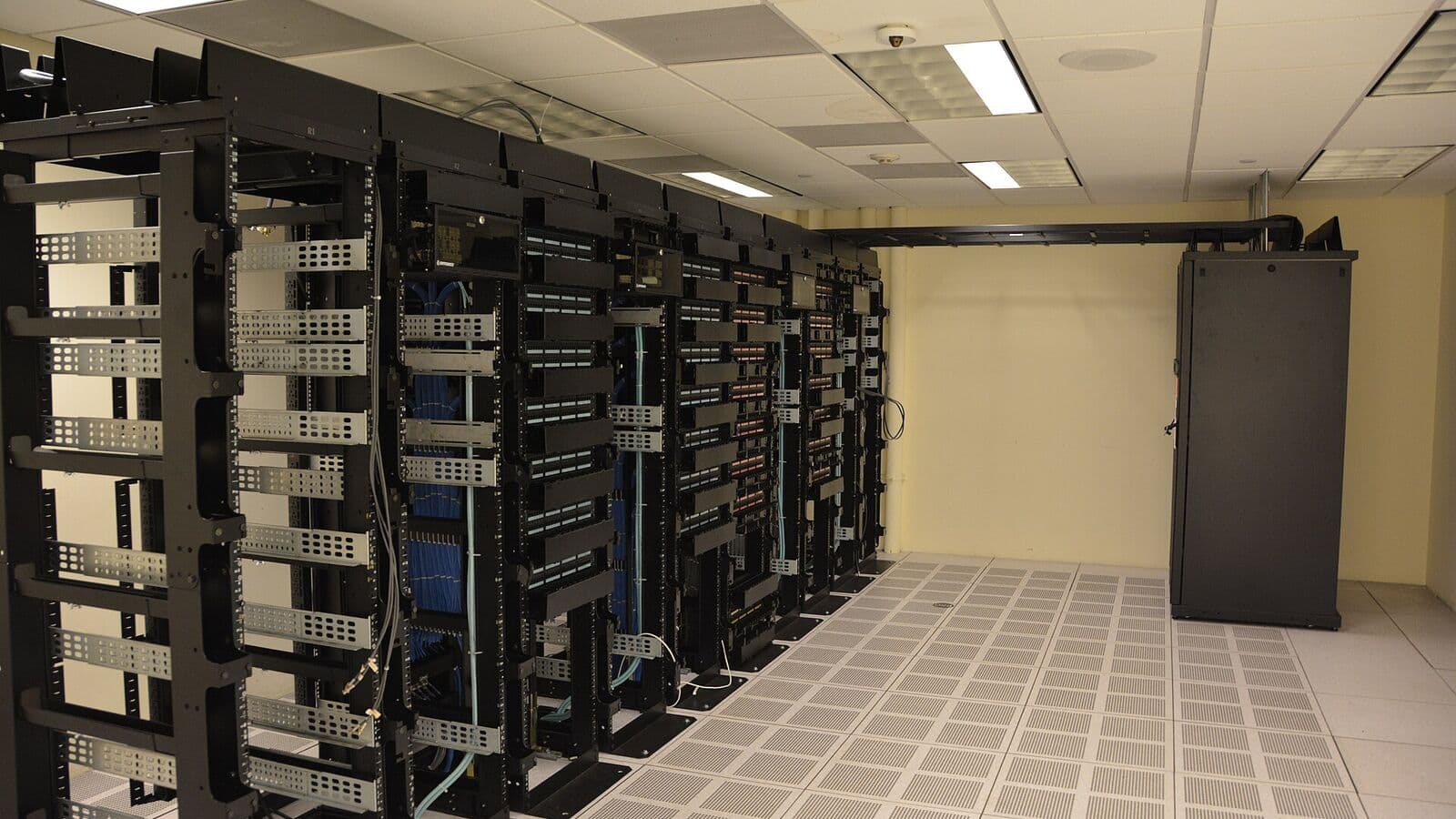
Bangladesh's enterprise buildings are full of Cat5e cabling installed during the late 2000s and early 2010s. At the time, Cat5e was the current standard, 100Mbps to 1Gbps connectivity was the enterprise norm, and IP cameras were typically standard-definition analogue-over-IP units drawing minimal PoE power. Cat5e was adequate for those requirements.
It is no longer adequate for 2026's enterprise environment. 4K IP cameras, Wi-Fi 6E access points drawing 35W of PoE, 10 Gigabit network access for high-performance workstations, and high-density PoE++ deployments are now standard requirements in Grade A commercial buildings. Cat5e fails at all of these.
This article explains when Cat5e becomes a performance bottleneck, what it costs to operate with underperforming infrastructure, the business case for upgrading, and how to approach the upgrade strategically.
When Cat5e Becomes a Bottleneck
Not every Cat5e installation needs immediate replacement. But several specific triggers indicate that Cat5e is actively limiting your operations or creating future risk.
Trigger 1: Adoption of 10 GbE Network Switching
Switch vendors are transitioning their enterprise access switch portfolios to 10 Gigabit Ethernet (10 GbE) switch-to-server and switch-to-switch uplinks, and increasingly offering 2.5 GbE or 5 GbE to the desktop for high-performance workstations, video editing suites, and network storage (NAS) access.
Cat5e supports only 1 GbE at 100 metres. It cannot support 10 GbE at 100 metres under any conditions — the frequency bandwidth (100 MHz for Cat5e) is simply insufficient for 10GBASE-T's 500 MHz requirement. If you are upgrading your network switches to hardware capable of 2.5, 5, or 10 GbE to the access port, Cat5e will prevent you from utilising any speed above 1 GbE.
The limitation is invisible to users until they notice that their "new 10 GbE switch" delivers identical speed to the old 1 GbE switch. IT teams that install expensive new switches without upgrading the horizontal cabling essentially waste the incremental investment in faster switch hardware.
Trigger 2: PoE++ Device Deployment Failures
As discussed in the PoE planning article, Cat5e's 24 AWG conductors have the same DC resistance as Cat6 24 AWG conductors — approximately 18.8 ohms per 100-metre round trip. For IEEE 802.3bt Type 3 devices (requiring 51W at the device) connected via Cat5e at 80–100 metres, voltage drop and power loss may reduce delivered power below the device's minimum operating threshold.
The symptom is intermittent device resets, failure to power on, or reduced functionality — a 4K PTZ camera that cannot drive its pan-tilt motors at full speed, a Wi-Fi 6E AP that disables one of its radios to operate within the available power budget, or an access controller that cannot power its lock relay under all conditions.
If your team is troubleshooting intermittent device issues on PoE++ devices and has eliminated software causes, Cat5e's power delivery limitations are the likely culprit.
Trigger 3: 4K Camera Upgrade Plans
Bangladesh's enterprise security market is in a generational shift from 1080p to 4K cameras. The drivers are clear: a 4K camera covers a wider area with the same installation point, provides forensic-quality images for identification and evidence, and enables analytics (licence plate recognition, facial recognition, crowd density analysis) that 1080p cameras cannot support reliably.
However, 4K cameras — particularly 4K PTZ units with infrared illuminators, built-in heaters for low-temperature operation, and high-speed pan-tilt drives — require 25–60W of PoE power. Deploying these cameras on Cat5e runs approaching 100 metres is risky. Cat6A's lower resistance and verified PoE performance characteristics make it the correct cable for 4K camera deployments.
If you are planning a CCTV upgrade to 4K cameras and your building has Cat5e cabling, bundling the cable upgrade with the camera upgrade is significantly more cost-effective than doing them separately. The camera installation mobilisation — scaffolding access, ceiling disruption, camera positions — will already be in place.
Trigger 4: Network Reliability Issues at Scale
Older Cat5e installations in Bangladesh face additional age-related challenges. Early Cat5e cable in some installations used questionable conductor materials (copper-clad aluminium, CCA, rather than solid copper), had inconsistent twist rates, or was installed with excessive pulling tension that stretched conductor geometry. These quality issues, combined with 15+ years of thermal cycling in Bangladesh's climate, can result in marginal electrical performance.
If your network generates unexplained link errors, intermittent drops, or consistently fails to negotiate at the rated link speed, the horizontal cabling is a suspect. Professional cable certification testing (with a FLUKE DSX cable analyzer) will identify whether the existing Cat5e passes or fails TIA-568 channel tests — and therefore whether it is a performance limitation.
The Cost of Underperformance: Quantifying the Status Quo
Before building the upgrade business case, quantify what underperformance is costing you today. Three cost categories are measurable.
Network Downtime Cost
For Bangladesh enterprises, network downtime has a direct productivity cost. An office of 200 employees, average salary BDT 40,000/month (BDT 200/hour), experiencing 2 hours of network-related downtime per week (common in buildings with ageing Cat5e installations) incurs:
200 employees × 2 hours × BDT 200/hour = BDT 80,000/week = BDT 41.6 lakh/year in lost productivity.
This is a conservative estimate. For a bank's branch office, call centre, or trading floor, downtime costs per hour are an order of magnitude higher.
IT Support Cost
Network troubleshooting consumes IT team time. If your Cat5e infrastructure generates 5 hours of troubleshooting and remediation per week (tracing faults, replacing patch cords, investigating link errors), and your IT staff cost BDT 150/hour fully loaded, that is BDT 39,000/year per staff member — plus the opportunity cost of that time not spent on more productive IT work.
Camera Upgrade Deferred or Compromised
If you are delaying a 4K camera upgrade because you know Cat5e cannot reliably support the PoE++ requirements, the cost of that delay is the security gap between current 1080p coverage and the improved 4K coverage. For a retail bank branch, hospital, or hotel where better camera image quality directly affects security incident resolution, this gap has quantifiable value.
The Upgrade Cost: Forklift vs. Incremental Approaches
There are two strategic approaches to a Cat5e-to-Cat6A upgrade, each with different cost profiles and business disruption levels.
Forklift Upgrade: Full Floor or Full Building Replacement
A forklift upgrade replaces all horizontal cabling on a floor or building in a single project. New Cat6A cable is pulled alongside or in place of existing Cat5e. New Cat6A patch panels are installed in IDFs. All outlets are replaced with Cat6A keystone jacks. The old Cat5e is removed from pathways to maintain cable management quality and free up conduit space.
Advantages: Complete and guaranteed performance upgrade; all ports certified to Cat6A standard; warranty registration for all installed links; single project mobilisation; clean result.
Disadvantages: Requires temporary disruption of connections during installation (typically managed by migrating sections of the floor during off-hours); higher upfront capital cost; some building access challenges in occupied buildings.
Typical cost for a 10,000 m² Bangladesh office building: BDT 40–70 lakh for materials and labour, depending on outlet density, building configuration, and retrofit complexity.
Incremental Upgrade: Zone-by-Zone or Trigger-Based
An incremental approach upgrades cabling zone by zone, triggered by specific equipment replacements or area renovations. When a floor is refurbished, that floor's cabling is upgraded. When 4K cameras are deployed in a new area, the cabling to those positions is upgraded. When new Wi-Fi 6E APs are installed in a wing, that wing's cable runs are upgraded.
Advantages: Spreads capital cost over time; integrates cabling upgrade with planned equipment refreshes; minimises disruption in any single phase.
Disadvantages: Mixed Cat5e and Cat6A infrastructure for an extended period; difficult to achieve building-wide certification and warranty; some runs upgraded twice (once for one device, then again for another); IDF patch panels become mixed-category.
For large buildings, SSAL recommends a phased forklift approach: prioritise floors where the need is most acute (security camera positions, server room connections, heavy PoE device zones) and complete one floor at a time. This captures most of the incremental upgrade advantages (cost spreading, integration with renovations) while achieving clean, certified Cat6A results on each completed floor.
ROI Framework: The Numbers for a Bangladesh Enterprise
Let's build a concrete ROI model for a typical Bangladesh scenario: a 5,000 m² office building with 200 outlets, currently on Cat5e, planning a 4K camera upgrade and Wi-Fi 6E deployment.
Upgrade Investment
| Item | Estimated Cost (BDT lakh) |
|---|---|
| Cat6A cable (200 runs × 60m average × BDT 25/m) | 3.0 |
| Cat6A keystone jacks and faceplates (200 outlets) | 0.8 |
| Cat6A patch panels (for IDF) | 0.4 |
| Installation labour (cable pulling, termination, testing) | 5.0 |
| FLUKE DSX certification testing (200 links) | 1.2 |
| Project management and documentation | 0.8 |
| Total upgrade cost | 11.2 lakh |
Avoided Costs from Upgrade
4K camera deployment without upgrade (separate project): If the cabling is not upgraded now and 4K cameras are deployed with intermittent PoE failures, the cost of troubleshooting and partial re-cabling later is estimated at BDT 3–5 lakh in labour and remediation.
Wi-Fi 6E AP performance degradation: Without Cat6A, Wi-Fi 6E APs are limited to 1 GbE uplinks rather than the 2.5 GbE their Ethernet ports can support. For a 200-person office, the network throughput bottleneck costs approximately 2–3 hours of productivity per week across the team. At BDT 200/person/hour: 200 × 2.5 hours × BDT 200 = BDT 100,000/week = BDT 52 lakh/year. (Note: not all of this is recovered by cabling alone — some depends on ISP bandwidth — but Cat6A enables the infrastructure for higher speeds.)
Network reliability improvement: Eliminating Cat5e-related link instability saves approximately 3 hours of IT troubleshooting per week. At BDT 500/hour for senior IT staff time: BDT 78,000/year.
Infrastructure warranty value: A certified Cat6A installation with manufacturer's channel warranty is a tangible real estate asset. For a building in Dhaka, certified infrastructure cabling adds approximately 1–2% to the building's technical asset valuation — for a BDT 5 crore commercial property, this is BDT 5–10 lakh.
Simple Payback
The most direct savings are the avoided 4K camera re-cabling (BDT 4 lakh) plus IT productivity savings (BDT 1 lakh/year) plus Wi-Fi performance improvement (partial credit, BDT 5 lakh/year in conservative productivity estimate).
Total first-year benefit: BDT 10 lakh. Total upgrade cost: BDT 11.2 lakh. Simple payback: approximately 13 months.
Over 5 years, the cumulative benefit (growing at 5% per year due to increasing device complexity and power requirements) is approximately BDT 55 lakh — a net present value of BDT 43 lakh on an BDT 11 lakh investment.
Timing Your Upgrade: The Best Windows of Opportunity
Three situations create natural windows for a Cat5e-to-Cat6A upgrade at minimum additional disruption cost:
Office Fit-Out or Refurbishment: When a floor or building is being refurbished — new ceilings, new partitions, new furniture — the ceiling void and wall spaces are open and accessible. Cabling work during a fit-out costs 30–40% less than in an occupied, finished building.
CCTV System Replacement: The camera mounting and ceiling access already paid for by the camera project can be shared with cable replacement. Bundling cable replacement with a 4K camera upgrade is the highest-value combination.
Lease Renewal or Tenant Change: Between tenants, a commercial landlord has full access to the building without occupancy disruption. This is the ideal time to upgrade common area and building-wide cabling infrastructure.
If none of these windows are imminent but Cat5e failures are causing operational problems today, the cost of waiting exceeds the cost of a targeted upgrade in the problem areas now.
Why Get a Certified Installer
The Cat5e-to-Cat6A upgrade only delivers its full value if the Cat6A installation is certified. An uncertified installation — using Cat6A cable but installed without proper testing — may have performance-limiting faults that prevent 10 GbE or PoE++ from working reliably. Worse, you will have no channel warranty and no documentation basis for troubleshooting future issues.
SSAL certifies every Cat6A permanent link with a FLUKE DSX cable analyzer, producing a full test report for each link. These reports become the as-built record, the warranty registration evidence, and the troubleshooting reference for the life of the installation.
Talk to Our Expert — Contact SSAL to assess your existing Cat5e installation, develop an upgrade strategy that fits your building's schedule and budget, and receive a certified Cat6A result that supports your network's next 15 years of growth.
Filed under
- Cat5e
- Cat6A
- cabling upgrade
- ROI
- network infrastructure
- 4K cameras
- PoE
- Bangladesh enterprise
SSAL Expert Team
SSAL engineering team — Bangladesh-focused technical writing on security, fire-safety, ICT, and building technology.
Related Articles
Cat6 vs. Cat6A vs. Cat7 vs. Cat8: Which Ethernet Cable Should You Choose in 2026?
Compare Cat6, Cat6A, Cat7, and Cat8 Ethernet cables on speed, bandwidth, PoE support & cost. Learn which cable is best for Bangladesh enterprise installs in 2026.
OpenFiber Optic vs. Copper Cabling: When to Use Each in Enterprise & Data Centre Networks
When to use fiber optic vs copper cabling in enterprise networks. Compare cost, bandwidth, PoE, distance & EMI for Bangladesh offices, campuses & data centres.
OpenPower over Ethernet (PoE & PoE++): How It Changes Enterprise Network Planning
Learn how PoE (802.3af/at/bt) powers IP cameras, access control & APs over Ethernet. Plan switch budgets, cable requirements & PoE++ for Bangladesh enterprise networks.
OpenNeed Help Choosing the Right Solution?
SSAL engineers respond to RFQ submissions within 1 business day with a scoping call request.
- 48-hour site survey
- Free consultation
- 24/7 priority support