
Power over Ethernet (PoE & PoE++): How It Changes Enterprise Network Planning
Author
SSAL Expert TeamPublished
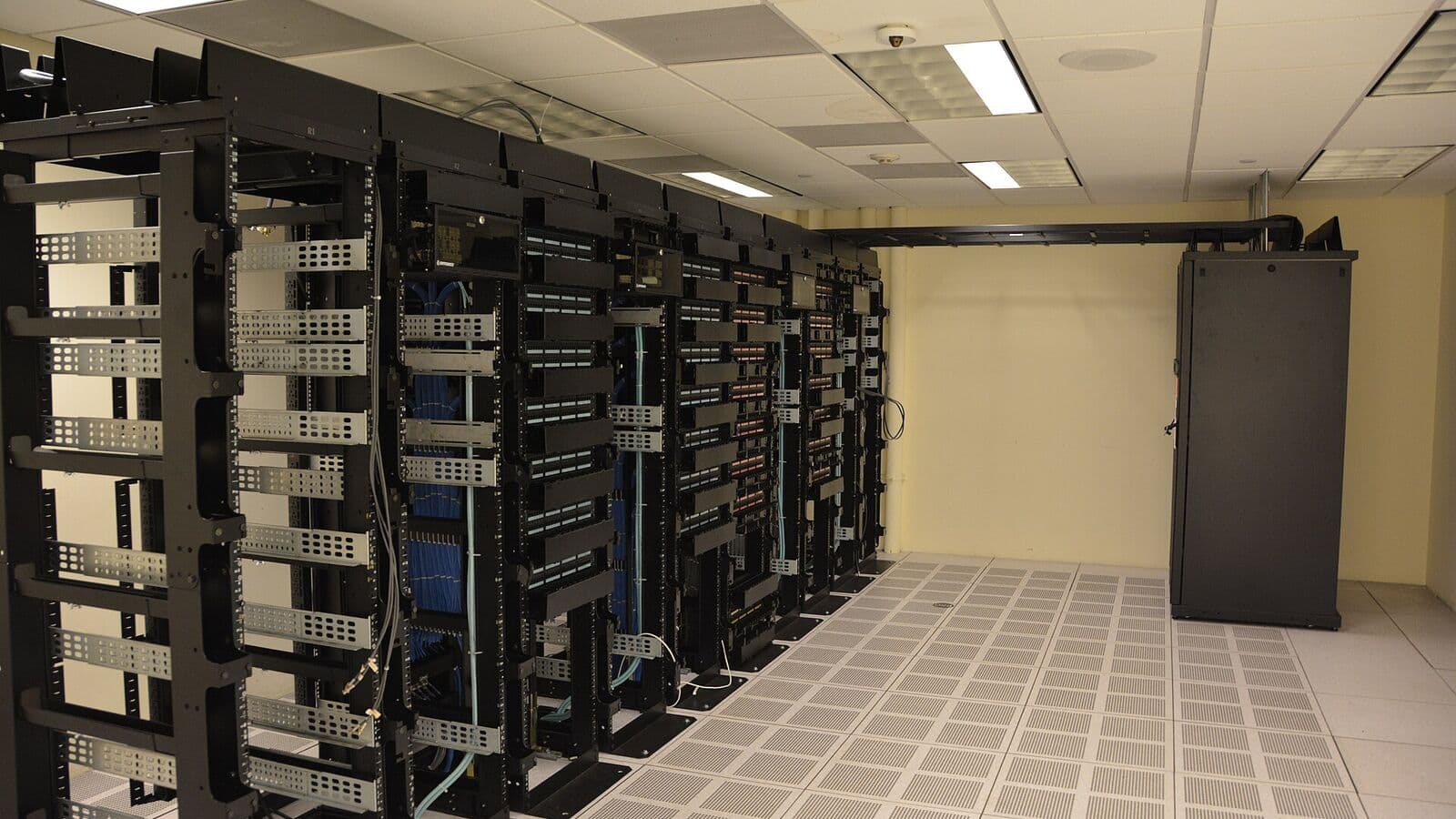
Twenty years ago, deploying an IP security camera meant running two separate systems: a data cable for network connectivity and a power cable for electricity. Installing 200 cameras in a large building required 200 data cable runs and 200 power cable runs — plus the electrical conduit, power outlets, and electricians to install them.
Power over Ethernet (PoE) changed that equation permanently. Today, a single Cat6A cable delivers both data and power to IP cameras, wireless access points, IP phones, access control readers, and dozens of other building devices. One cable, one installation, one termination point. The simplification is profound — but PoE introduces its own planning requirements that catch many network designers off guard.
This guide explains the PoE standards, the devices that benefit from PoE in Bangladesh enterprises, how to plan your switch power budget, and how cable quality affects PoE performance.
The PoE Standards: af, at, and bt
Power over Ethernet is standardised by the IEEE (Institute of Electrical and Electronics Engineers). Three main standards define how much power can be delivered:
IEEE 802.3af: Standard PoE (15.4W per port, 12.95W delivered)
The original PoE standard, published in 2003 and still widely deployed. 802.3af delivers up to 15.4 watts from the switch port (Power Sourcing Equipment, or PSE) and guarantees a minimum of 12.95 watts at the powered device (PD) — the difference is consumed as heat in the cable's resistance.
802.3af uses two of the four wire pairs in a Cat5e/Cat6/Cat6A cable. It operates at 44–57V DC.
Devices powered by 802.3af include:
- Standard VoIP desk phones
- Basic IP cameras (non-PTZ, non-4K, without built-in heaters)
- Low-power wireless access points (single-band 802.11n/ac Wave 1)
- Simple access control readers (card-only, no display)
In 2026, 802.3af is increasingly a legacy standard. Many modern devices require more power than 802.3af can deliver. Specifying an 802.3af switch for a new installation risks underperforming PoE delivery for devices that have moved to higher power classes.
IEEE 802.3at: PoE+ (30W per port, 25.5W delivered)
Published in 2009, 802.3at (often called PoE+ or PoE Plus) doubled PoE power capacity. It delivers up to 30W at the switch port and guarantees 25.5W at the device. It still uses two pairs but at higher current levels.
Devices powered by 802.3at include:
- 1080p PTZ IP cameras with basic zoom drives
- Dual-band 802.11ac Wave 2 wireless access points
- IP video phones with colour displays
- Door access controllers with display panels and relay outputs
- IP intercoms with video displays
For most Bangladesh enterprise installations completed before 2023, 802.3at was the dominant PoE standard. A large portion of currently deployed enterprise hardware supports or requires 802.3at.
IEEE 802.3bt: PoE++ (60W or 90W per port)
Published in 2018, 802.3bt (also called PoE++ or 4PPoE — 4-Pair PoE) is the current state of the art. It defines two power types:
Type 3 (60W at port, 51W at device): Uses all four pairs in the cable, with power delivered simultaneously on all pairs. Supports devices requiring up to 51W of delivered power.
Type 4 (90W at port, 71.3W at device): The maximum defined by 802.3bt. All four pairs carry power at higher current levels, delivering up to 71.3W at the device.
Devices powered by 802.3bt include:
- 4K PTZ IP cameras with high-speed pan-tilt motors and built-in deicers
- Tri-band Wi-Fi 6/6E wireless access points with multiple high-power radios
- Building IoT hubs (combining multiple building sensor inputs)
- Small remote switches or media converters powered from a central PoE switch
- LED lighting fixtures designed for PoE power
For new Bangladesh enterprise installations in 2026, specifying PoE++ capable switches (802.3bt Type 3 minimum, Type 4 where the device mix includes high-power APs and 4K cameras) is the forward-looking choice.
Bangladesh Enterprise Devices and Their PoE Requirements
Understanding which devices require which PoE standard is essential for switch specification and power budget planning. Here is a practical reference for the devices most commonly deployed in Bangladesh enterprises:
| Device Type | Brand Examples | Typical PoE Power Class | IEEE Standard |
|---|---|---|---|
| Standard IP camera (1080p fixed) | Hikvision, Dahua | Class 2–3, 7–15W | 802.3af |
| 4K fixed IP camera | Hikvision DS-2CD2T47G2, Dahua IPC-HDW3849H | Class 4, 15–25W | 802.3at |
| PTZ camera (1080p) | Hikvision DS-2DE4A425IWG, Dahua SD49425 | Class 4, 25W | 802.3at |
| PTZ camera (4K) with heater | Hikvision DS-2DE7A432IW, Dahua SD60432 | Class 6, 45–60W | 802.3bt Type 3 |
| VoIP phone (standard) | Yealink T33G, Fanvil X3SG | Class 1, 3.5W | 802.3af |
| VoIP phone (executive/video) | Yealink T58A, Polycom VVX 600 | Class 3, 10–15W | 802.3at |
| Wi-Fi AP (Wi-Fi 5) | Ubiquiti UniFi, Cisco Aironet 2800 | Class 4, 15–20W | 802.3at |
| Wi-Fi AP (Wi-Fi 6E tri-band) | Cisco Catalyst 9136, Aruba AP-635 | Class 6, 25–35W | 802.3bt Type 3 |
| Access control reader (card + display) | ZKTeco, HID | Class 2–3, 6–12W | 802.3af/at |
| Door access controller with Wiegand panel | ZKTeco C2 Pro, HID Edge | Class 3, 10–15W | 802.3at |
| IP intercom station | Fanvil i32V, Hikvision DS-KV8102 | Class 3, 12W | 802.3at |
Switch Power Budget Planning
The most common PoE planning mistake is overlooking switch power budget. Many network switches advertise "PoE on all 48 ports" but have a total PoE power budget of only 370W — enough for 24 devices drawing 15W each, not 48 devices drawing 25W each.
Calculating Your PoE Power Requirement
Follow these steps:
Step 1: List every PoE-powered device you will connect to each switch, including device type and maximum PoE power draw.
Step 2: Sum the total maximum power for all devices on that switch. This is your peak power requirement.
Step 3: Apply a utilisation factor. Not all devices will draw maximum power simultaneously. For mixed device types (cameras, phones, APs), a 70–80% simultaneity factor is reasonable. For security camera-only networks, use 90% — cameras run continuously.
Step 4: Add 20% headroom for future device additions.
Example calculation: A 24-port access switch serving one floor of a Bangladesh office building:
- 8 × Wi-Fi 6 APs at 25W = 200W
- 20 × VoIP phones at 10W = 200W
- 12 × IP cameras at 15W = 180W
- 4 × access control readers at 10W = 40W
- Total maximum: 620W
- At 80% simultaneity: 496W
- Plus 20% headroom: 595W
- Required switch PoE budget: 600W minimum
A switch with a 370W PoE budget would be grossly undersized for this floor. You need a switch with at least 600W of PoE budget — typically a higher-specification model in the 720W or 740W range.
Power Budget Pitfalls
PoE Budget vs. Per-Port Maximum: A switch may support 802.3bt (90W per port) but have a total PoE budget of 720W. This means you cannot simultaneously power 8 full-power PoE++ devices on that switch — the budget is shared. Always check both the per-port maximum and the total switch budget.
PoE Allocation vs. PoE Delivered: Switches allocate power based on the device's LLDP (Link Layer Discovery Protocol) or CDP (Cisco Discovery Protocol) power announcement, not actual measured consumption. If a device announces it needs 30W but only uses 15W, the switch still reserves 30W in its budget for that port. Over-announcement by devices can cause premature budget exhaustion.
Temperature derating: Switch PoE power budgets are specified at 25°C ambient. In Bangladesh's warm climate — where even well-cooled network rooms may reach 28–30°C — some switch models derate their PoE output at higher temperatures. Check the manufacturer's thermal derating specifications.
The Impact of PoE on Cable Specification
PoE performance depends heavily on cable quality. The electrical resistance of the cable conductors determines how much power is lost as heat between the switch and the device, and how much voltage the device actually receives.
Why Cat6A Matters for PoE++
Cat6A cable uses 23 AWG conductors — slightly thicker than Cat6's typical 24 AWG. The larger conductor has approximately 15% lower DC resistance. For PoE++ devices drawing 60–90W at the switch port, this difference is meaningful:
A 90W PoE++ device connected via 100-metre Cat6 (24 AWG) may receive as little as 68–72W at the device — after 18–22W of power loss in the cable resistance and heat dissipation. The same device on Cat6A (23 AWG) receives 74–78W — enough for the device to operate correctly under all conditions.
More critically, the 802.3bt standard requires that cables used for Type 3 and Type 4 PoE meet specific DC resistance requirements. TIA TSB-184-A (the PoE guidelines addendum to TIA-568) recommends Cat6A as the minimum cable category for 802.3bt PoE installations, particularly for longer runs.
Cable Heating Under PoE Load
When cables in a bundle carry PoE current, they generate heat through resistive losses. TIA-568 and TIA TSB-184-A specify derating rules for cables in bundles: a bundle of 24 Cat6A cables, each carrying a PoE++ load, may have its rated current capacity derated by up to 15% due to mutual heating. This means that cable pathways carrying large numbers of PoE++ cables need adequate spacing and air circulation to prevent thermal buildup.
In Bangladesh's warm climate — where ceiling voids can reach 38–42°C during summer without active ventilation — cable thermal performance under PoE load is a real concern. Avoid bundling large numbers of PoE++ cables tightly in hot ceiling voids. Where possible, use cable trays with air gap between cables rather than tight conduit packing.
Bangladesh Context: CCTV and Access Control Systems on PoE
PoE has transformed the economics of security system installation in Bangladesh. A traditional analogue CCTV system required coaxial cable for video and separate power cable (or a power-over-coax balun) for every camera — a dual-cabling system with associated cost and complexity.
IP camera systems on Cat6A PoE use a single cable for both purposes. For a 100-camera system in a Dhaka commercial building, eliminating 100 separate power cable runs — each needing conduit, power outlets, and electrician installation — represents a substantial cost saving that partially offsets the higher cost of IP cameras versus analogue cameras.
Access control systems on PoE are similarly simplified. A ZKTeco or HID access control reader at a door typically needs power (12V or 24V DC), data connectivity (Wiegand to a controller panel, or Ethernet to an IP-based controller), and door lock power (12V or 24V DC to the electromagnetic or electric strike lock). PoE-based IP access control systems consolidate the reader and data communication onto a single Cat6A cable, with the door lock powered separately from a local power supply or from the controller's own power output.
Specifying PoE Infrastructure: Checklist for Bangladesh Enterprise Projects
When specifying PoE infrastructure for a Bangladesh enterprise installation, work through this checklist:
- Inventory all PoE-powered devices and their maximum PoE power classes
- Calculate per-switch PoE budget requirements with 20% headroom
- Specify Cat6A as the horizontal cabling standard (mandatory for PoE++ Type 3/4 applications)
- Check cable run lengths — any run approaching 90 metres with PoE++ should use Cat6A minimum
- Specify 802.3bt Type 3 or Type 4 switches for floors with high-power devices
- Plan switch power supply redundancy for critical floors (dual PSUs in the switch)
- Verify data centre or network room cooling adequacy for increased equipment heat loads from PoE-capable switches
- Confirm that structured cabling is installed per TIA TSB-184-A guidelines for PoE bundles
SSAL designs and deploys PoE networks as an integrated part of our security surveillance, access control, and enterprise network infrastructure projects. Our engineers calculate power budgets, specify appropriate switch models, and certify cabling installations to ensure reliable PoE delivery across your entire network.
Talk to Our Expert — Contact SSAL to discuss your PoE planning requirements for your next enterprise network, CCTV, or access control project in Bangladesh.
Filed under
- PoE
- PoE++
- 802.3bt
- enterprise network
- IP cameras
- access control
- network planning
- Bangladesh
SSAL Expert Team
SSAL engineering team — Bangladesh-focused technical writing on security, fire-safety, ICT, and building technology.
Related Articles
The Business Case for Upgrading from Cat5e to Cat6A: ROI Analysis for Bangladesh Enterprises
Business case for upgrading Cat5e to Cat6A cabling: bottleneck triggers, ROI analysis, 4K CCTV PoE requirements & upgrade strategies for Bangladesh enterprises.
OpenCat6 vs. Cat6A vs. Cat7 vs. Cat8: Which Ethernet Cable Should You Choose in 2026?
Compare Cat6, Cat6A, Cat7, and Cat8 Ethernet cables on speed, bandwidth, PoE support & cost. Learn which cable is best for Bangladesh enterprise installs in 2026.
OpenFiber Optic vs. Copper Cabling: When to Use Each in Enterprise & Data Centre Networks
When to use fiber optic vs copper cabling in enterprise networks. Compare cost, bandwidth, PoE, distance & EMI for Bangladesh offices, campuses & data centres.
OpenNeed Help Choosing the Right Solution?
SSAL engineers respond to RFQ submissions within 1 business day with a scoping call request.
- 48-hour site survey
- Free consultation
- 24/7 priority support