
Fiber Optic vs. Copper Cabling: When to Use Each in Enterprise & Data Centre Networks
Author
SSAL Expert TeamPublished
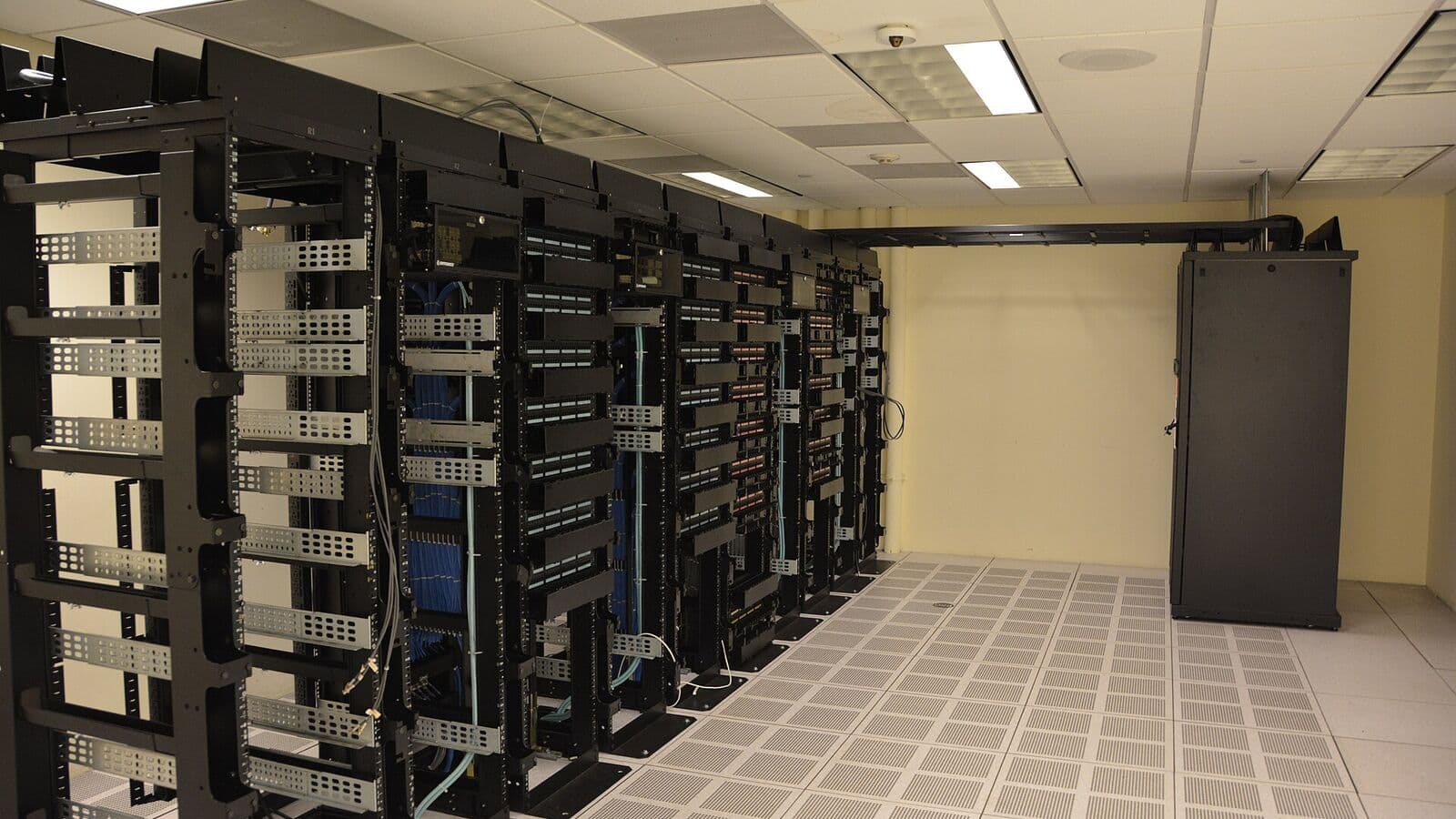
Bangladesh's enterprise networks are growing more complex. Multi-building university campuses in Dhaka and Chittagong, hospital groups with separate diagnostic and ward buildings, garment factories with offices separated from production buildings, and corporate headquarters with remote data centres all share the same fundamental challenge: connecting buildings and systems that are too far apart for standard copper Ethernet, while keeping the network reliable, fast, and cost-effective.
The choice between fiber optic cable and copper cable is one of the most consequential decisions in enterprise network design. Choose copper where you should use fiber, and you hit distance limits and bandwidth ceilings. Choose fiber where copper would suffice, and you overspend on infrastructure and transceivers. This guide explains the strengths and limitations of each, how they work together in a well-designed enterprise topology, and when each is the right tool for Bangladesh's building environments.
Copper Cabling: The Close-Range Workhorse
Copper balanced twisted-pair cable — Cat5e, Cat6, Cat6A — is the standard medium for horizontal cabling: the connections from user devices at the work area to the floor-level network switch in the wiring closet.
Copper Strengths
Power over Ethernet (PoE): This is copper's decisive advantage in enterprise networks. Copper cables carry not only data signals but also electrical power to connected devices — IP cameras, wireless access points, VoIP phones, access control readers, and building IoT sensors. Fiber optic cables cannot carry PoE (though specialist hybrid fiber/copper solutions exist for specific applications). In Bangladesh's enterprise security and IoT environment, where PoE-powered devices are ubiquitous, copper is the only practical horizontal medium.
Lower cost per connection: Cat6A copper cable, patch panels, and RJ-45 connectors are significantly cheaper per connection point than fiber-optic equivalents. For a 500-outlet office floor, the cost differential between copper and fiber horizontal cabling is substantial — typically 40–70% higher per outlet for fiber.
Simpler termination: Copper termination (punching down wire pairs to an RJ-45 keystone jack or patch panel) requires lower skill and simpler tools than fiber termination (which requires cleaving, splicing or connectorisation, and optical loss testing). This makes copper faster and cheaper to install and repair.
Universal device compatibility: Every Ethernet device — computers, printers, cameras, phones, switches — has an RJ-45 copper port. No transceivers or media converters are needed for copper-to-copper connections.
Copper Limitations
100-metre maximum channel length: TIA-568 sets the maximum horizontal channel at 100 metres (90m permanent link plus 10m patch cords). This limit is a fundamental physical characteristic of twisted-pair copper at Ethernet frequencies — signals attenuate beyond this distance to the point where reliable communication is not possible. Any connection point more than 100 metres from the nearest switch must be served via an intermediate active device or by fiber.
Susceptibility to electromagnetic interference (EMI): Copper cables can pick up interference from nearby power cables, motors, variable frequency drives, and other electromagnetic sources. In industrial environments — Bangladeshi RMG factories, machine rooms, and hospital radiology departments — EMI can cause data errors and network drops on copper runs that are physically close to heavy electrical equipment. Shielded copper (F/UTP or S/FTP Cat6A) mitigates this but does not eliminate it.
Limited bandwidth ceiling: Cat6A supports 10 GbE at 100 metres and Cat8 supports 25/40 GbE at 30 metres. For data centre interconnects requiring 100 GbE or higher, copper cannot keep pace with optical fiber, which supports 100, 400, and 800 GbE over multimode and single-mode fiber.
Fiber Optic Cabling: Long-Distance, High-Bandwidth, EMI-Immune
Fiber optic cable transmits data as pulses of light through a thin glass or plastic core, rather than as electrical signals through copper conductors. This fundamental difference produces a set of advantages and disadvantages that are essentially the inverse of copper.
Fiber Optic Strengths
Very long distances: Single-mode fiber (OS2) supports data transmission over distances of kilometres — 10 km at 10 GbE, 40 km at 1 GbE — without signal degradation. Multimode fiber (OM3/OM4) supports 300–550 metres at 10 GbE with low-cost laser transceivers. These distances dwarf copper's 100-metre limit.
Very high bandwidth: Modern fiber supports data rates of 100 GbE, 400 GbE, and beyond over a single fiber pair. Even the current enterprise standard of 10 GbE leaves enormous headroom for future upgrades simply by replacing the transceivers — the fiber infrastructure itself does not need to change.
Complete EMI immunity: Since fiber transmits light rather than electrical signals, it is completely immune to electromagnetic interference from power cables, motors, lightning, and radio frequency sources. This makes fiber the correct choice in electrically noisy environments — factory floors, hospital MRI suites, substations, and any installation where copper cables would need to be routed near high-voltage equipment.
Electrical isolation: Because there is no electrical connection between the transmitting and receiving end of a fiber link, fiber provides complete electrical isolation — there is no ground loop problem and no risk of electrical surges propagating through the network. In Bangladesh, where lightning strikes and power quality issues are frequent, fiber backbone links between buildings offer protection that copper cannot provide.
Longer service life: Fiber cables have essentially unlimited bandwidth headroom — you upgrade data rates by changing the active transceivers, not the cable. A fiber backbone installed today can support 10 GbE now, 100 GbE in five years, and potentially 400 GbE in ten years, without touching the physical cable. This makes fiber the most future-proof long-term investment for backbone infrastructure.
Fiber Optic Limitations
No PoE capability: Fiber cables cannot carry electrical power. Any device at a fiber endpoint that needs PoE must have a local power source or be connected via a short copper run from a local PoE switch.
Higher transceiver cost: Fiber connections require optical transceivers (SFP, SFP+, QSFP modules) at both ends of the link. SFP+ 10 GbE multimode transceivers cost approximately USD 30–80 per module; single-mode transceivers cost USD 60–200 per module. For a building with 50 IDF-to-MDF fiber links, transceiver costs add significantly to the total infrastructure investment.
More skilled installation: Fiber termination requires cleaving, polishing or fusion splicing, and optical loss testing with an optical power meter and OTDR (Optical Time-Domain Reflectometer). Poorly terminated fiber connectors introduce insertion loss that can degrade link performance. Quality fiber installation requires trained and equipped technicians.
Fragility: While modern ruggedised fiber cables are quite durable, the glass core of a fiber cable is more fragile than copper wire under rough handling. Excessively tight bends (below the minimum bend radius specified by the cable manufacturer) can crack the glass core or introduce bend-induced losses.
Multimode vs. Single-Mode Fiber: The Key Distinction
Not all fiber is the same. The two most important fiber types for enterprise networks are multimode and single-mode.
Multimode Fiber: Shorter Distances, Lower-Cost Transceivers
Multimode fiber (MMF) has a larger core diameter (50 µm for OM3/OM4/OM5, versus 9 µm for single-mode) that allows multiple light modes to propagate simultaneously. This characteristic allows multimode fiber to be used with lower-cost VCSEL (Vertical Cavity Surface-Emitting Laser) transceivers — the SFP+ modules that drive 10 GbE links.
OM3 (Aqua): Supports 10 GbE to 300 metres. Appropriate for building backbone in most mid-rise commercial buildings. OM4 (Violet/Aqua): Supports 10 GbE to 550 metres and 40/100 GbE to 100–150 metres. The current recommended multimode grade for new installations. OM5 (Lime Green): Supports wideband multimode for 40/100 GbE over 150 metres. Emerging standard for data centre short-reach applications.
For most Bangladesh commercial building backbone applications — inter-floor connections within a building, short campus links between adjacent buildings — OM4 multimode with VCSEL transceivers provides an excellent price-performance balance.
Single-Mode Fiber: Long Distances, Maximum Future-Proofing
Single-mode fiber (SMF) has a much smaller 9 µm core that supports only one light mode, eliminating modal dispersion and allowing extremely long transmission distances. OS2 single-mode fiber supports 10 GbE at up to 10 km and 100 GbE at up to 40 km.
Single-mode transceivers are more expensive than multimode equivalents because they require more precise laser sources (DFB lasers rather than VCSELs). However, for links between buildings separated by more than 300–550 metres, single-mode is the only fiber option that works without active repeaters.
In Bangladesh's multi-building campus contexts — university campuses, hospital complexes, government compound networks, and large industrial parks — single-mode fiber for inter-building backbone is the technically correct choice and the most future-proof investment.
The Enterprise Topology: Copper Horizontal, Fiber Backbone
In a well-designed enterprise network, copper and fiber are not competing choices — they are complementary technologies used in their respective optimal positions.
The standard enterprise topology:
- Work area to IDF (horizontal cabling): Copper (Cat6A) — up to 100m, supports PoE, connects all user devices
- IDF to MDF within a building (vertical backbone): Multimode fiber (OM4) — distances of 50–200m, 10–100 GbE capacity, no EMI concerns
- MDF to MDF between buildings (campus backbone): Single-mode fiber (OS2) — distances of 100m to several kilometres, maximum future-proof bandwidth, EMI-immune and electrically isolated
This topology serves every enterprise need: PoE for devices at the work area, high-speed backbone between floors, and resilient long-distance inter-building connectivity.
Bangladesh Multi-Building Campus Context
Bangladesh has many organisations with physically distributed facilities that require high-performance connectivity between buildings. Consider these common scenarios:
University campus: Dhaka's large universities — BUET, DU, BRAC, NSU — have administrative buildings, faculty buildings, libraries, and student facilities spread across campuses of 5–50 acres. Single-mode fiber backbone connects buildings via underground conduit, providing Gigabit or 10-Gigabit Ethernet connections between buildings.
Hospital complex: A major Dhaka hospital may have separate buildings for outpatients, inpatients, diagnostics, pharmacy, and administration — sometimes separated by 100–500 metres. Fiber backbone carries PACS (Picture Archiving and Communication System) medical imaging data at high speed between the radiology building and clinical workstations throughout the complex.
RMG factory campus: Large garment production facilities in Gazipur or Narayanganj often have multiple production buildings, a warehouse, and an administrative office building. Single-mode fiber backbone provides reliable connectivity between buildings in an environment where EMI from production machinery would degrade copper links.
Corporate headquarters with data centre: A Dhaka corporate headquarters building may have its primary data centre in a separate facility — either on campus or at a Tier III colocation facility. Single-mode fiber in underground conduit provides the primary network connection between the HQ and the data centre, with redundant paths for resilience.
Making the Right Choice for Your Project
The decision between copper and fiber — and between multimode and single-mode within fiber — follows directly from your distance, bandwidth, PoE, EMI, and budget requirements.
For horizontal cabling within buildings: always copper (Cat6A). For backbone within buildings up to 300m: multimode fiber (OM4). For backbone within buildings or campus links up to 550m at 10 GbE: multimode fiber (OM4). For campus links beyond 550m, or any application requiring future-proof ultra-high-bandwidth: single-mode fiber (OS2). For electrically noisy environments at any distance: fiber (either type) over copper.
SSAL designs and installs structured cabling systems using all of these media types, with certified testing for both copper (TIA-568 channel certification via FLUKE DSX) and fiber (optical loss testing with OTDR and optical power meter). Our fiber splicers are trained and equipped for both fusion splicing and mechanical connector assembly.
Get Free Consultation — Talk to SSAL's network infrastructure team about the right cabling solution for your building or campus. We provide detailed design, certified installation, and comprehensive as-built documentation.
Filed under
- fiber optic
- copper cabling
- multimode fiber
- single-mode fiber
- enterprise network
- Bangladesh
- data centre
- structured cabling
SSAL Expert Team
SSAL engineering team — Bangladesh-focused technical writing on security, fire-safety, ICT, and building technology.
Related Articles
The Business Case for Upgrading from Cat5e to Cat6A: ROI Analysis for Bangladesh Enterprises
Business case for upgrading Cat5e to Cat6A cabling: bottleneck triggers, ROI analysis, 4K CCTV PoE requirements & upgrade strategies for Bangladesh enterprises.
OpenCat6 vs. Cat6A vs. Cat7 vs. Cat8: Which Ethernet Cable Should You Choose in 2026?
Compare Cat6, Cat6A, Cat7, and Cat8 Ethernet cables on speed, bandwidth, PoE support & cost. Learn which cable is best for Bangladesh enterprise installs in 2026.
OpenPower over Ethernet (PoE & PoE++): How It Changes Enterprise Network Planning
Learn how PoE (802.3af/at/bt) powers IP cameras, access control & APs over Ethernet. Plan switch budgets, cable requirements & PoE++ for Bangladesh enterprise networks.
OpenNeed Help Choosing the Right Solution?
SSAL engineers respond to RFQ submissions within 1 business day with a scoping call request.
- 48-hour site survey
- Free consultation
- 24/7 priority support