
Understanding TIA-942 Data Centre Tiers: What Tier I, II, III & IV Mean for Your Business
Author
SSAL Expert TeamPublished
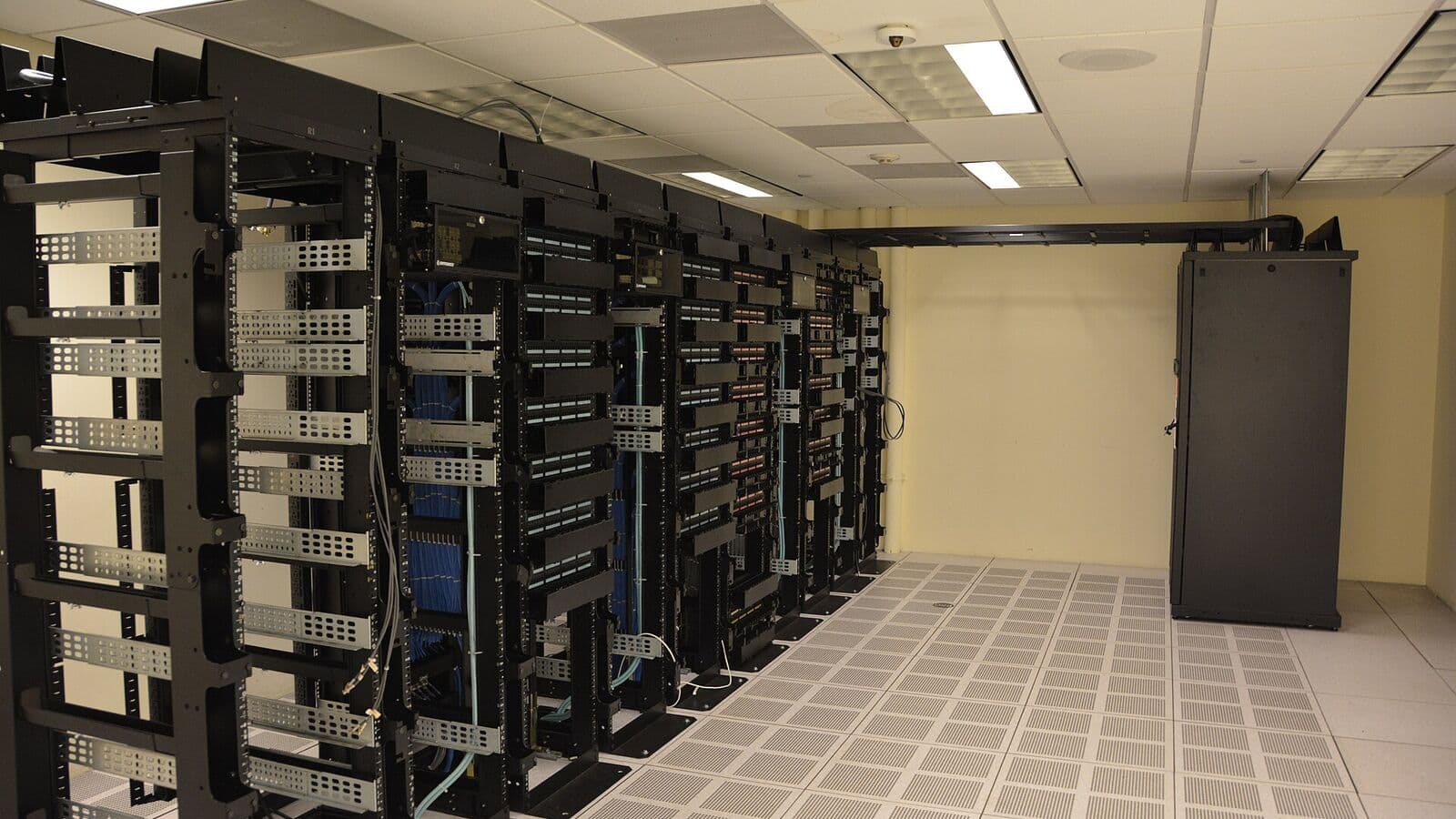
When you are designing or selecting a data centre facility in Bangladesh — whether an on-premise data room for your organisation's servers, a co-location facility in Dhaka, or a modular data centre deployment — the term "Tier" will appear repeatedly. Tier I. Tier III. Tier III Certified. These labels carry specific technical meanings, and understanding them correctly is essential to making a sound infrastructure decision.
The TIA-942 standard — published by the Telecommunications Industry Association — defines four data centre infrastructure tiers based on availability, redundancy, and maintenance capability. Each tier represents a step up in resilience, uptime, and cost. This guide explains what each tier actually means, what uptime level it delivers, what it costs relative to lower tiers, and which tier Bangladesh's regulatory environment requires.
Why Tiers Matter: The Business Case for Uptime
Every hour your data centre is unavailable costs your organisation money. For a Bangladesh bank's core banking system, an outage means customers cannot access accounts, ATMs stop dispensing cash, and transaction processing halts. For an e-commerce platform, downtime during peak shopping periods (Eid, Puja) translates directly into lost revenue and customer churn. For a hospital, unavailability of patient record systems impairs clinical decision-making.
The annual downtime implicit in each tier level makes the stakes concrete:
| Tier | Annual Uptime | Annual Downtime |
|---|---|---|
| Tier I | 99.671% | 28.8 hours |
| Tier II | 99.741% | 22.0 hours |
| Tier III | 99.982% | 1.6 hours |
| Tier IV | 99.995% | 0.4 hours |
The jump from Tier II to Tier III — from 22 hours of annual downtime to 1.6 hours — is the most significant leap in the tier framework. This gap explains why Tier III is specified for most mission-critical applications and why Bangladesh Bank's regulatory requirements mandate it for primary financial institution data centres.
Tier I: Basic Data Centre
Uptime: 99.671% (28.8 hours annual downtime) Redundancy: N (no redundant components — single path for power and cooling) Maintenance: Requires scheduled downtime for maintenance Typical applications: Small business server rooms, basic IT rooms
A Tier I data centre has a single path for power distribution and a single path for cooling distribution. There are no redundant components: one utility feed, one UPS, one cooling unit, one distribution path. Any component failure or maintenance activity on that single path causes downtime.
Tier I data centres also require planned downtime for preventive maintenance. Replacing a UPS battery, servicing the precision air conditioning unit, or maintaining the power distribution path requires shutting down the equipment it serves. For a small business accepting occasional planned downtime windows, Tier I may be acceptable.
For any organisation in Bangladesh with critical applications — banking, healthcare IT, government services, e-commerce — Tier I is wholly inadequate. 28.8 hours of annual downtime, distributed unpredictably across the year, is operationally unacceptable.
Tier II: Redundant Component Capacity
Uptime: 99.741% (22.0 hours annual downtime) Redundancy: N+1 for critical components (redundant UPS modules, additional cooling capacity) Maintenance: Some maintenance possible without downtime, but distribution path is still single Typical applications: Regional branch data rooms, secondary sites
A Tier II data centre adds redundant capacity to critical components — an N+1 configuration meaning that if one component fails, the remaining components can carry the full load. The UPS has redundant modules so that a single module failure does not interrupt power. The cooling system has an additional unit so that one unit failure can be covered.
However, Tier II still has a single distribution path from these redundant components to the equipment. If the distribution path itself requires maintenance — a faulty power distribution unit (PDU), a cooling distribution pipe that develops a leak — the equipment it feeds must be shut down for repairs. Tier II reduces the frequency of outages from component failures but does not eliminate downtime for distribution path maintenance.
Tier II is appropriate for secondary data rooms, branch server rooms, and non-critical systems where a small amount of planned and unplanned downtime is acceptable. Bangladesh's mid-sized enterprises, regional offices of banks, and secondary systems of larger organisations commonly operate at Tier II levels.
Tier III: Concurrently Maintainable
Uptime: 99.982% (1.6 hours annual downtime) Redundancy: N+1 redundant components AND dual distribution paths (active + standby) Maintenance: All maintenance can be performed without taking equipment offline Typical applications: Primary data centres for banks, large enterprises, government systems
Tier III is the commercially dominant specification for serious data centre deployments. Its defining characteristic is concurrent maintainability: every component and every distribution path can be maintained, repaired, or replaced without interrupting the IT equipment load. This is achieved through dual distribution paths — two independent power paths from UPS to equipment, two independent cooling distribution paths — with only one path active at a time.
When maintenance is required on the active path, the load transfers to the standby path while work is completed. Neither the maintenance work nor the path transfer affects IT equipment operation. Because no planned maintenance requires IT downtime, the only source of outage in a Tier III facility is unplanned failure of multiple independent components simultaneously — a rare event that produces the 1.6 hours per year of expected downtime.
Tier III Infrastructure Elements
Achieving Tier III requires:
Power: Two independent utility feeds (or one utility feed plus on-site generator as primary with UPS bridging), dual UPS systems operating in a 2N or N+1 configuration, dual power distribution paths to each rack (each rack has two PDUs, each on a separate power path), and equipment with redundant power supplies connected to both PDUs.
Cooling: Multiple cooling units (N+1 or 2N), dual chilled water or refrigerant distribution loops, and cooling delivery designed so that any single distribution path can be isolated for maintenance while the alternate path maintains full cooling capacity.
Connectivity: Redundant network connections — primary ISP connection plus secondary ISP on diverse physical paths, redundant core network switches, and redundant uplinks from distribution switches to core.
Generator: On-site diesel generator that starts automatically on utility power failure, with sufficient capacity to carry the full IT load plus mechanical equipment (precision cooling), and sufficient fuel storage for 24–72 hours of autonomous operation.
Tier IV: Fault Tolerant
Uptime: 99.995% (0.4 hours annual downtime) Redundancy: 2N or 2(N+1) redundant components, dual active distribution paths Maintenance: All components and paths concurrently maintainable; any single failure has zero impact Typical applications: National infrastructure, financial market systems, hyperscaler facilities
Tier IV takes concurrent maintainability to the next level: every system operates in active-active redundancy. Both power paths are active simultaneously, carrying half the load each. Both cooling loops are active. Any single component failure — a UPS module, a cooling unit, a PDU — causes automatic redistribution of load to the remaining equipment with zero interruption. No manual switching is required.
Tier IV fault tolerance is extraordinarily expensive — typically 30–40% more in capital cost than Tier III — and is justified only for genuinely national-critical infrastructure. The Bangladesh Bank itself, the BGMEA digital systems, the national payment switch (operated by Bangladesh Bank through its subsidiary), and major stock exchange systems might warrant Tier IV design. Most private sector organisations in Bangladesh operate Tier III primary data centres and Tier II or Tier III secondary disaster recovery sites.
Bangladesh Bank ICT Security Guideline v4.0: The Regulatory Requirement
Bangladesh Bank's ICT Security Guideline Version 4.0 — mandatory for all banks, financial institutions, and mobile financial service (MFS) providers licensed by Bangladesh Bank — specifies data centre infrastructure requirements that effectively mandate Tier III for primary data centres.
Key requirements from the Bangladesh Bank guideline:
Redundant power: Scheduled banks' primary data centres must have redundant power infrastructure including uninterruptible power supply with battery backup sufficient to bridge to generator start-up, and on-site diesel generator with at least 72 hours fuel supply.
Cooling redundancy: Precision air conditioning with N+1 redundancy, maintaining temperature and humidity within equipment operating ranges.
Connectivity redundancy: Primary Internet and WAN connectivity with at least one independent redundant path via a different ISP and different physical route.
Disaster Recovery Site: A geographically separate DR site with the ability to restore full operations within defined Recovery Time Objectives (RTOs). The DR site must itself meet a minimum infrastructure standard — typically Tier II or Tier III.
Environmental monitoring: Continuous monitoring of temperature, humidity, water leakage, power quality, and physical access, with real-time alerting.
For smaller financial institutions — NBFIs, MFIs — Bangladesh Bank's guidelines apply at a proportional level, but the direction is clear: financial institution IT infrastructure in Bangladesh is being held to progressively higher infrastructure standards, and Tier III primary data centre capability is the target.
Cost vs. Uptime: The Tradeoff in Bangladesh Context
The capital cost of data centre infrastructure escalates significantly with each tier level:
| Tier | Relative Capital Cost (Index) | Additional Annual Downtime vs. Tier III |
|---|---|---|
| Tier I | 1.0x baseline | +27.2 hours |
| Tier II | 1.3–1.5x | +20.4 hours |
| Tier III | 2.0–2.5x | Baseline |
| Tier IV | 2.8–3.5x | -1.2 hours |
The move from Tier I to Tier III roughly doubles the infrastructure cost. The move from Tier III to Tier IV adds another 30–40%. Whether the extra availability justifies the extra cost depends entirely on the value of an hour of downtime to your organisation.
For a Bangladesh bank with 2 million retail customers, an hour of core banking downtime might cost BDT 5–10 crore in lost transaction value, regulatory penalties, and reputational damage. In that context, the incremental cost of Tier III over Tier II — perhaps BDT 3–5 crore per year in additional capital depreciation — is clearly justified.
For a mid-sized manufacturing company whose IT systems are important but not revenue-critical by the minute, Tier II may be an entirely rational choice for the primary server room.
SSAL Modular Data Centre: Tier III Solutions
One of the barriers to Tier III deployment in Bangladesh has been the complexity and cost of constructing a purpose-built Tier III facility. SSAL's modular data centre solutions address this barrier.
A modular data centre (MDC) is a pre-engineered, factory-built container or enclosure that integrates all the infrastructure elements of a Tier III data centre — power distribution, precision cooling, fire suppression, physical security, monitoring systems, and rack infrastructure — into a self-contained unit that can be deployed in a fraction of the time and at a lower cost than traditional construction.
Modular data centres can be:
- Micro data centres (≤10 racks): Self-contained units for branch offices, edge computing locations, or small primary data centres
- Row-based modular systems: Factory-built hot-aisle containment rows deployed within existing buildings
- Container data centres: 20- or 40-foot shipping container format, suitable for outdoor deployment or rapid temporary deployment
For Bangladesh organisations that need Tier III capability without the 18–24 month construction timeline of a purpose-built facility, modular data centres provide a faster path to compliance and operational resilience.
Get Free Consultation — Contact SSAL to discuss your data centre infrastructure requirements. We provide site assessment, tier-level analysis, and full modular data centre design and deployment services for Bangladesh enterprises and financial institutions.
Filed under
- TIA-942
- data centre tiers
- Tier III
- data centre
- uptime
- redundancy
- Bangladesh Bank
- modular data centre
SSAL Expert Team
SSAL engineering team — Bangladesh-focused technical writing on security, fire-safety, ICT, and building technology.
Related Articles
The Business Case for Upgrading from Cat5e to Cat6A: ROI Analysis for Bangladesh Enterprises
Business case for upgrading Cat5e to Cat6A cabling: bottleneck triggers, ROI analysis, 4K CCTV PoE requirements & upgrade strategies for Bangladesh enterprises.
OpenCat6 vs. Cat6A vs. Cat7 vs. Cat8: Which Ethernet Cable Should You Choose in 2026?
Compare Cat6, Cat6A, Cat7, and Cat8 Ethernet cables on speed, bandwidth, PoE support & cost. Learn which cable is best for Bangladesh enterprise installs in 2026.
OpenFiber Optic vs. Copper Cabling: When to Use Each in Enterprise & Data Centre Networks
When to use fiber optic vs copper cabling in enterprise networks. Compare cost, bandwidth, PoE, distance & EMI for Bangladesh offices, campuses & data centres.
OpenNeed Help Choosing the Right Solution?
SSAL engineers respond to RFQ submissions within 1 business day with a scoping call request.
- 48-hour site survey
- Free consultation
- 24/7 priority support