
4K Ultra-HD CCTV Cameras: Is the Extra Resolution Worth It for Your Business?
Author
SSAL Technical TeamPublished
Reading time
9 min read
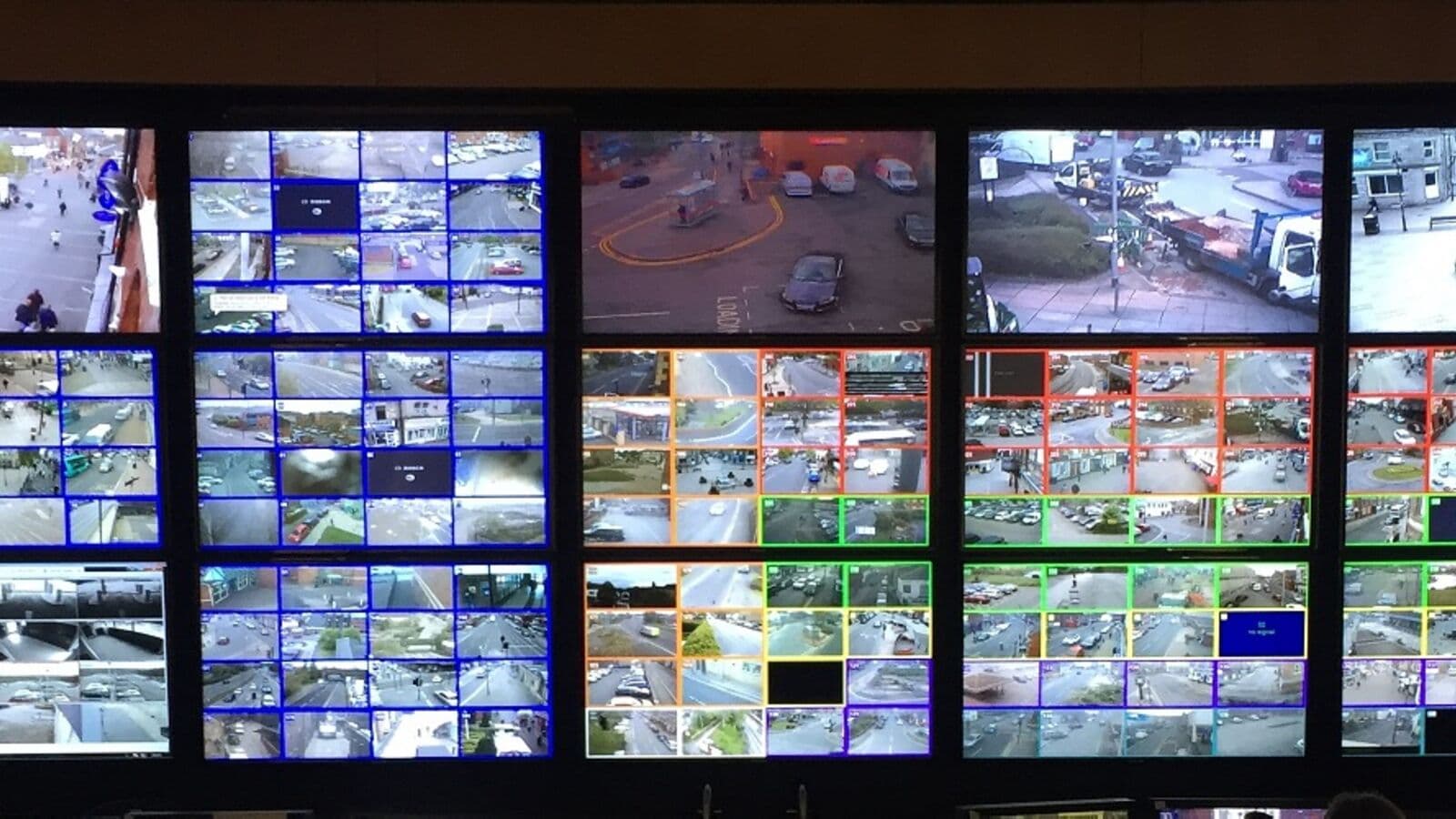
Security footage from a Dhaka bank branch captured a cheque fraud incident clearly — the person's face visible, the document in hand, the transaction completed. Yet prosecutors could not use the footage as evidence because the 1080p camera positioned 12 metres from the teller counter could not resolve sufficient facial detail to confirm identity beyond reasonable doubt. A 4K camera at the same position would have provided definitive identification.
This scenario illustrates the central promise of 4K surveillance: not merely "better video," but footage that crosses the threshold from observation to identification. However, 4K cameras cost more, consume more storage, and require more network bandwidth. Deployed indiscriminately, they waste budget without delivering proportional security benefit. Deployed strategically, they fundamentally change what your surveillance system can prove.
This guide helps you determine exactly where 4K cameras are justified — and where they are overkill.
What 4K Means in Technical Terms
4K refers to a resolution of 3840×2160 pixels — the Ultra High Definition standard also used in consumer televisions. In security camera terminology, 4K is equivalent to 8 megapixels (8MP).
To put this in context:
| Resolution | Pixel Count | Megapixels | Common Name |
|---|---|---|---|
| 720p | 1280×720 | 0.9 MP | HD |
| 1080p | 1920×1080 | 2.1 MP | Full HD |
| 4MP | 2560×1440 | 4 MP | QHD / 2.5K |
| 5MP | 2592×1944 | 5 MP | 5MP |
| 4K | 3840×2160 | 8.3 MP | Ultra HD / 4K |
| 12MP | 4000×3000 | 12 MP | 4K+ / Ultra |
A 4K camera captures four times more pixels than a 1080p camera. This means that when you crop into a 4K image to identify a person, you are working with four times more pixel information than a 1080p system provides.
The Identification Distance Advantage
The practical value of 4K is not about "seeing more detail everywhere" — it is about extending the distance at which you can reliably identify people and vehicles.
Facial Identification Standards
Security and forensic standards require a minimum of 40 pixels between a person's eyes for reliable facial identification. This is the threshold at which trained analysts and facial recognition software can work with confidence.
| Camera Resolution | Typical Horizontal Field of View | 40-Pixel Eye Separation Distance |
|---|---|---|
| 1080p (2MP) | 90° | ~5 metres |
| 4MP | 90° | ~7 metres |
| 5MP | 90° | ~8 metres |
| 4K (8MP) | 90° | ~10 metres |
| 4K (8MP) | 60° | ~15 metres |
| 12MP | 90° | ~14 metres |
A 4K camera at 60° field of view — a moderate zoom setting — can provide identification-quality facial detail at 15 metres. A 1080p camera at the same field of view provides identification quality at only 5 metres. For a bank teller counter, ATM lobby, or corporate reception where distances of 8–15 metres are common, 4K makes the difference between useful evidence and inadmissible footage.
Licence Plate Recognition Distance
Vehicle licence plate reading follows similar principles. The standard requires the plate to occupy a minimum width in the frame.
| Camera Resolution | Plate Reading Distance (Standard Lens) |
|---|---|
| 1080p | 8–12 metres |
| 4K | 16–24 metres |
At a wide vehicle gate where approaching vehicles may be 20 metres from the camera before they slow, 4K doubles the useful plate-reading zone compared to 1080p.
Storage and Bandwidth Cost: The 4K Penalty
4K's superior resolution comes with a proportional cost in storage and bandwidth. A 4K camera with H.265 generates approximately 8–12 Mbps, compared to 1.5–3 Mbps for a 1080p H.265 camera. The storage requirement is roughly 4× greater for 4K versus 1080p at equivalent frame rates.
30-Day Storage Comparison (10 cameras)
| Resolution | Codec | Bitrate | 30-Day Storage |
|---|---|---|---|
| 1080p | H.265 | 2 Mbps | 6.5 TB |
| 4K | H.265 | 8 Mbps | 25.9 TB |
| 4K | H.265+ | 5 Mbps | 16.2 TB |
For a 10-camera system, 4K roughly quadruples storage costs compared to 1080p. Over 90 days (Bangladesh Bank compliance), this differential becomes very significant. A mixed-resolution strategy — 4K only where justified, 1080p elsewhere — is the economically correct approach.
Bangladesh Regulatory Callout
Bangladesh Bank's ICT Security Guideline v4.0 does not prescribe a specific resolution. However, bank inspectors increasingly require footage quality sufficient for investigative use. In practice:
- Teller counter cameras: 4K strongly recommended where teller-customer distance exceeds 5 metres
- ATM cameras: 1080p or 4MP typically sufficient for internal ATM cameras (short distances); 4K recommended for external ATM street cameras
- Vault entrance: 4K recommended for definitive access record at distances over 5 metres
- IT room: 1080p adequate (short distances, controlled environment)
- Perimeter and car park: 4K recommended for vehicle entry and exit points
Bandwidth Requirements: Can Your Network Handle 4K?
A 4K camera at 8 Mbps requires 8 times more network bandwidth than a 1 Mbps 1080p camera. For a system with 20 cameras at 4K (8 Mbps each), your surveillance network must handle 160 Mbps of sustained traffic — plus the NVR needs sufficient storage throughput to write this data continuously.
Network Requirements by Camera Count (4K, H.265)
| 4K Cameras | Sustained Network Traffic | NVR Write Speed Required |
|---|---|---|
| 8 | 64 Mbps | 8 MB/s |
| 16 | 128 Mbps | 16 MB/s |
| 32 | 256 Mbps | 32 MB/s |
| 64 | 512 Mbps | 64 MB/s |
For large 4K deployments, ensure your surveillance VLAN uses Gigabit switching throughout, and verify that your NVR has sufficient RAID write throughput. Cheap NVRs often have RAID write speeds that bottleneck before the network does.
Pro Tip: When mixing 4K and 1080p cameras, place all 4K cameras on a dedicated NVR or NVR group. This prevents 4K cameras from consuming resources that affect playback performance of your 1080p camera feeds.
When 4K Is Justified: Strategic Deployment
High-Value Transaction Points
Bank teller counters, jewellery store showcases, cash handling areas, and pharmaceutical dispensing counters benefit from 4K where distances exceed 5 metres. The definitive identification capability is worth the storage premium for these critical points.
Vehicle Entry and Exit Gates
Main entrance vehicle gates where you need reliable licence plate capture beyond 12 metres, and where dual-lane gates may have vehicles at oblique angles, justify 4K. The extended plate-reading range and the ability to crop into any vehicle in a wide scene are both operationally valuable.
Wide-Open Public Areas
A 4K camera covering a large lobby, banking hall, or retail floor can capture the entire space in a single frame while still providing identification-quality detail anywhere in the frame. Four 1080p cameras covering the same area would each provide adequate general coverage but none would provide identification quality across the full space.
High-Security Perimeters with Long Fence Lines
A 4K camera with a narrow-angle lens (telephoto) at a fence perimeter can identify individuals at 25+ metres. This capability is valuable for infrastructure protection facilities, diplomatic compounds, and data centre perimeters.
Legal and Compliance-Critical Applications
If your organisation operates in an environment where CCTV footage is regularly used as legal evidence — financial services, healthcare, corporate facilities with high-value assets — 4K provides a meaningful evidentiary advantage that is worth the storage premium.
When 4K Is Overkill: Save Your Budget
Indoor Corridors Under 10 Metres Wide
A corridor that is 8 metres wide and 15 metres long does not need a 4K camera. A 1080p camera at the far end easily provides identification quality for anyone in the corridor. Installing 4K here wastes storage without improving security outcomes.
Small Offices and Meeting Rooms
Rooms smaller than 6m × 6m are well covered by a single 1080p camera. The subject is always within 1080p identification range. 4K in these spaces provides no meaningful benefit.
Secondary Internal Corridors and Back-of-House Areas
Service corridors, plant rooms, storage areas, and staff-only back-of-house spaces where the primary purpose is activity logging rather than identification can use 1080p or even 720p cameras effectively.
Budget-Constrained Installations Needing More Coverage
If your budget allows either 20 cameras at 4K or 40 cameras at 1080p, the 40-camera deployment at 1080p typically provides better overall security. Coverage gaps create more risk than resolution limitations in most commercial facilities.
The Smart Mixed-Resolution Strategy
The optimal enterprise CCTV design uses resolution as a tool, not a specification applied uniformly.
4K for: Vehicle entry/exit, main public-facing entrances, teller counters and transaction points, wide-area coverage where identification at range is needed, compliance-critical recording points.
4MP/5MP for: General internal areas, medium-distance corridors, secondary entry points, outdoor general surveillance where identification quality is needed but maximum range is not critical.
1080p for: Internal corridors under 10m, small rooms, secondary monitoring points, large-camera-count deployments where budget constrains resolution choices.
720p for: Legacy camera locations, non-critical monitoring points, bulk coverage where activity logging only is required.
A well-designed 100-camera site might use 15 cameras at 4K, 30 cameras at 4MP, 45 cameras at 1080p, and 10 cameras at 720p — deployed according to the specific identification requirement at each location rather than a blanket resolution policy.
4K Camera Viewing and Playback Requirements
4K video requires more processing power to decode and display than lower-resolution streams. Verify these components before specifying 4K:
Client workstations: The operator's monitoring workstation must have a GPU capable of hardware-decoded 4K HEVC playback. Modern workstations with dedicated GPUs handle this easily. Old workstations without GPU hardware decode struggle to display multiple 4K streams simultaneously.
Monitors: 4K monitors are required to display 4K footage at full resolution. Viewing 4K footage on a 1080p monitor wastes the resolution advantage entirely — the monitor downscales the image. A 27" 4K monitor is the minimum recommendation for operators who regularly review 4K footage forensically.
VMS software: Confirm your Video Management Software supports H.265 4K hardware decoding. Milestone XProtect, Genetec Security Center, and the native VMS applications from Hikvision and Dahua all support this on compatible hardware.
Key Takeaways
- 4K cameras capture 4× more pixels than 1080p, extending facial identification range to 15 metres and licence plate reading to 24 metres
- 4K cameras generate approximately 4× more storage and bandwidth than 1080p — deploy strategically, not universally
- High-value transaction points, vehicle entry gates, and wide public areas justify 4K investment
- Indoor corridors under 10m, small rooms, and secondary monitoring points do not benefit meaningfully from 4K
- A mixed-resolution strategy delivers better security outcomes per dollar than blanket 4K deployment
- Bangladesh Bank compliance is served well by 4K at teller counters, ATMs, and vault entrances where distances exceed 5 metres
Ready to Specify the Right Resolution for Your Facility?
SSAL's technical team designs resolution-stratified CCTV systems that allocate 4K where it matters and optimise your storage budget everywhere else. We specify Hikvision, Dahua, Bosch, Axis, and Avigilon 4K cameras to match your specific coverage requirements.
Contact SSAL for a free site survey and resolution planning consultation:
- Phone: +880 1799-986890
- Email: info@smartsafety.com.bd
- Web: www.smartsafety.com.bd
- Office: Youth Tower Level 2, 822/2 Rokeya Sarani, Dhaka-1216
Would you like to see 4K footage quality demonstrated on your own facility layout? Request a 4K camera demonstration visit from our technical team — we bring live equipment so you can evaluate identification quality at your actual camera distances before purchasing.
Filed under
- 4K CCTV
- Ultra-HD camera
- CCTV resolution
- facial recognition
- licence plate recognition
- Bangladesh Bank compliance
- surveillance
SSAL Technical Team
SSAL engineering team — Bangladesh-focused technical writing on security, fire-safety, ICT, and building technology.
Related Articles
AI-Powered Video Analytics: A Complete Guide for Bangladesh Enterprise Decision-Makers
Understand AI video analytics for Bangladesh enterprises. People counting, LPR, facial recognition, PPE compliance, and ROI analysis from SSAL's experts.
OpenThe Complete CCTV Buying Guide for Bangladeshi Businesses: 10 Questions to Ask Before You Buy
10 essential questions to answer before buying CCTV for your Bangladesh business. Coverage, compliance, analytics, maintenance, and vendor evaluation from SSAL.
OpenDome vs. Bullet vs. Turret vs. PTZ: Choosing the Right Camera Form Factor for Every Location
Choose the right CCTV camera form factor for every location. Dome, bullet, turret, PTZ, and fisheye cameras compared with Bangladesh monsoon and application guidance.
OpenNeed Help Choosing the Right Solution?
SSAL engineers respond to RFQ submissions within 1 business day with a scoping call request.
- 48-hour site survey
- Free consultation
- 24/7 priority support