
The Complete CCTV Buying Guide for Bangladeshi Businesses: 10 Questions to Ask Before You Buy
Author
SSAL Technical TeamPublished
Reading time
9 min read
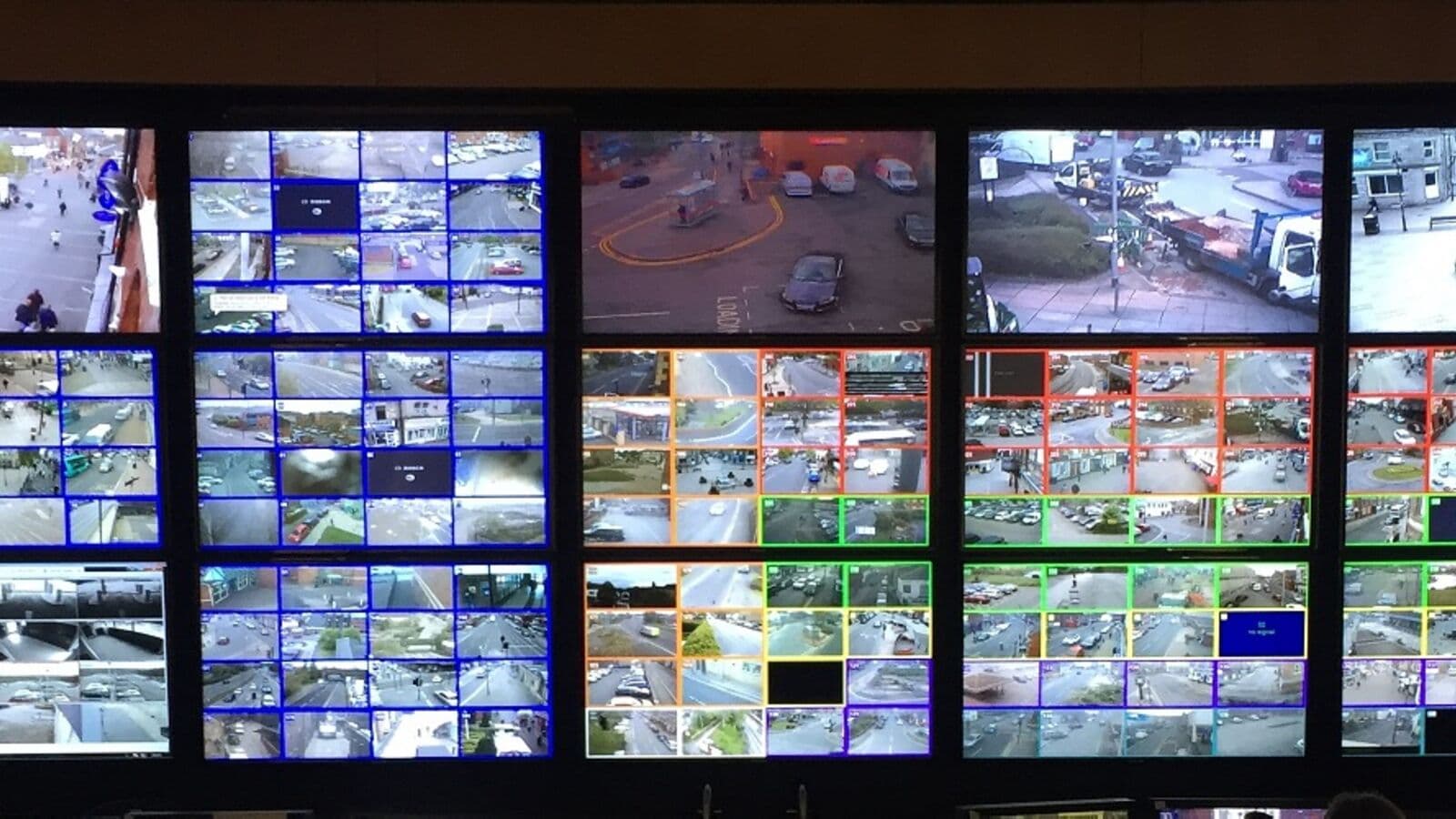
Every week, businesses across Bangladesh make costly CCTV purchasing mistakes. Some buy cameras without thinking about storage, then discover they can only retain footage for 7 days. Others buy the cheapest cameras available, then find the footage is unusable for identification when they need it most. Banks install systems that fail Bangladesh Bank compliance audits within the first year.
These mistakes share a common root cause: the purchase decision was made based on price or sales pitch rather than a systematic assessment of actual requirements. This guide gives you the 10 questions you must answer before purchasing any CCTV system — and the knowledge to evaluate the answers critically.
Question 1: What Areas Need CCTV Coverage?
This seems obvious, but most buyers underestimate the complexity. A thorough coverage assessment requires walking every square metre of your facility and asking: "What would I need to see on camera if an incident occurred here?"
Coverage Categories to Consider
External perimeter: Vehicle entry and exit points, pedestrian gates, perimeter fencing, car parks, loading bays, rooftop access.
Entry and exit points: All ground-floor doors and windows accessible from outside, lift lobbies, fire escape doors.
Public-facing areas: Reception, waiting areas, banking halls, retail shop floors, dining areas.
Transaction and cash handling areas: Teller counters, cash offices, ATMs (both internal ATM machine and external street camera), safes and vaults.
Restricted access areas: IT rooms, server rooms, data centres, HR offices, management areas, pharmacies.
Storage and logistics: Warehouses, stockrooms, goods receiving areas, loading docks.
Common areas: Corridors, stairwells, lifts, car parks.
Create a floor plan and mark every camera location with a coverage note explaining what each camera must capture and why. This document becomes your CCTV specification and can be given to multiple vendors for comparable quotations.
Question 2: Indoor or Outdoor?
Indoor and outdoor cameras have fundamentally different specifications. Buying an indoor camera for an outdoor location is one of the most common — and most expensive — mistakes.
Key Outdoor Requirements
IP Rating: Every outdoor camera must have an IP (Ingress Protection) rating. In Bangladesh's monsoon climate, IP66 is the minimum acceptable standard; IP67 is recommended for exposed locations. IP66 protects against heavy rain. IP67 protects against temporary submersion.
Operating temperature: Outdoor cameras must operate in Bangladesh's temperature range of 10°C to 45°C ambient. Industrial areas may experience higher temperatures — verify camera operating specifications.
IR range: Outdoor cameras need sufficient IR illumination for their coverage area at night. A camera covering a 40-metre parking lot needs at least 50-metre IR range.
Vandal resistance: Outdoor cameras in accessible locations (under 3 metres height) should be IK10-rated against physical impact.
| Environment | Recommended IP Rating | Recommended IK Rating |
|---|---|---|
| Indoor, climate-controlled | IP40 minimum | IK07 (public areas) |
| Indoor, humid (factory) | IP54 | IK08 |
| Outdoor, sheltered (under eaves) | IP65 | IK09 |
| Outdoor, exposed | IP66 | IK10 |
| Outdoor, flood-prone areas | IP67 | IK10 |
Question 3: What Resolution Is Sufficient?
Resolution is the most over-specified element in budget purchases and the most under-specified element in compliance-critical applications. The answer depends on the distance between the camera and the subject.
For facial identification at 5m: 1080p is sufficient For facial identification at 10m: 4MP minimum, 4K preferred For facial identification at 15m: 4K required For licence plate reading at 20m+: 4K required For general area monitoring (no identification required): 1080p is adequate
As a practical guideline:
- Teller counters, ATMs, vault entrances: 4K or 4MP (depending on distance)
- Corridors and internal areas: 1080p
- Large open areas (car parks, lobby): 4K or wide-angle 4MP
- General monitoring (stairwells, non-critical corridors): 1080p or 720p
Question 4: How Long Must Footage Be Retained?
Retention period determines your storage requirements more than any other factor. Before specifying any NVR or cloud storage, you must know your minimum retention requirement.
For Bangladesh Bank-regulated entities: 90 days minimum retention is mandatory for all coverage points.
For BGMEA member factories: Review your buyer code of conduct requirements — international buyers (H&M, Zara, M&S) increasingly specify minimum retention periods in compliance requirements.
For non-regulated businesses: 30 days is the practical minimum recommended by security professionals. 7–14 days is common for budget installations but leaves little time to detect incidents that are not immediately apparent.
For healthcare facilities: Consider retaining critical footage (pharmacy, operating theatre, ICU access) for 90+ days given potential liability timelines.
Once you know your retention period, calculate your storage requirement using the formula from our dedicated storage calculation guide.
Bangladesh Regulatory Callout
Bangladesh Bank's ICT Security Guideline v4.0 (Section 8) specifies 90-day CCTV retention for all branches. Additionally:
- Bangladesh Bank inspectors review CCTV systems during branch audits
- Banks found with insufficient retention or inadequate image quality are required to upgrade at their own cost with compliance timelines of 30–60 days
- The cost of emergency compliance upgrades significantly exceeds planned upgrades
- Specify compliance from day one to avoid forced emergency expenditure
Question 5: Do You Need Remote Access?
Almost every business with multiple locations or management team members who travel needs remote access. Modern NVR systems provide excellent mobile app remote access as standard. The question is not whether to have remote access, but how to implement it securely.
For small single-site businesses: Manufacturer app access via VPN or secure cloud relay is adequate.
For multi-site businesses: A centralised VMS (Video Management Software) is recommended, allowing all sites to be monitored from a single application with unified search and evidence export.
Security consideration: Never use direct port forwarding for remote camera access. Always use VPN or a manufacturer's secure cloud relay service. See our dedicated cybersecurity guide for detailed implementation guidance.
Question 6: Will You Need Video Analytics?
Video analytics — AI-powered event detection — transforms CCTV from a passive recording system to an active security tool. Deciding upfront whether you need analytics determines whether you purchase analytics-capable cameras or basic recording cameras.
Analytics-capable cameras (Hikvision AcuSense, Dahua WizSense) cost somewhat more than non-analytics cameras. However, the analytics capability is embedded in the camera chip — if you buy a camera without analytics and later decide you want it, you must replace the camera entirely.
Consider analytics if:
- You have a large facility that cannot be monitored by guards watching monitors
- You need perimeter protection with immediate alerts
- You want PPE compliance monitoring (RMG factories, construction sites)
- You want people counting or queue management for operational purposes
- You want LPR for vehicle access management
Basic recording without analytics is adequate if:
- You have dedicated security guards monitoring cameras actively
- Your facility is small and all cameras are easily monitored
- Your requirement is purely forensic (review footage after an incident)
Question 7: What Is Your Network Infrastructure?
IP cameras require network infrastructure. If your building does not have structured Cat 6 cabling and managed PoE switches, these must be installed as part of your CCTV project — or costed separately.
Questions to ask your IT team:
- Do we have spare Cat 6 ports within 100 metres of each planned camera location?
- Do we have a managed switch with VLAN capability and available PoE power budget?
- Do we have sufficient uplink bandwidth for camera traffic on the surveillance VLAN?
- Do we have a UPS that covers the surveillance switch and NVR for the required outage duration?
If your building lacks network infrastructure, the cabling and switching cost may represent 30–40% of the total CCTV project cost. Ensure your quotations include this.
For older buildings with existing coaxial cable, consider whether using HD analog cameras + HVR is more cost-effective than installing new Cat 6 cabling throughout. In some cases, it is.
Question 8: Who Will Maintain the System?
CCTV systems are infrastructure — they require ongoing maintenance to remain effective. Cameras fail. Hard drives degrade. Firmware needs updating. Lens contamination reduces image quality. Without a maintenance plan, the average CCTV system's effective performance degrades significantly within 2 years.
Annual Maintenance Contract (AMC): Specify an AMC with your installation vendor covering:
- Quarterly preventive maintenance visits (clean cameras, check mounts, verify footage quality)
- Hard drive health monitoring and replacement of degrading drives
- Firmware update management
- Response time SLA for critical failures (recommended: 4 hours response for bank and critical facilities, 24 hours for standard commercial)
- Software licencing renewal management for VMS systems
AMC cost benchmarks: Typically 8–12% of installation cost per year. A BDT 10 lakh installation should have an AMC of BDT 80,000–120,000 per year. Be suspicious of AMC offers below 5% — they typically do not cover parts replacement or emergency call-outs.
Question 9: What Is the Ongoing AMC Cost?
AMC cost is part of the total cost of ownership and must be factored into your budget planning. Many businesses focus on installation cost and overlook AMC, then face budget pressure when renewal time arrives.
Total 5-Year Cost Calculation:
| Cost Element | Year 1 | Years 2–5 | 5-Year Total |
|---|---|---|---|
| Hardware and installation | BDT X | — | BDT X |
| Annual AMC | — | BDT X × 0.10 × 4 | BDT 0.40X |
| HDD replacement (Year 3–4) | — | BDT 0.05X | BDT 0.05X |
| VMS licence renewal (annual) | Included | BDT Y × 4 | BDT 4Y |
| 5-Year TCO | ~1.50X + 4Y |
When comparing vendors at similar installation prices, compare AMC terms and pricing carefully. The cheapest installation with poor AMC terms often has a higher 5-year TCO than a slightly more expensive installation with comprehensive AMC coverage.
Question 10: Is This a Bangladesh Bank-Compliant Installation?
For any regulated entity — bank, NBFI, mobile financial services provider — compliance is not optional. Before signing any CCTV contract, verify that your vendor explicitly confirms compliance with Bangladesh Bank ICT Security Guideline v4.0.
Key compliance checklist:
- [ ] Cameras at all teller counter positions
- [ ] Cameras at all ATM locations (internal machine + external street-facing)
- [ ] Cameras at vault and strong room entrances and interior
- [ ] Cameras at all entry and exit points
- [ ] Cameras in the IT room (with biometric access control)
- [ ] 90-day footage retention with adequate storage
- [ ] H.265 or better compression to make 90-day retention economically feasible
- [ ] Surveillance network logically separated from core banking network
- [ ] Remote access for centralised compliance review
- [ ] Storage redundancy (RAID) to prevent footage loss from drive failure
Budget Ranges for Bangladesh CCTV Systems
| Tier | Camera Count | Typical Specification | Approximate Cost |
|---|---|---|---|
| Entry Level | 8–16 cameras | 1080p IP cameras, 16-channel NVR, 30-day storage | BDT 1.5–3.5 lakh |
| Mid-Range | 16–32 cameras | 4MP IP cameras, AcuSense analytics, 32-channel NVR, 60-day storage | BDT 3.5–8 lakh |
| Enterprise | 32–128 cameras | Mixed 4K/4MP, full AI analytics, dedicated NVR, RAID, 90-day storage | BDT 8–35 lakh |
| Critical Infrastructure | 100+ cameras | Enterprise VMS, redundant storage, thermal perimeter, full analytics suite | BDT 35 lakh+ |
Prices include cameras, NVR, cabling, installation, and 1-year warranty. Bangladesh market pricing, 2026.
How to Evaluate CCTV Vendors in Bangladesh
Not all security system integrators in Bangladesh are equal. Use these criteria:
- Brand authorisation: Is the vendor an authorised dealer/installer for the brands they specify? Authorised dealers have access to genuine products, manufacturer support, and warranty service. Verify authorisation with the manufacturer's Bangladesh representative.
- Reference installations: Request references for 3–5 completed projects of similar size. Visit one reference site to view the installation quality firsthand.
- Technical certifications: Are their engineers certified by camera manufacturers? Hikvision, Dahua, Axis, and Bosch all offer technical certification programmes. Certified engineers understand system design requirements that self-taught technicians may miss.
- AMC capability: Does the vendor have the capacity to maintain your system after installation? A vendor with 2 engineers serving 200 clients cannot provide 4-hour emergency response.
- Compliance knowledge: Can the vendor explain Bangladesh Bank ICT Security Guideline requirements in detail? Can they produce documentation confirming their design meets the guideline?
Key Takeaways
- Answer all 10 questions before approaching vendors — this determines your specification, not the salesperson's preference
- Indoor vs outdoor specification (IP rating, IR range, vandal resistance) is non-negotiable for system durability
- Resolution must be matched to subject distance — 1080p is often sufficient, 4K is required for specific high-distance identification points
- Bangladesh Bank regulated entities must address 90-day retention, network separation, and coverage completeness from day one
- Include 5-year AMC cost in your budget planning — it represents 40–50% of installation cost over the ownership period
- Evaluate vendors on brand authorisation, reference installations, and technical certification — not price alone
Ready to Build Your CCTV Specification?
SSAL's technical team works with you to answer all 10 questions and produce a detailed CCTV specification that you can use for vendor comparison or engage us to deliver. Our free site survey includes a preliminary camera layout, storage calculation, compliance assessment, and budget estimate.
Contact SSAL for a free CCTV site survey and specification:
- Phone: +880 1799-986890
- Email: info@smartsafety.com.bd
- Web: www.smartsafety.com.bd
- Office: Youth Tower Level 2, 822/2 Rokeya Sarani, Dhaka-1216
Already have quotes from other vendors? Request a SSAL comparative review — our technical team reviews any existing quotation against the specification requirements and provides honest feedback on gaps, over-specifications, and value for money.
Filed under
- CCTV buying guide
- Bangladesh CCTV
- surveillance system
- CCTV specification
- Bangladesh Bank compliance
- CCTV vendor
- security camera
- buying guide
SSAL Technical Team
SSAL engineering team — Bangladesh-focused technical writing on security, fire-safety, ICT, and building technology.
Related Articles
4K Ultra-HD CCTV Cameras: Is the Extra Resolution Worth It for Your Business?
Is 4K CCTV worth the investment? Understand identification distances, storage costs, and the right use cases for 4K surveillance in Bangladesh facilities.
OpenAI-Powered Video Analytics: A Complete Guide for Bangladesh Enterprise Decision-Makers
Understand AI video analytics for Bangladesh enterprises. People counting, LPR, facial recognition, PPE compliance, and ROI analysis from SSAL's experts.
OpenDome vs. Bullet vs. Turret vs. PTZ: Choosing the Right Camera Form Factor for Every Location
Choose the right CCTV camera form factor for every location. Dome, bullet, turret, PTZ, and fisheye cameras compared with Bangladesh monsoon and application guidance.
OpenNeed Help Choosing the Right Solution?
SSAL engineers respond to RFQ submissions within 1 business day with a scoping call request.
- 48-hour site survey
- Free consultation
- 24/7 priority support