
AI-Powered Video Analytics: A Complete Guide for Bangladesh Enterprise Decision-Makers
Author
SSAL Technical TeamPublished
Reading time
9 min read
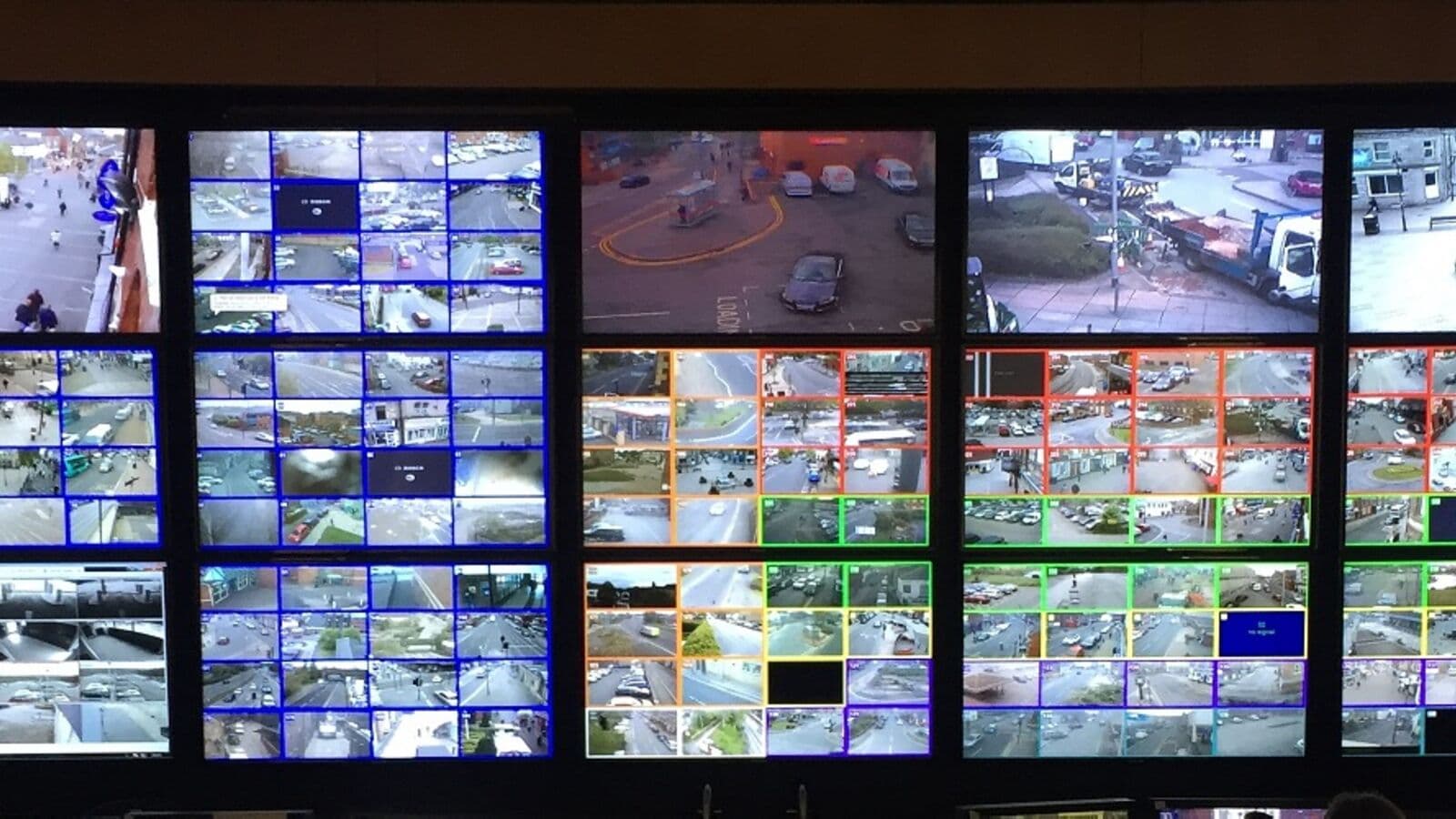
A garments factory in Narayanganj was spending BDT 180,000 per month on security guards to monitor 8 entry/exit gates during shift changes — approximately 4 million workers pass through Bangladesh's RMG sector entry points daily. The factory management replaced 6 of the 8 guard positions with AI-powered video analytics that automatically detected unauthorised access, tracked crowd density, and triggered alerts. Annual savings exceeded BDT 12 lakh. The two remaining guards responded to alerts rather than watching monitors.
This is the operational promise of video analytics: transforming passive recording infrastructure into active intelligence. Your CCTV cameras are already capturing everything. Video analytics extracts actionable insight from that footage in real time — without a human watching every screen.
This guide explains what video analytics can do, how the technology has evolved, and which analytics types deliver the best return on investment for Bangladesh enterprises.
What Is Video Analytics?
Video analytics (also called Video Content Analysis or VCA) is software that analyses video streams in real time to detect, classify, and respond to events of interest. Instead of requiring a human operator to spot something unusual on a monitor, the software continuously processes every frame and generates alerts when predefined conditions are met.
Early video analytics systems (pre-2015) were rule-based: they detected motion in defined zones, measured pixel changes, and triggered alerts based on simple thresholds. These systems generated enormous numbers of false alarms — a blowing leaf, a changing shadow, rain on an outdoor camera all triggered alerts. Alert fatigue made them operationally unusable.
Modern AI video analytics uses deep learning neural networks trained on millions of annotated video samples. Instead of detecting "pixel change," these systems understand what they see: they distinguish a person from a vehicle, a cat from an intruder, an employee from a stranger. False alarm rates have dropped by 95%+ compared to first-generation systems, making AI analytics operationally viable.
The Technology: From Rule-Based to Deep Learning
First Generation (2005–2015): Rule-Based Analytics
Motion detection, virtual tripwire crossing, zone-based intrusion detection. High false alarm rates. Limited to simple pixel-change analysis. Required dedicated analytics servers.
Second Generation (2015–2019): Machine Learning
Object classification (person vs. vehicle vs. animal). Reduced false alarms. Required GPU-accelerated servers for real-time processing. Accuracy in the 70–80% range.
Third Generation (2019–Present): Deep Learning AI
Convolutional Neural Networks (CNNs) trained on massive datasets. Object detection and tracking, attribute recognition (clothing colour, bag type), behaviour understanding (fighting, falling, loitering). Camera-embedded processing or edge AI chips. Accuracy exceeding 95% in controlled conditions. False alarm rates under 5% for well-configured systems.
Types of Video Analytics: Complete Reference
1. People Counting and Occupancy Management
AI accurately counts individuals entering and exiting a zone, maintaining running occupancy counts in real time.
Applications:
- Retail: track customer footfall by hour and day; measure conversion rate versus transactions
- Corporate: manage building occupancy for energy efficiency and post-COVID capacity limits
- Banking: measure teller queue lengths and trigger staffing adjustments
- Factories: count workers for evacuation roll calls and shift management
Accuracy: Modern deep-learning people counters achieve 97–99% accuracy in single-file entry scenarios; 90–95% in crowd scenarios.
2. Licence Plate Recognition (LPR/ANPR)
Automatic Number Plate Recognition reads vehicle licence plates in motion and matches them against white/black lists, recording every vehicle entry and exit with timestamp.
Applications:
- Car park access control without physical barriers
- Vehicle whitelist management for gated communities and corporate premises
- Black list alerting for security-flagged vehicles
- Evidence retrieval — search footage by plate number rather than scrubbing through hours of video
Accuracy: 98%+ in good lighting conditions with proper camera placement; 90–95% in challenging night or weather conditions.
Bangladesh context: Bangladesh uses a standardised plate format that AI LPR systems handle well. However, commercially printed number plates and temporary plates on new vehicles require configuration attention.
3. Facial Recognition
AI matches faces in live video against an enrolled database of known individuals (employees, visitors, blacklisted persons).
Applications:
- Employee attendance verification at factory/office entry
- VIP recognition at hotel and hospitality entrances
- Blacklist alerting when a known security threat enters the facility
- Access control integration — open doors for known faces without card presentation
PDPO 2025 Alert: Facial recognition in public or semi-public areas requires explicit consent from individuals whose faces are enrolled. Bangladesh's Personal Data Protection Ordinance 2025 classifies facial templates as biometric data requiring the highest level of protection. Consult legal counsel before deploying facial recognition analytics in Bangladesh.
4. PPE Compliance Detection
AI detects whether workers are wearing required Personal Protective Equipment — hard hats, safety vests, safety glasses, gloves, and face masks.
Applications in Bangladesh:
- Construction sites: detect workers without helmets or harnesses at height
- RMG factories: detect workers on machinery without required safety equipment
- Pharmaceutical facilities: detect personnel in clean rooms without proper PPE
- Chemical plants: continuous monitoring of hazardous area equipment compliance
Value proposition: A single PPE compliance alert system can prevent costly workplace accidents, reduce BGMEA audit findings, and demonstrate proactive safety management to international buyers.
5. Loitering Detection
Detects individuals remaining in a defined zone for longer than a specified time period.
Applications:
- ATM vestibule monitoring — alert when someone lingers for more than 60 seconds
- Restricted area monitoring — alert when an unauthorised person remains in a secure zone
- Perimeter monitoring — detect a person waiting outside a fence line
6. Perimeter Tripwire and Virtual Fence
Draw a virtual line across the camera view. The system triggers an alert when any person or vehicle crosses the line in the specified direction.
Applications:
- Factory perimeter fence line monitoring
- Rooftop access point monitoring
- Server room glass wall monitoring
- Retail stock room entry/exit
7. Crowd Density Analysis
Monitors the density of people in a zone and alerts when crowd density exceeds a safe threshold.
Applications:
- Hospital emergency waiting areas: alert when waiting room exceeds capacity
- Shopping mall common areas: manage crowd flow during peak periods
- Factory evacuation muster points: confirm all zones have cleared
- Stadium and event venue crowd safety management
8. Object Left Behind / Object Removed Detection
Detects objects that appear in a scene (unattended bags, packages) or disappear from a scene (removed assets, stolen equipment).
Applications:
- Airport and transport hub security — unattended bag detection
- Museum and art gallery — removed asset alert
- Factory floor — detect removed tools or components from designated storage locations
9. Heat Maps and Dwell Time Analysis
Generate visual heat maps showing where people spend the most time in a space.
Applications:
- Retail: identify high-traffic and dead-zone areas for merchandising optimisation
- Banking: measure teller queue behaviour and branch layout effectiveness
- Corporate offices: measure collaboration space utilisation
Industry Applications in Bangladesh
Banking (Bangladesh Bank-Regulated Facilities)
| Analytics Type | Application | Compliance Relevance |
|---|---|---|
| People counting | Teller queue management, branch capacity | Operational efficiency |
| Facial recognition | Staff access validation at IT rooms | Bangladesh Bank IT room biometric requirement |
| Loitering detection | ATM vestibule monitoring | ATM fraud prevention |
| LPR | Branch car park access | Vehicle access management |
| Object left behind | ATM and banking hall | Unattended bag security |
Retail and Shopping Centres
People counting, heat maps, and conversion analysis provide measurable commercial value independent of security. Retailers in Bashundhara City and Jamuna Future Park increasingly use these analytics to optimise store layout and staffing.
Readymade Garments Factories
PPE compliance detection, people counting at shift changes, perimeter tripwire monitoring, and LPR at vehicle gates address the specific security and safety challenges of large RMG facilities. BGMEA audit teams look favourably at documented safety monitoring systems.
Hospitals and Healthcare Facilities
Crowd density management in emergency waiting areas, restricted zone protection (ICU, pharmacy, operating theatres), and patient wandering detection (using geofencing analytics) all serve the unique security and safety requirements of healthcare.
Manufacturing and Industrial
PPE compliance, perimeter protection, object detection for critical equipment, and heat maps for factory floor optimisation serve industrial clients. Chemical plants and pharmaceutical manufacturers particularly benefit from PPE compliance monitoring.
Accuracy Rates: Setting Realistic Expectations
No video analytics system achieves 100% accuracy. Understanding realistic performance expectations prevents disappointment and ensures proper system configuration.
| Analytics Type | Accuracy (Ideal Conditions) | Accuracy (Challenging Conditions) |
|---|---|---|
| People counting (single file) | 97–99% | 90–95% |
| LPR (good light, angle) | 98%+ | 88–95% |
| PPE detection (hard hat) | 92–96% | 82–90% |
| Loitering detection | 95%+ | 90%+ |
| Tripwire crossing | 97%+ | 90–95% |
| Facial recognition (controlled) | 95–99% | 75–90% |
| Crowd density | 85–95% | 75–85% |
Challenging conditions include: extreme angles, poor lighting, rain or fog on outdoor cameras, very fast motion, or scenarios very different from the training data.
Pro Tip: Always pilot AI analytics in a limited deployment before full rollout. Run the system in "monitoring only" mode for 2–4 weeks, review alerts, and tune sensitivity thresholds before enabling automated responses. This prevents alert fatigue and ensures operators trust the system.
Where Analytics Runs: Camera vs. Edge vs. Server
Camera-embedded analytics: Modern AI cameras (Hikvision AcuSense, Dahua WizSense, Axis ARTPEC-8) process basic analytics directly in the camera chip. No additional server required. Suitable for: tripwire, loitering, people counting, PPE detection at individual camera points.
Edge appliance analytics: A GPU-enabled appliance connects to multiple cameras and processes more complex analytics centrally. Suitable for: LPR, facial recognition across multiple cameras, crowd density at large sites.
Server-based analytics: Enterprise AI servers (NVIDIA GPU) run enterprise-grade analytics across large camera estates. Suitable for: city-scale deployments, complex behaviour analysis, multi-site correlation.
For most Bangladesh enterprise deployments, a combination of camera-embedded analytics (AcuSense/WizSense cameras) plus an edge analytics appliance for LPR and facial recognition delivers the best capability-to-cost ratio.
ROI Framework for Video Analytics Investment
| Benefit Category | Measurement Method | Typical Bangladesh Value |
|---|---|---|
| Guard reduction | Guards replaced per shift × salary | BDT 15,000–30,000/guard/month |
| Incident prevention | Incidents avoided × average cost | Variable (BDT 50,000–5,000,000+) |
| Retail optimisation | Revenue uplift from better merchandising | 2–8% revenue improvement |
| PPE compliance | Workplace accident cost avoidance | BDT 500,000+ per serious incident |
| Queue management | Customer satisfaction, throughput improvement | Variable |
For a 50-camera factory with PPE compliance and people counting analytics, the guard reduction and accident prevention savings typically return the analytics investment within 12–18 months.
Key Takeaways
- AI video analytics transforms passive CCTV recording into active intelligence by detecting events and triggering real-time alerts
- Third-generation deep learning analytics achieves 95%+ accuracy with false alarm rates below 5%
- People counting, LPR, PPE compliance, perimeter tripwire, and loitering detection are the highest-ROI analytics for Bangladesh enterprises
- Facial recognition requires explicit consent under PDPO 2025 and careful legal consideration before deployment
- Camera-embedded analytics (AcuSense, WizSense) is cost-effective for basic analytics; edge appliances add LPR and facial recognition capability
- Pilot analytics in monitoring-only mode before enabling automated responses to tune accuracy and build operator trust
- ROI for most Bangladesh deployments is achievable within 12–24 months through guard cost reduction and incident prevention
Ready to Deploy AI Video Analytics?
SSAL designs and implements AI video analytics solutions across Bangladesh, from single-site people counting systems to enterprise multi-site analytics platforms. Our team specifies the right analytics type for each camera location and integrates with your existing NVR, VMS, and access control systems.
Contact SSAL for a video analytics consultation:
- Phone: +880 1799-986890
- Email: info@smartsafety.com.bd
- Web: www.smartsafety.com.bd
- Office: Youth Tower Level 2, 822/2 Rokeya Sarani, Dhaka-1216
Want to see AI analytics working on your actual camera footage? Request an analytics demonstration using your existing camera streams — our team demonstrates real detection performance in your specific environment before you commit to any purchase.
Filed under
- AI video analytics
- video analytics
- people counting
- LPR
- facial recognition
- PPE compliance
- CCTV analytics
- Bangladesh
- enterprise security
SSAL Technical Team
SSAL engineering team — Bangladesh-focused technical writing on security, fire-safety, ICT, and building technology.
Related Articles
4K Ultra-HD CCTV Cameras: Is the Extra Resolution Worth It for Your Business?
Is 4K CCTV worth the investment? Understand identification distances, storage costs, and the right use cases for 4K surveillance in Bangladesh facilities.
OpenThe Complete CCTV Buying Guide for Bangladeshi Businesses: 10 Questions to Ask Before You Buy
10 essential questions to answer before buying CCTV for your Bangladesh business. Coverage, compliance, analytics, maintenance, and vendor evaluation from SSAL.
OpenDome vs. Bullet vs. Turret vs. PTZ: Choosing the Right Camera Form Factor for Every Location
Choose the right CCTV camera form factor for every location. Dome, bullet, turret, PTZ, and fisheye cameras compared with Bangladesh monsoon and application guidance.
OpenNeed Help Choosing the Right Solution?
SSAL engineers respond to RFQ submissions within 1 business day with a scoping call request.
- 48-hour site survey
- Free consultation
- 24/7 priority support