
COB vs. SMD LED Technology: Which Is Better for 24/7 Control Room Deployments?
Author
SSAL Expert TeamPublished
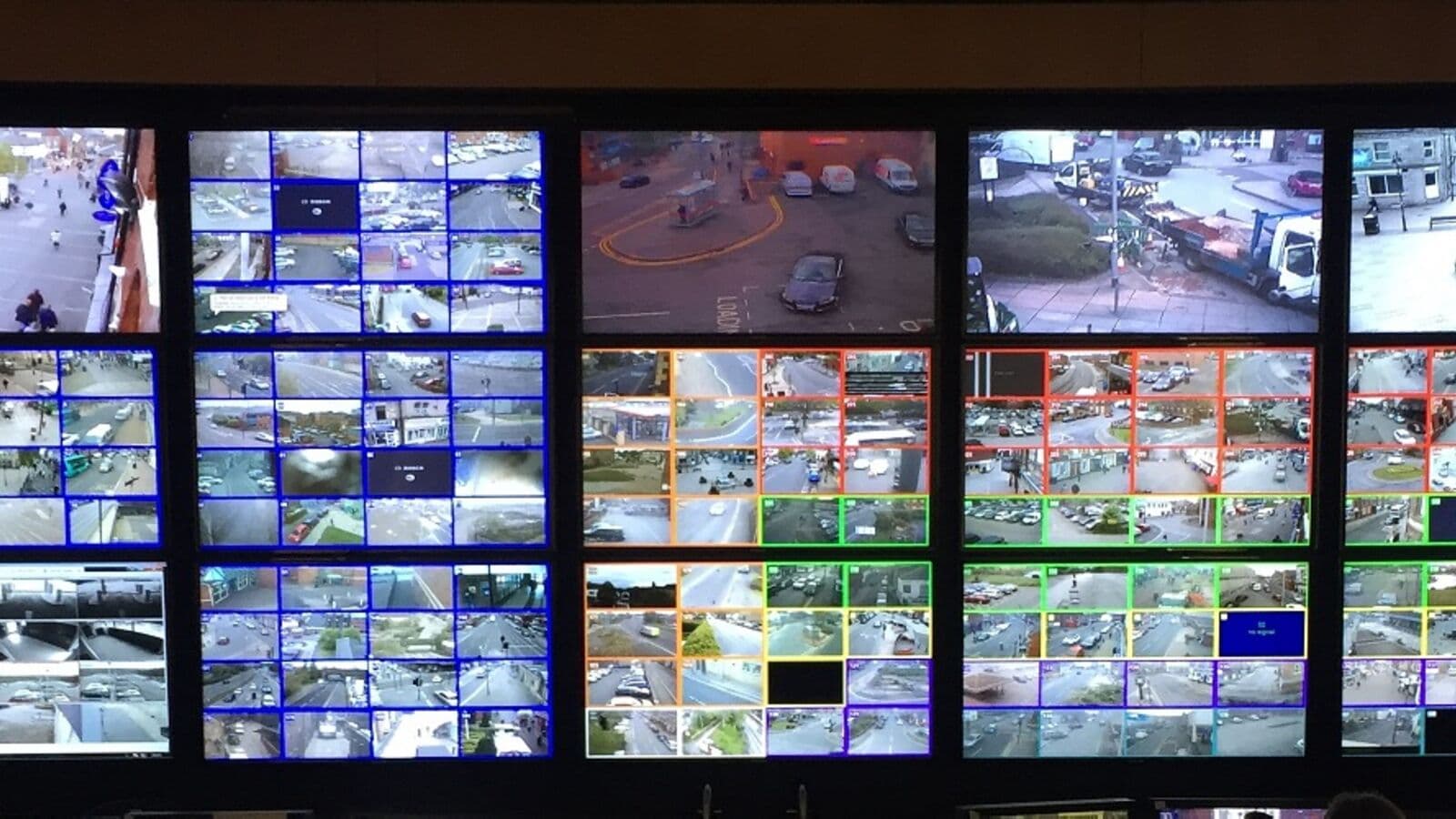
Direct-view LED video walls are not a single technology — they are a family of technologies that share the principle of using LED elements to generate light directly from the display surface. Within this family, two distinct manufacturing architectures dominate the market: SMD (Surface Mount Device) LED and COB (Chip on Board) LED. Understanding the difference between them is increasingly important for organisations specifying command centre and control room display systems in 2026.
The choice between SMD and COB affects brightness, resolution capability, operational durability, maintenance cost, and the viewing experience under different environmental conditions. For a 24/7 control room expected to operate continuously for 8–12 years, specifying the right LED architecture is a long-term operational decision.
How SMD LED Works
SMD (Surface Mount Device) LED is the current mainstream architecture for commercial direct-view LED video walls. In an SMD display, individual LED components — each containing red, green, and blue LED chips packaged together — are surface-mounted onto a printed circuit board (PCB) using standard surface-mount manufacturing processes.
The SMD package provides a small, discrete light-emitting point at each pixel position. The package encapsulates the LED chips in a protective resin, provides the electrical connections, and diffuses the emitted light slightly to improve viewing angle.
SMD technology currently spans pixel pitches from approximately P0.9 to P10 in commercial products, with the P1.5 to P4.0 range representing the mainstream commercial market. SMD manufacturing is mature, well-optimised, and benefits from the full scale of the LED manufacturing industry — which keeps SMD costs lower than COB for equivalent pixel pitch.
How COB LED Works
COB (Chip on Board) LED takes a fundamentally different approach. Instead of packaging individual red, green, and blue LED chips into discrete SMD components, COB technology mounts bare LED chips directly onto the substrate (the PCB or ceramic substrate) and encapsulates the entire array of chips in a single layer of phosphor or quantum dot resin.
The result is a display surface where the LEDs are embedded within a continuous protective layer rather than sitting as individual raised components on the PCB surface. This architecture has several significant consequences for the display's physical and optical characteristics.
Brightness and Optical Performance
SMD Brightness
SMD LED panels for command centre applications typically deliver 600–1,500 nits of peak brightness. The discrete SMD components produce directional light that can be partially focused using lens elements within the package — contributing to efficiency and brightness.
Black mask treatments applied around the SMD components (to improve contrast and reduce ambient light reflection) are standard in quality commercial panels. However, the raised profile of individual SMD components means that reflected ambient light from room lighting can create surface glare that reduces perceived contrast.
COB Brightness and Surface Reflection
COB displays typically achieve similar or slightly lower peak brightness than SMD at equivalent power input — the flat resin encapsulant diffuses light more broadly than discrete SMD packages. However, COB's flat, continuous surface provides a measurable advantage in environments with overhead ambient lighting: the matte resin surface scatters reflected ambient light rather than specularly reflecting it.
In a control room with overhead lighting hitting the display at angles typical of recessed ceiling lights, COB consistently demonstrates better perceived contrast than SMD at equivalent brightness levels. Operators find the image "punchier" and easier to read under these conditions.
Pixel Pitch and Resolution Capability
SMD technology's resolution limitation is driven by the physical size of the SMD package. As pixel pitch decreases below P1.5, individual SMD packages begin to crowd each other to the point where manufacturing yield drops and costs rise steeply. SMD below P1.0 is technically challenging and expensive.
COB technology removes this limitation because bare LED chips are smaller than packaged SMD components. COB displays are commercially available at P0.4–P0.9 pixel pitches — enabling display resolutions that SMD cannot economically achieve. For control rooms requiring extremely high information density at close viewing distances (below 2 metres), COB is the enabling technology.
For the majority of command centre viewing distances (4–8 metres), pixel pitches of P1.5–P2.5 are appropriate, and SMD delivers those specifications at lower cost than COB equivalents. The resolution advantage of COB is meaningful only at close viewing distances.
Operational Durability: The Key Differentiator
The most significant practical difference between SMD and COB for control room applications is physical durability.
SMD Vulnerability
SMD components are physically raised from the PCB surface — each component stands approximately 0.3–0.8 mm above the substrate, depending on the specific package. This means the LED emitting surface is the most mechanically exposed part of the panel. Physical contact — cleaning, accidental touch, equipment contact during maintenance — can dislodge or damage individual SMD packages.
In a control room operated by rotating shift teams over 12 years, the cumulative risk of LED damage from incidental contact is real. A damaged SMD component creates a "dead pixel" visible in the display — typically a permanently dark point or a stuck bright point. Repair requires replacing the affected module.
COB Physical Robustness
COB's continuous resin encapsulant provides significantly better mechanical protection for the underlying LED chips. The display surface is smooth, hard, and resistant to incidental contact damage. LED chips embedded beneath the resin surface are protected from contact forces that would damage exposed SMD components.
For control room environments — where panels may be touched during operator training, cleaning, or maintenance — COB's improved surface robustness reduces the risk of damage from physical contact. Manufacturers including Absen (X series COB) and Samsung (The Wall) cite improved panel longevity in physically demanding environments as a primary COB advantage.
IP Rating and Cleaning
COB displays typically achieve better ingress protection ratings than SMD equivalents because the sealed resin surface provides inherent protection against particulate contamination and moisture. In control rooms adjacent to industrial environments, or in locations where aggressive cleaning is required, COB's surface integrity advantage is operationally meaningful.
Service Life and Operational Hours
Both SMD and COB LED technology from quality manufacturers is rated at 80,000–100,000 hours. At 24/7 operation, 100,000 hours represents approximately 11.4 years — considerably longer than the expected 7-8 year operational life of LCD video walls.
The end-of-life pattern differs between the technologies. SMD panels may show individual LED failures as "dead pixels" before other panels age to the same state — because exposed SMD components are more vulnerable to infant mortality failures (early failures in a small proportion of components). COB panels typically age more uniformly because the chips are in a protected environment, though their resin encapsulant can discolour slightly over time, affecting white balance uniformity.
For control rooms purchasing 10+ year display systems, both technologies deliver adequate life ratings — but SMD requires a more active module maintenance programme due to higher infant mortality risk.
Repairability: SMD Has the Advantage
Despite COB's durability advantages, SMD has a significant repair advantage: module-level replacement is straightforward and well-supported. If an SMD LED module fails, a replacement module slides in and the display resumes normal operation within 30–60 minutes. The global supply chain for SMD LED modules is deep and replacement modules are widely available.
COB module replacement is equally straightforward at the module level — a failed COB module is replaced as a unit in the same way as SMD. However, the granularity of repair differs: an individual LED chip failure in an SMD display theoretically allows chip-level repair by highly skilled technicians, while COB's embedded chips make chip-level repair impractical in the field.
For practical control room maintenance, both technologies rely on module-level replacement rather than chip-level repair — making this distinction less important than it might appear. The key question is module availability and cost, where SMD's larger market ensures better supply chain robustness for standard configurations.
Cost Differential and ROI Analysis
COB LED panels command a price premium over equivalent-pitch SMD panels. The premium ranges from 20–60% depending on the specific product and manufacturer. For a P2.0 SMD panel at approximately USD 800 per square metre, an equivalent-specification COB panel might cost USD 1,100–1,300 per square metre.
For a 6 m × 2.5 m control room video wall (15 m²), the total hardware cost differential between SMD and COB is approximately USD 4,500–7,500 (BDT 540,000–900,000). The question is whether the operational benefits of COB — better ambient light contrast, improved physical durability, and reduced incidental damage risk — justify this premium for your specific operating environment.
In environments with:
- Significant overhead ambient lighting (where COB's anti-glare advantage is pronounced)
- High operator-panel contact risk during training or maintenance
- Dusty or moisture-adjacent conditions requiring better surface ingress protection
COB provides operational value that justifies the premium. In environments with:
- Good lighting control (where SMD contrast performance is adequate)
- Standard commercial control room cleanliness
- Budget constraints that limit capital expenditure
SMD at P1.5–P2.0 delivers excellent performance at significantly lower cost.
Bangladesh Command Centre Recommendations
For Bangladesh command centre deployments, the SSAL recommendation differs by application:
Bank monitoring centres and corporate NOCs: SMD at P1.5–P2.0 provides excellent performance at cost-effective pricing. Standard control room lighting conditions make COB's contrast advantage marginal, and the operational environment does not expose panels to unusual physical stress.
Police and security control rooms: Higher operator density, shift handover contact risk, and variable cleaning protocols argue for COB consideration — particularly for lower-pitch panels (P1.5 and below) where the cost premium is proportionally smaller relative to the higher base cost of fine-pitch panels.
Industrial control rooms (power, manufacturing, utilities): COB's better IP performance and dust resistance provide genuine operational value in these environments. Specify COB at the appropriate pixel pitch for the room's viewing distances.
SSAL's LED Video Wall Expertise
SSAL specifies and installs both SMD and COB LED video wall systems for Bangladesh command centres, boardrooms, and monitoring applications. We carry Unilumin and Absen product lines that include both SMD and COB options across the P0.9–P4.0 pixel pitch range.
Our specification process starts with your room geometry, viewing distances, content requirements, and operational environment — and results in a specific technology recommendation with full cost and performance justification.
Ready to specify the right LED technology for your control room?
[Get Free Consultation] — Request a video wall technology assessment for your specific control room requirements.
[Talk to Our Expert] — Discuss SMD vs. COB selection for your command centre deployment with an LED display specialist.
Filed under
- COB-LED
- SMD-LED
- video-wall
- control-room
- LED-technology
- pixel-pitch
- 24/7-operation
- Bangladesh
- command-centre
SSAL Expert Team
SSAL engineering team — Bangladesh-focused technical writing on security, fire-safety, ICT, and building technology.
Related Articles
How to Design a Command and Control Centre Video Wall: 7 Critical Decisions
Design a command centre video wall correctly. 7 critical decisions: size, pixel pitch, content sources, control system, sight lines, cooling, and redundancy for NOC/SOC.
OpenLED vs. LCD Video Walls: The Definitive Technical Comparison for Command Centres
Compare direct-view LED and LCD video walls for command centres. Pixel pitch, brightness, 24/7 ratings, bezel gaps, and Bangladesh control room context. Complete guide.
OpenNeed Help Choosing the Right Solution?
SSAL engineers respond to RFQ submissions within 1 business day with a scoping call request.
- 48-hour site survey
- Free consultation
- 24/7 priority support