
Data Centre Cooling 101: Calculating Cooling Load for Your Server Room
Author
SSAL Expert TeamPublished
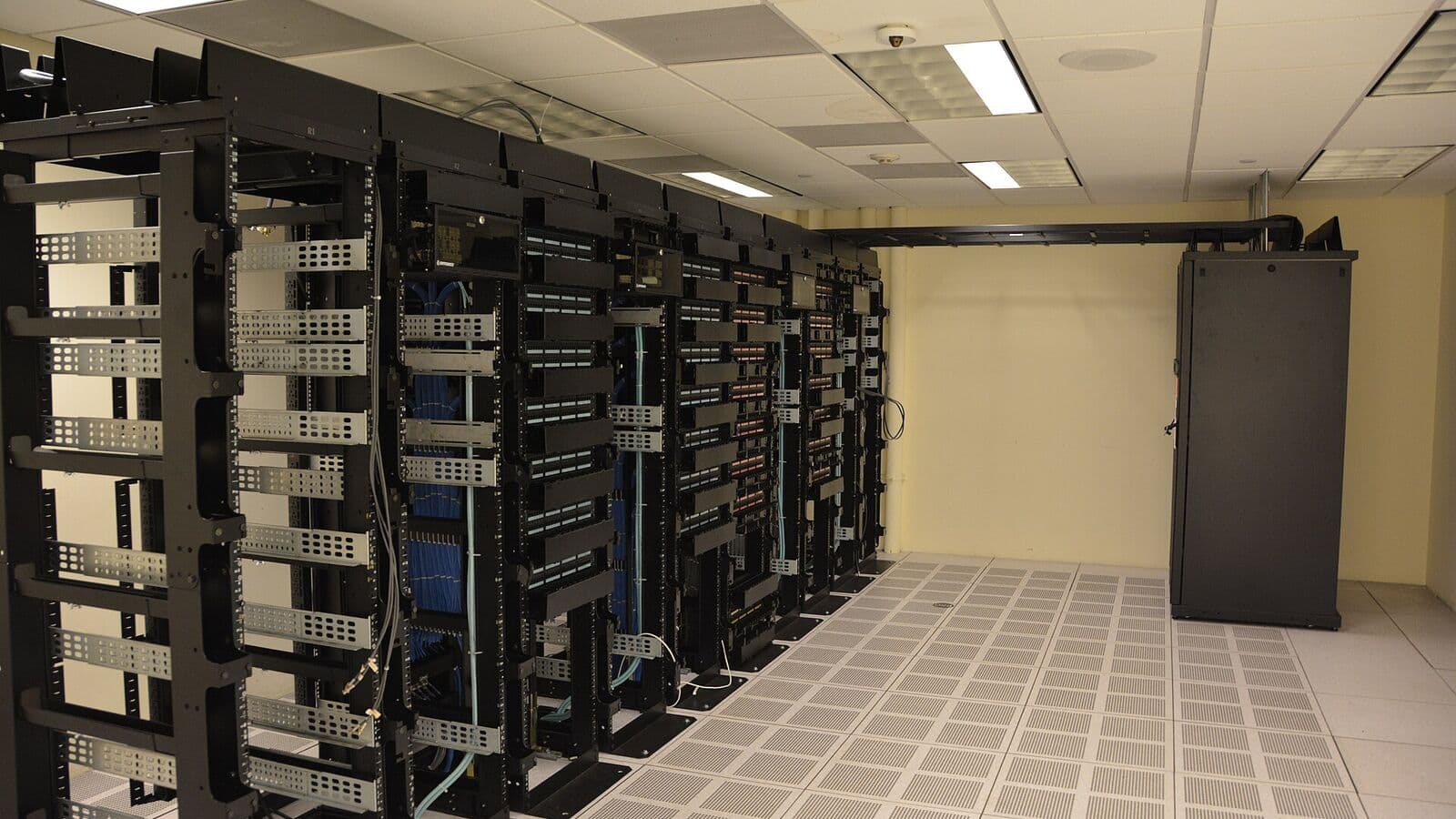
Cooling is the most common point of failure in server room and data centre operations. Not cooling failure in the dramatic sense of a complete HVAC breakdown — though that happens — but cooling inadequacy: a room that was sized for 10 kW of IT load now carrying 20 kW, airflow patterns that leave some racks running hot while others are overcooled, or a general HVAC system that cannot provide the consistent, controlled cooling that sensitive IT equipment requires.
This guide explains the engineering fundamentals of data centre cooling: how to calculate the cooling load your IT equipment generates, why general HVAC is inadequate for server rooms, how airflow management principles reduce cooling energy requirements, and what the PUE metric tells you about your facility's cooling efficiency. We also address the specific challenges of cooling in Bangladesh's hot, humid climate.
The Fundamental Equation: IT Load Equals Cooling Load
Every watt of electrical power consumed by IT equipment is ultimately converted to heat and released into the room. This is a physics law with no exceptions — there are no partially efficient servers that convert some power to useful computation and discard less heat. All power consumed becomes heat.
Therefore: Cooling load (kW) = IT equipment load (kW)
If your server room contains 25 kW of IT equipment operating at full load, it generates 25 kW of heat that must be removed to maintain operating temperature. If it also contains 5 kW of UPS and power distribution losses, lighting, and other non-IT loads, total cooling load is 30 kW.
Converting kW to Cooling Tons
Cooling capacity in the HVAC industry is often expressed in "tons of cooling" (a historical measure based on the cooling capacity of melting ice). 1 ton of cooling = 3.517 kW of heat removal.
Cooling tons = IT load (kW) ÷ 3.517
For a 25 kW IT room: 25 ÷ 3.517 = 7.1 tons of cooling capacity required for the IT equipment alone. Add the non-IT loads and PUE overhead, and the total HVAC capacity required for a 25 kW server room is typically 9–12 tons.
Add a 20–30% safety margin to the calculated cooling load when specifying HVAC capacity — allowing for load growth and ensuring the cooling system operates at sustainable duty cycles rather than continuous maximum output.
Precision Air Conditioning vs. General HVAC
Why General Building HVAC Fails in Server Rooms
Standard building air conditioning systems — split units, cassette units, central fan coil units — are designed for human comfort: maintaining temperature in a range of 20–26°C with moderate humidity control. They are not designed for server rooms in several critical respects:
Continuous operation: General HVAC systems are designed for occupancy hours, not 24/7 operation. Compressors, fans, and controls in standard commercial HVAC have maintenance requirements and design lifetimes based on 10–14 hours/day operation. Running them continuously accelerates wear and reduces reliability.
Humidity control: General HVAC primarily controls temperature; humidity control is secondary. Server rooms need humidity maintained within 40–60% relative humidity (ASHRAE guidelines). Low humidity causes electrostatic discharge damage; high humidity causes condensation on circuit boards. General HVAC cannot reliably maintain these tight humidity bounds.
Sensible heat ratio: General HVAC is designed with a significant latent cooling capacity (removing moisture from the air) appropriate for human-occupancy spaces. Server rooms produce almost no moisture — the heat load is almost entirely sensible (dry heat). Precision air conditioning units have a high sensible heat ratio (SHR of 0.90+), meaning they are specifically designed to cool dry heat loads efficiently without dehumidifying excessively.
Air distribution: General HVAC delivers air from ceiling diffusers. Server equipment draws cool air from the front and exhausts hot air from the rear. Ceiling diffusers mix supply air with room air, reducing the temperature differential and cooling effectiveness. Precision air conditioning delivers cool air directly to the floor level (under a raised floor) or directly to the equipment aisle.
CRAC vs. CRAH Units
Two types of precision air conditioning serve data centre and server room applications:
CRAC (Computer Room Air Conditioning) units contain a complete refrigeration system — compressor, condenser, expansion valve, and evaporator coil — within a single floor-standing unit. They are self-contained and require only electrical connection (and a condenser circuit to reject heat, either air-cooled to an external condenser or water-cooled). CRAC units are appropriate for small to medium server rooms (up to approximately 500 kW) and are the most common precision cooling solution in Bangladesh's enterprise market.
CRAH (Computer Room Air Handler) units use chilled water (from a centralised chiller plant) rather than a self-contained refrigeration circuit. They are more energy-efficient than CRAC units at large scale because centralised chillers can achieve higher efficiency than distributed compressor units, particularly with free cooling capability. CRAH units require chilled water infrastructure — a chiller plant, chilled water pipework, and a cooling tower. They are appropriate for large data centre deployments (above 500 kW) where the investment in chilled water infrastructure is justified by the efficiency gains.
For the majority of Bangladesh enterprise server rooms (20 kW to 200 kW), CRAC units with air-cooled condensers on the building rooftop or in adjacent plant rooms are the practical choice.
Hot Aisle / Cold Aisle Containment
The Basic Principle
The most impactful single change you can make to your server room's cooling efficiency — and it costs almost nothing — is correct hot aisle/cold aisle rack arrangement.
All modern servers draw cool air from the front face and exhaust hot air from the rear. If server racks are arranged with fronts facing each other (cold aisle configuration) and backs facing each other (hot aisle configuration), the cooling system can deliver cool supply air to the cold aisle directly and extract hot exhaust air from the hot aisle directly.
Without this arrangement — with racks arranged randomly or with fronts and backs intermixed — hot exhaust air from one rack is drawn in as supply air by an adjacent rack. This "hot air recirculation" forces servers to work harder (higher fan speeds) to maintain safe temperatures and forces the cooling system to work harder (lower supply air temperatures, higher airflow rates) to compensate. Energy waste increases and equipment reliability decreases.
Containment: Sealing the Separation
Hot/cold aisle arrangement is beneficial. Hot/cold aisle containment — physically sealing the cold aisle or hot aisle to prevent mixing — is dramatically more beneficial.
Cold aisle containment physically encloses the cold aisle with end panels and a ceiling, creating a plenum that supplies cool air exclusively to server intake faces. Hot exhaust air from server rear faces rises freely into the room and is returned to the CRAC units. Typical energy savings from cold aisle containment versus uncontained arrangement: 20–40% reduction in cooling energy for the same IT load.
Hot aisle containment physically encloses the hot aisle with end panels and a ceiling that connects to the CRAC return air plenum. Cool air fills the open room and supplies server intakes; hot exhaust is captured and returned directly to the cooling units. Hot aisle containment typically achieves slightly higher efficiency than cold aisle containment for the same room configuration.
For Bangladesh server rooms where cooling energy represents a significant operating cost, implementing proper aisle containment is the highest-return improvement available at minimal capital cost (containment panels typically cost BDT 100,000–300,000 for a medium server room).
In-Row Cooling for High-Density Racks
When Standard Cooling Is Not Enough
Standard CRAC units are designed for average rack power densities of 3–8 kW per rack. As server density increases — a single server chassis with 8 high-density compute nodes can consume 20+ kW — the airflow volume required exceeds what floor-level supply air can deliver without extremely high velocity and turbulence.
High-density racks (10 kW+) require cooling closer to the heat source. In-row cooling (IRC) units — precision cooling units the same width and height as a server rack, positioned between IT equipment racks — deliver cool air directly to the adjacent equipment at the point of need, with minimal travel distance and maximum efficiency.
IRC units connect to chilled water circuits or use self-contained refrigeration. They cool the local micro-environment of the high-density rack directly, without requiring the room-level cooling system to handle the high-density load. Room-level CRAC units continue to handle background room cooling; IRC units handle the hot spots.
For Bangladesh enterprises deploying high-density compute — HCI (Hyper-Converged Infrastructure) platforms, GPU compute nodes, or high-core-count server configurations — in-row cooling is the enabling infrastructure that allows these deployments to be safe and reliable.
PUE: Measuring Your Cooling Efficiency
PUE (Power Usage Effectiveness) is the standard metric for data centre energy efficiency:
PUE = Total Facility Power ÷ IT Equipment Power
Where Total Facility Power includes cooling (the largest overhead), lighting, UPS losses, power distribution losses, and any other non-IT loads.
A PUE of 1.0 is theoretical perfection — all energy consumed goes to IT equipment. Real facilities range from:
- 1.1–1.2: Hyperscale cloud data centres with highly optimised cooling and power
- 1.3–1.5: Well-designed modular or modern enterprise data centres
- 1.5–2.0: Typical enterprise data centres with standard CRAC cooling
- 2.0–2.5+: Poorly designed or overcooled legacy server rooms
In Bangladesh's climate context, achieving PUE below 1.5 requires active design effort — aisle containment, appropriately sized precision cooling, efficient UPS systems, and attention to lighting and miscellaneous power loads. A PUE of 2.0–2.5 for an air-cooled Bangladesh server room without containment is typical of what many organisations currently operate.
Improving PUE from 2.0 to 1.5 for a 40 kW IT load reduces cooling power consumption from 40 kW to 20 kW — a saving of 20 kW × 8,760 hours/year × BDT 8.5/kWh = BDT 1,489,200 per year in energy cost.
Bangladesh Climate Challenge: High Ambient Temperature
The Ambient Temperature Problem
Bangladesh's ambient air temperature reaches 35–40°C during April–June and remains above 30°C for most of the year outside December–February. This high ambient temperature affects data centre cooling in two ways.
First, air-cooled CRAC units and chiller systems reject heat to the outdoor air. As outdoor temperature increases, the temperature differential available for heat rejection decreases, reducing the cooling system's efficiency. A CRAC unit designed to deliver 20°C supply air operates more efficiently when the outdoor temperature is 25°C than when it is 40°C — at very high ambient temperatures, cooling capacity may be derated (reduced) by 10–20% relative to the nameplate rating at standard conditions.
Specify CRAC and chiller equipment by requesting the manufacturer's performance data at 40°C ambient temperature — not at the standard rating condition (typically 35°C). This ensures the specified cooling capacity is actually delivered in Bangladesh's worst-case summer conditions.
Second, condenser units (the outdoor component of CRAC systems) located on building rooftops in direct sunlight experience ambient temperatures significantly above air temperature — roof surfaces can reach 55–65°C in direct sun, creating an extremely hostile environment for heat rejection equipment. Specify condenser units for the actual rooftop environment: high ambient temperature ratings, corrosion-resistant construction, and shading where practical.
SSAL's Data Centre Cooling Design Service
SSAL designs precision cooling systems for server rooms and data centres across Bangladesh. Our mechanical engineering team performs heat load calculations, airflow modelling (CFD — Computational Fluid Dynamics — analysis for complex room layouts), equipment selection at Bangladesh-appropriate ambient conditions, and full M&E system design.
We design and install CRAC-based and CRAH-based cooling systems, implement hot/cold aisle containment, and commission in-row cooling for high-density deployments. Our commissioning process verifies actual cooling performance before handover.
Ready to design or audit your server room cooling system?
[Get Free Consultation] — Request a cooling load assessment and system design proposal for your server room.
[Talk to Our Expert] — Discuss your specific cooling challenges and IT density requirements with a data centre specialist.
Filed under
- data-centre-cooling
- CRAC
- CRAH
- hot-aisle
- cold-aisle
- PUE
- server-room-cooling
- Bangladesh
- in-row-cooling
- precision-cooling
SSAL Expert Team
SSAL engineering team — Bangladesh-focused technical writing on security, fire-safety, ICT, and building technology.
Related Articles
Modular vs. Traditional Data Centres: Why Bangladesh Enterprises Are Choosing Prefab
Modular prefab data centres deploy in 90 days vs 18-24 months for traditional builds. PUE, scalability, Bangladesh Bank Tier III compliance, and cost per kW comparison.
OpenTier I vs. Tier II vs. Tier III Data Centres: What Redundancy Level Does Your Business Need?
Compare Tier I, II, III, and IV data centre tiers. Uptime, downtime hours, redundancy requirements, Bangladesh Bank Tier III mandate, and cost vs ROI analysis.
OpenHow to Choose a UPS System for Your Server Room: A Buyer's Guide for IT Managers
Choose the right UPS for your server room. UPS types, kVA sizing, runtime calculation, VRLA vs lithium-ion batteries, N+1 redundancy, and Bangladesh power quality guide.
OpenNeed Help Choosing the Right Solution?
SSAL engineers respond to RFQ submissions within 1 business day with a scoping call request.
- 48-hour site survey
- Free consultation
- 24/7 priority support