
The Case for a Modular Prefab Data Centre in Bangladesh: Speed, Scalability & Sustainability
Author
SSAL Expert TeamPublished
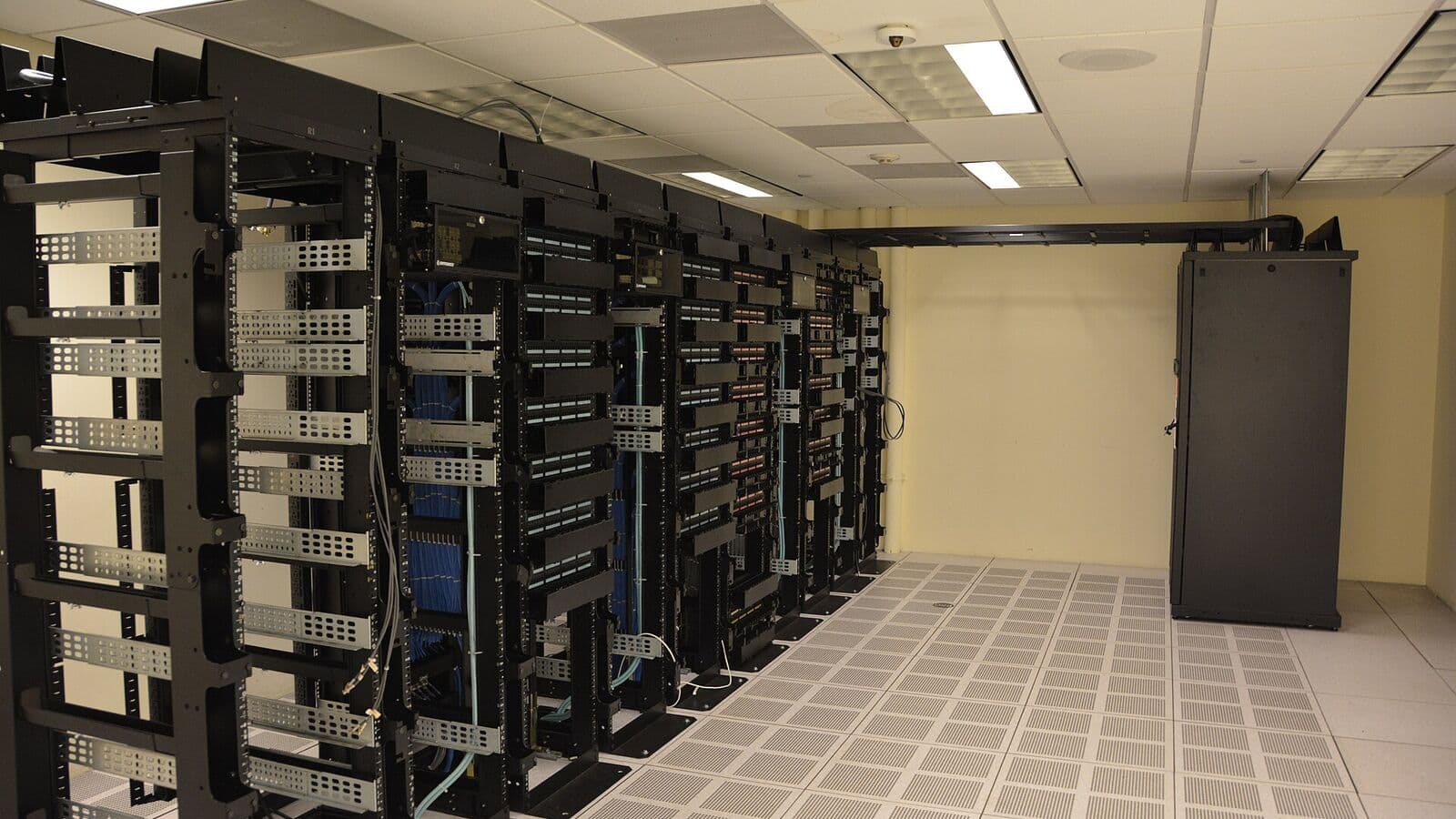
Bangladesh's digital economy is growing faster than its traditional data centre infrastructure can accommodate. Mobile financial services processing billions of transactions monthly, e-commerce platforms scaling rapidly, digital banking expanding from urban centres to rural populations, and enterprise cloud adoption accelerating — all of these trends drive an urgent need for additional data centre capacity that traditional construction approaches cannot deliver quickly enough.
Modular prefabricated data centres are the infrastructure solution that fits Bangladesh's specific situation: organisations that need capacity quickly, cannot commit to a full traditional build programme, and need the flexibility to scale progressively as demand develops. This article makes the full case for modular prefab in the Bangladesh context.
Why Modular Suits Bangladesh: The Structural Case
Rapid Capacity Growth Outpacing Traditional Build Timelines
Bangladesh Bank's progressive data localisation requirements, the Bangladesh government's Digital Bangladesh initiative (now progressed to Smart Bangladesh 2041), and the rapid adoption of digital services by Bangladesh's young, tech-literate population are driving data centre demand growth at rates that traditional 18–24 month construction programmes cannot service.
Consider the typical experience of a Bangladesh bank expanding its digital banking services. The bank's 2023 capacity plan forecast a 3-year demand horizon. By 2025, digital transaction volumes had exceeded the 2026 forecast. A traditional data centre designed in 2023 and delivered in 2025 would have been undersized immediately upon opening. A modular approach, with an initial 40 kW deployment in 90 days and capacity to add modules as demand grows, matches infrastructure delivery to actual demand rather than forecast demand.
This "build what you need now, add what you need later" model is fundamentally better matched to Bangladesh's fast-growth digital economy than the traditional "forecast 5 years ahead and build to that" approach.
Limited Civil Engineering Expertise at Scale
Traditional data centre construction requires specialist civil and MEP (Mechanical, Electrical, Plumbing) engineering expertise — not just for design but for quality construction that meets TIA-942 specifications. Bangladesh has a growing pool of IT engineers but a more limited pool of data centre mechanical and electrical engineering specialists capable of executing Tier III construction to international standards.
Modular data centres transfer the construction quality challenge to factory manufacturing — where the complex precision engineering is executed in a controlled environment by specialist manufacturers with decades of experience. The on-site work is reduced to foundation preparation, power connection, network fibre routing, and module installation — a much simpler scope that Bangladesh's construction industry can execute reliably.
Quality control in factory manufacturing is demonstrably more consistent than field construction. Factory-built modular units undergo Factory Acceptance Testing (FAT) before shipment — every system is tested, measured, and documented before the module leaves the manufacturing facility. Field-constructed facilities undergo Site Acceptance Testing after all the civil and MEP work is complete, at a point where defects are expensive and slow to correct.
Factory Quality Control Advantages
The factory manufacturing environment provides quality control advantages that site construction cannot replicate:
Precision installation: Cable routing, equipment mounting, and system integration are performed by specialist technicians in ergonomically designed factory conditions — controlled lighting, stable temperatures, and access to calibrated tools and test equipment throughout the process.
Integrated testing: All mechanical and electrical systems are fully integrated and tested in the factory before shipment. The cooling system is run and validated. The UPS system is tested under load. The monitoring and management systems are configured and verified. When the module arrives on site, these systems are known-good rather than being commissioned for the first time.
Documentation completeness: Factory processes produce complete, accurate as-built documentation because it is generated as manufacturing proceeds — not reconstructed after field construction where changes accumulate informally. This documentation is essential for Bangladesh Bank compliance audits, TIA-942 certification, and ongoing maintenance.
Controlled tolerances: Fire suppression system nozzle positioning, precision cooling airflow management, raised floor tile alignment, and cable management systems all benefit from factory manufacturing precision that field installation cannot consistently achieve.
Power Efficiency: Free Cooling Options
The Bangladesh Free Cooling Opportunity
"Free cooling" refers to cooling approaches that use ambient air or groundwater temperatures to assist or replace mechanical refrigeration — reducing or eliminating the energy required by compressors. In hot climates, free cooling opportunities are limited; in temperate or cold climates, free cooling can provide the majority of annual cooling energy.
Bangladesh's climate — with ambient temperatures of 20–35°C for most of the year — does not support direct free cooling (using outside air directly). However, indirect economiser cooling — using outside air after heat exchange to pre-cool the water entering the chiller — provides meaningful efficiency improvement during Bangladesh's cooler months (December–February, when ambient temperatures reach 10–20°C at night).
A modular data centre designed with indirect economiser capability achieves PUE of 1.35–1.45 on an annual basis (blending full mechanical cooling in summer with economiser-assisted operation in cooler periods) versus 1.5–1.8 for systems without economiser capability. Over 10 years, this efficiency difference represents significant energy cost savings.
Efficiency by Design in Modular Systems
Modular data centres achieve PUE 1.3–1.5 through design features that are difficult to retrofit into traditionally constructed facilities:
Integrated hot aisle containment: Factory-integrated systems include complete aisle containment by default — raised floor, enclosed cold aisles, blanking panels for unused rack units — achieving consistent airflow management without the compromises of retrofitted containment.
Right-sized cooling: Each module's cooling system is sized precisely for that module's IT load, operating at high efficiency rather than the part-load inefficiency that afflicts oversized traditional CRAC installations.
Optimised power distribution: Factory-designed power distribution paths minimise cable losses and implement high-efficiency transformers where required — reducing power distribution overhead below what field construction typically achieves.
A Real Deployment Story: 90 Days from Order to Live
To make the speed advantage concrete, consider a representative Bangladesh enterprise deployment scenario:
Day 0 — Order placed: A Bangladesh commercial bank places an order for a 40 kW modular data centre module, Tier III specification, with 6 equipment racks, precision cooling, N+1 UPS, and integrated monitoring. Site survey and technical specifications completed during the pre-order assessment.
Days 1–10: Factory manufacturing commenced. Site preparation initiated simultaneously: foundation slab poured at the building's server room location, electrical connection points prepared, network fibre routing completed to connection point.
Days 1–75: Factory manufacturing and testing. Module framework constructed, cooling units installed and integrated, UPS systems installed and tested, rack infrastructure completed, monitoring systems configured.
Day 75: Factory Acceptance Testing. Bank's IT team and SSAL engineers visit the factory for FAT — running the complete system under simulated load, verifying all monitoring and alarm functions, reviewing documentation.
Day 78: Module shipped.
Day 83: Module arrives on site, positioned on prepared foundation, electrical and network connections made.
Days 83–88: Site Acceptance Testing: systems powered up, cooling performance verified at actual site ambient conditions, network connectivity confirmed, monitoring systems validated.
Day 90: First live IT load moved to the modular data centre.
This timeline contrasts with the 18–24 months a traditionally constructed equivalent would have required. The bank's IT team moved from decision to live operation in 3 months rather than 18.
Scalability Story: From 20 kW to 200 kW
One of the most powerful characteristics of modular data centre architecture is granular scalability. An organisation can start with the minimum viable capacity and add modules as demand grows — paying only for what they use, when they use it.
A representative growth scenario:
Year 1 — Initial deployment: 1 module, 20 kW IT capacity. Covers current server infrastructure with modest headroom.
Year 2 — Digital banking growth: Transactional volume doubles; IT load grows to 35 kW. Module 2 added: capacity now 40 kW. 60-day procurement and delivery.
Year 3 — New services: Mobile app and API banking platform added; IT load reaches 55 kW. Module 3 added: capacity now 60 kW.
Year 5 — Full digital transformation: AI-driven banking analytics, real-time fraud detection, expanded customer data platforms; IT load reaches 180 kW. Modules 4–10 added over 18 months as demand grew.
At each step, the organisation added capacity aligned to actual demand rather than forecast demand. Capital was deployed efficiently rather than locked in unused capacity. The modular architecture accommodated 10× capacity growth without facility replacement — only module addition.
Green Credentials: Lower Carbon Construction
Modular data centres carry lower embodied carbon than traditionally constructed equivalents. The reasons are straightforward:
Factory manufacturing efficiency: Mass production processes in a factory are more material-efficient than site construction — less waste, more precise cutting, better material utilisation.
Reduced site activity: The reduced scope of site work means fewer vehicle movements, less diesel consumption by construction equipment, and less construction waste generated on site.
Shipping efficiency: A complete module is transported as a single load, whereas traditional data centre components (CRAC units, UPS equipment, racks, cabling, raised floor tiles) require dozens of separate deliveries.
Optimised power efficiency: The lower PUE of modular systems (1.3–1.5 vs. 1.8–2.5 traditional) represents less electricity consumed per kW of IT load — with corresponding reduction in carbon emissions from electricity generation.
For Bangladesh organisations with sustainability reporting requirements — particularly those with international shareholders, ESG (Environmental, Social, Governance) commitments, or supply chain sustainability requirements — the green credentials of modular data centre infrastructure are a genuine differentiator.
SSAL's Modular Data Centre Programme
SSAL designs, supplies, deploys, and supports modular data centre solutions for Bangladesh organisations across all industries. Our programme covers:
- Needs assessment and capacity planning
- Site survey and foundation design
- Module specification (Tier II or Tier III, capacity, cooling approach)
- Project management through factory manufacturing and site deployment
- Factory Acceptance Testing participation
- Site installation and commissioning
- TIA-942 compliance documentation
- Ongoing monitoring, maintenance, and support
We work with modular data centre manufacturers whose products are designed to Bangladesh Bank ICT Security Guideline requirements and TIA-942 Tier III specifications.
Ready to evaluate modular data centre options for your organisation?
[Get Free Consultation] — Request a modular data centre feasibility assessment and preliminary specification.
[Download Our Modular Data Centre Planning Guide] — A practical guide to scoping a modular deployment for your specific capacity requirements.
[Talk to Our Expert] — Discuss your capacity timeline, compliance requirements, and site constraints with a data centre specialist.
Filed under
- modular-data-centre
- Bangladesh
- prefab
- scalability
- green-data-centre
- TIA-942
- PUE
- 90-day-deployment
- Tier-III
SSAL Expert Team
SSAL engineering team — Bangladesh-focused technical writing on security, fire-safety, ICT, and building technology.
Related Articles
Modular vs. Traditional Data Centres: Why Bangladesh Enterprises Are Choosing Prefab
Modular prefab data centres deploy in 90 days vs 18-24 months for traditional builds. PUE, scalability, Bangladesh Bank Tier III compliance, and cost per kW comparison.
OpenTier I vs. Tier II vs. Tier III Data Centres: What Redundancy Level Does Your Business Need?
Compare Tier I, II, III, and IV data centre tiers. Uptime, downtime hours, redundancy requirements, Bangladesh Bank Tier III mandate, and cost vs ROI analysis.
OpenHow to Choose a UPS System for Your Server Room: A Buyer's Guide for IT Managers
Choose the right UPS for your server room. UPS types, kVA sizing, runtime calculation, VRLA vs lithium-ion batteries, N+1 redundancy, and Bangladesh power quality guide.
OpenNeed Help Choosing the Right Solution?
SSAL engineers respond to RFQ submissions within 1 business day with a scoping call request.
- 48-hour site survey
- Free consultation
- 24/7 priority support