
Cloud vs. On-Premise NVR Storage: What Bangladesh Enterprises Need to Know
Author
SSAL Technical TeamPublished
Reading time
9 min read
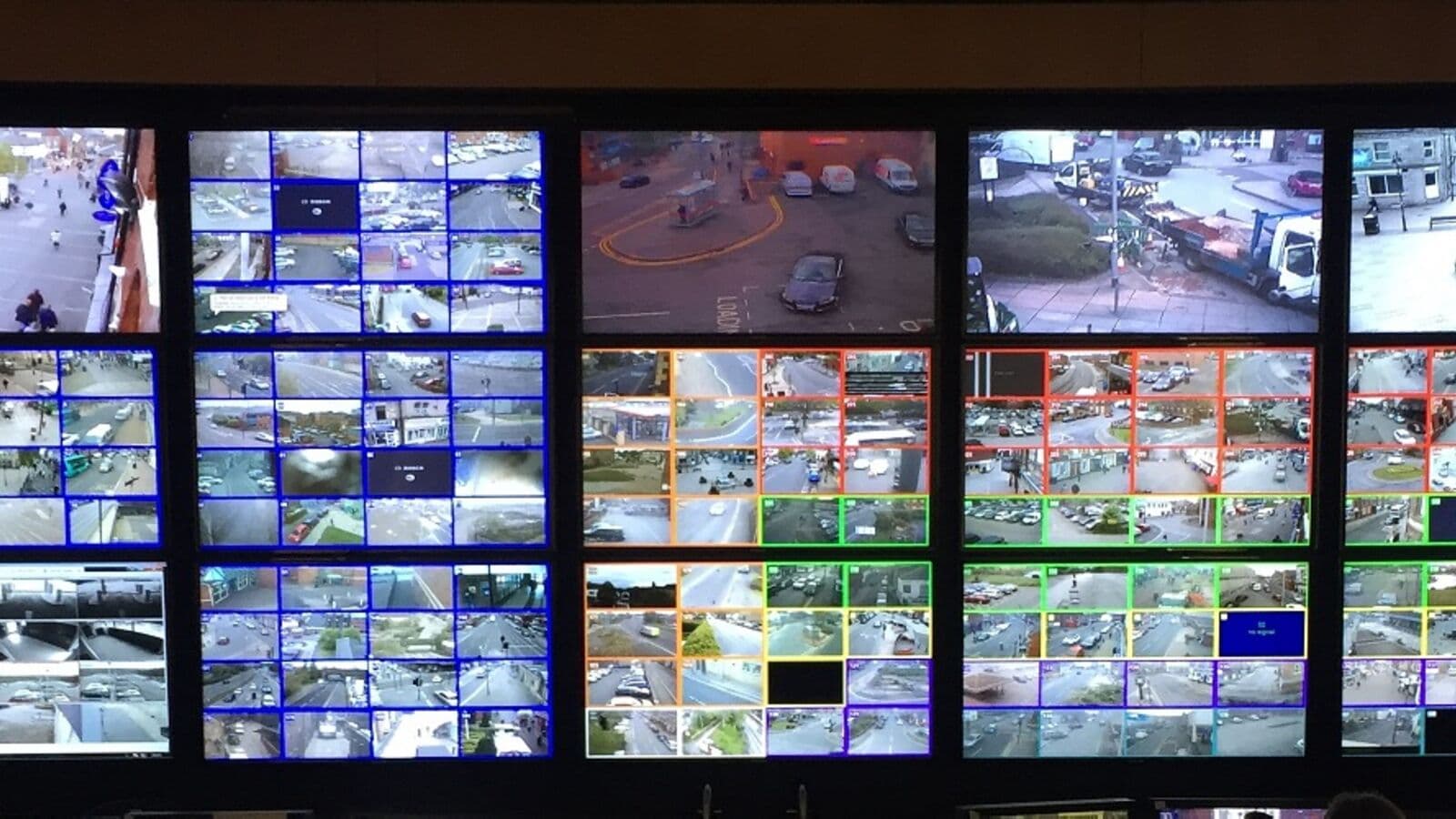
A Dhaka-based pharmaceuticals manufacturer invested heavily in a cloud-based CCTV storage solution recommended by an international consultant. The system worked flawlessly during the trial period in the consultant's home country. In Bangladesh, the reality was different: frequent ISP outages left the system uploading cached footage for hours after connectivity was restored, 4G failover connections were insufficient for the required bandwidth, and the cloud provider's servers were hosted in Singapore — raising questions about data sovereignty under Bangladesh's newly enacted Personal Data Protection Ordinance 2025.
This is not a story unique to cloud storage. On-premise NVR storage has its own failure mode: a fire in a Narayanganj factory destroyed both the production area and the NVR in the security office — the footage needed for the insurance claim existed nowhere else.
The honest answer to "cloud or on-premise?" in Bangladesh is neither a pure approach. Understanding the strengths and failure modes of each option — and designing a hybrid architecture appropriate for Bangladesh's specific infrastructure realities — is the purpose of this guide.
On-Premise NVR Storage: The Bangladesh Standard
On-premise storage means your CCTV footage is recorded and retained on hard drives inside NVRs installed at your facility. This is the predominant approach across Bangladesh today and remains appropriate for many deployments.
Strengths of On-Premise Storage
Full data control: Your footage never leaves your physical premises. There is no subscription, no third-party access, and no dependency on internet connectivity for recording or playback.
Lowest cost per terabyte: Enterprise NAS hard drives cost BDT 4,000–8,000 per terabyte. Cloud storage at equivalent capacity and retention would cost significantly more in subscription fees, particularly for large camera estates.
Fastest playback and evidence retrieval: When you need to review an incident, footage is retrieved from local storage in seconds. Cloud retrieval depends on internet bandwidth, which may be slow for large video files.
No internet dependency for recording: If your internet connection goes down, footage continues recording without interruption. This is critical in Bangladesh where ISP reliability varies significantly by location and provider.
Privacy-by-default: Footage remains within your physical control, simplifying compliance with data minimisation and access control requirements under PDPO 2025.
Weaknesses of On-Premise Storage
Vulnerable to physical disasters: Fire, flooding, or theft can destroy both your facility and your CCTV footage simultaneously. In a flood-prone low-lying area during Bangladesh's monsoon season, a flooded NVR room eliminates months of footage.
Single point of failure: Without RAID, a single hard drive failure can cause footage gaps. Even with RAID, a catastrophic NVR failure (power surge, motherboard failure) can result in storage loss.
Limited disaster recovery: Restoring a failed on-premise system requires sourcing replacement hardware, reinstalling software, and rebuilding RAID arrays — all while the site records no footage. Recovery time can be days.
Physical theft risk: In a robbery or break-in, sophisticated attackers may specifically target and remove the NVR to eliminate footage evidence. On-premise only storage is vulnerable to this targeted evidence destruction.
Cloud Storage: Opportunities and Bangladesh Realities
Cloud CCTV storage records footage to remote servers operated by a cloud provider. Cameras may upload directly to cloud, or an on-site gateway device aggregates footage before upload.
Strengths of Cloud Storage
Offsite protection: Footage stored in the cloud is safe from on-site physical disasters — fire, flood, theft, or sabotage cannot destroy it.
Centralised management for multi-site organisations: Cloud storage allows footage from all sites to be accessed, searched, and exported from a single online platform without VPN or remote NVR access configurations.
Scalable capacity: Adding cameras does not require purchasing additional NVR hardware. Storage scales automatically in the cloud, and you pay for what you use.
Geographic redundancy: Reputable cloud providers replicate data across multiple data centres, providing resilience against individual data centre outages.
Cloud Challenges Specific to Bangladesh
Internet connectivity reliability: Bangladesh's fixed broadband market has improved significantly, but reliability varies by ISP, location, and infrastructure quality. Industrial areas outside Dhaka often have less reliable connectivity than central business districts. Cloud-only storage requires consistently reliable upload bandwidth — an assumption that cannot always be made.
Upload bandwidth requirement: This is a major practical constraint. A 64-camera site with 1080p cameras at H.265 (2 Mbps average per camera) requires 128 Mbps of sustained upload bandwidth to send footage to the cloud in real time. Most Bangladesh commercial broadband connections do not provide 128 Mbps symmetric throughput. Even if the download speed is adequate, upload bandwidth is typically lower.
| Camera Count | Resolution | Codec | Required Upload Bandwidth |
|---|---|---|---|
| 16 cameras | 1080p | H.265 | 32 Mbps |
| 32 cameras | 1080p | H.265 | 64 Mbps |
| 64 cameras | 1080p | H.265 | 128 Mbps |
| 64 cameras | 1080p | H.265+ | 77 Mbps |
Cost at scale: Cloud storage subscriptions for full-footage upload become expensive at 30+ cameras with 30+ day retention. Calculate per-camera, per-month costs carefully and compare against the amortised cost of on-premise hardware over 5 years. Cloud typically becomes more expensive per terabyte at scale.
PDPO 2025 and Data Sovereignty
Bangladesh Regulatory Callout
Bangladesh's Personal Data Protection Ordinance 2025 (PDPO 2025) classifies CCTV footage capturing individuals as personal data. Biometric data captured by facial recognition cameras is a special category of personal data requiring heightened protection.
Key PDPO 2025 implications for cloud CCTV storage:
Cross-border data transfer: Storing personal data on servers in foreign countries (Singapore, the US, India) requires that either the destination country provides adequate data protection, or you obtain explicit consent from data subjects. Most cloud providers host their nearest servers in Singapore or India. Verify your cloud provider's data residency options and data processing agreement.
Data retention limitation: PDPO 2025 requires personal data to be retained no longer than necessary. Your cloud storage settings must align with your stated retention period — footage older than your retention policy must be automatically deleted, not indefinitely retained.
Data processor obligations: Your cloud storage provider is a data processor under PDPO 2025. You must have a Data Processing Agreement (DPA) in place. Verify that your cloud provider provides a PDPO-compliant DPA before committing footage to their platform.
Breach notification: If your cloud storage provider experiences a breach that exposes CCTV footage, you have notification obligations to the Data Protection Authority. Choose cloud providers with strong security certifications (ISO 27001, SOC 2 Type II) and clear breach notification commitments.
The Hybrid Approach: The Right Answer for Most Bangladesh Enterprises
Given the specific challenges of both approaches in the Bangladesh context, a hybrid architecture delivers the best balance of cost, reliability, and data sovereignty.
Hybrid Architecture Principle
All cameras record to on-premise NVR: Full footage is stored locally. No internet dependency for recording. Full retention period managed on-site with lowest cost per terabyte.
Critical cameras upload to cloud as backup: A defined subset of high-priority cameras (teller counters, vault entrance, ATM, server room access) uploads footage to cloud in parallel. This subset requires only 10–20% of the bandwidth that full-site cloud upload would demand.
Cloud backup covers the most important evidence: If the on-premise NVR is destroyed or stolen, footage from compliance-critical cameras is still available in the cloud. Non-critical cameras are covered by insurance and replacement, but compliance footage is protected.
Bandwidth Requirement for Hybrid Backup
For a bank branch with 8 critical cameras uploading to cloud (H.265, 2 Mbps per camera):
Upload bandwidth required: 16 Mbps — well within the capability of a standard commercial broadband connection in any urban Bangladesh location.
This makes hybrid backup immediately viable for virtually any Bangladesh business with a broadband connection, without the infrastructure investment required for full-site cloud.
Recommended Hybrid Implementation
On-premise NVR: Full camera count, full retention period, RAID 5 or 6 for redundancy. Sized for full compliance retention (90 days for regulated entities).
Cloud gateway appliance (or NVR with cloud integration): Hikvision HikCentral, Dahua DMSS Cloud, or Milestone Husky IVO Edge Appliance with cloud gateway functionality.
Cloud storage platform: Choose a provider with Asia-Pacific data residency (Singapore as closest available; verify PDPO compliance documentation). Reputable options include: Hikvision's own cloud platform (Hik-Partner Pro), Amazon Web Services (ap-southeast-1), or Microsoft Azure (Southeast Asia region).
Automatic failover: Configure the NVR to alert administrators when cloud upload fails for more than 30 minutes, enabling rapid ISP or cloud provider issue investigation.
ISP Selection for Cloud-Hybrid Deployments
The reliability of a hybrid cloud storage deployment depends directly on your ISP connection. Consider these factors when selecting or evaluating your ISP:
Dedicated vs. shared bandwidth: Dedicated leased line (DLL) connections provide guaranteed bandwidth with SLA commitments. Shared broadband connections provide "up to" speeds with no upload guarantee. For any cloud-reliant CCTV deployment, a dedicated leased line is strongly recommended.
ISP uptime SLA: Request the SLA document from your ISP. Reputable enterprise ISPs in Bangladesh offer 99.5% monthly uptime (approximately 3.6 hours downtime per month maximum) on dedicated connections.
Failover connectivity: For critical sites, implement dual-ISP connectivity. If your primary ISP connection fails, the secondary ISP automatically takes over, maintaining cloud upload of critical footage without gap.
Upload speed specification: Verify the upstream bandwidth explicitly. Many broadband packages advertise download speeds prominently but provide significantly lower upload speeds. Request the upload speed guarantee in writing.
Cost Comparison Over 5 Years
For a 32-camera, 90-day retention deployment:
| Storage Approach | Year 1 Cost | Years 2–5 Cost | 5-Year Total |
|---|---|---|---|
| On-premise NVR + RAID | BDT 8–12 lakh (hardware) | BDT 1–2 lakh/year (AMC, drive replacement) | BDT 12–20 lakh |
| Full cloud (32 cameras) | BDT 1.5–2 lakh (gateway) | BDT 6–10 lakh/year (subscription) | BDT 25–42 lakh |
| Hybrid (on-premise + 8 critical cameras cloud) | BDT 9–13 lakh (NVR + gateway) | BDT 2–3.5 lakh/year (AMC + cloud sub) | BDT 17–27 lakh |
Full cloud storage is significantly more expensive at scale for extended retention periods. The hybrid approach adds modest cloud subscription costs to the on-premise investment in exchange for disaster recovery protection of critical footage.
Key Takeaways
- On-premise NVR is the lowest-cost, most reliable option for recording — but vulnerable to physical disasters and targeted evidence theft
- Cloud storage provides offsite protection but requires consistent upload bandwidth that Bangladesh's ISP infrastructure does not universally support
- Bangladesh broadband typically cannot support full-site cloud upload for 30+ camera deployments without dedicated leased line connectivity
- PDPO 2025 creates data sovereignty obligations for cloud-stored CCTV footage — verify data residency and data processing agreements before committing footage to any cloud platform
- Hybrid architecture (on-premise NVR for all cameras + cloud backup for critical cameras only) provides the best balance of cost, reliability, and disaster recovery for Bangladesh conditions
- Full cloud is significantly more expensive than on-premise for large camera counts over 5 years
Ready to Design Your Storage Architecture?
SSAL designs hybrid cloud and on-premise CCTV storage architectures that match Bangladesh's specific infrastructure realities. Our team assesses your ISP capability, calculates your storage requirements, and designs an architecture that protects your most critical footage against physical disaster while managing cost and PDPO 2025 compliance obligations.
Contact SSAL for a storage architecture consultation:
- Phone: +880 1799-986890
- Email: info@smartsafety.com.bd
- Web: www.smartsafety.com.bd
- Office: Youth Tower Level 2, 822/2 Rokeya Sarani, Dhaka-1216
Worried about losing evidence if your NVR is stolen or destroyed? Request a free disaster recovery assessment — our team reviews your current storage setup and designs a cost-effective hybrid backup solution that protects your critical footage regardless of what happens on-site.
Filed under
- cloud storage
- NVR storage
- on-premise storage
- PDPO 2025
- data sovereignty
- hybrid storage
- Bangladesh broadband
- CCTV storage
- surveillance
SSAL Technical Team
SSAL engineering team — Bangladesh-focused technical writing on security, fire-safety, ICT, and building technology.
Related Articles
4K Ultra-HD CCTV Cameras: Is the Extra Resolution Worth It for Your Business?
Is 4K CCTV worth the investment? Understand identification distances, storage costs, and the right use cases for 4K surveillance in Bangladesh facilities.
OpenAI-Powered Video Analytics: A Complete Guide for Bangladesh Enterprise Decision-Makers
Understand AI video analytics for Bangladesh enterprises. People counting, LPR, facial recognition, PPE compliance, and ROI analysis from SSAL's experts.
OpenThe Complete CCTV Buying Guide for Bangladeshi Businesses: 10 Questions to Ask Before You Buy
10 essential questions to answer before buying CCTV for your Bangladesh business. Coverage, compliance, analytics, maintenance, and vendor evaluation from SSAL.
OpenNeed Help Choosing the Right Solution?
SSAL engineers respond to RFQ submissions within 1 business day with a scoping call request.
- 48-hour site survey
- Free consultation
- 24/7 priority support