
IP Camera vs. Analog CCTV Camera: The Complete Comparison for Bangladesh Businesses (2026)
Author
SSAL Technical TeamPublished
Reading time
9 min read
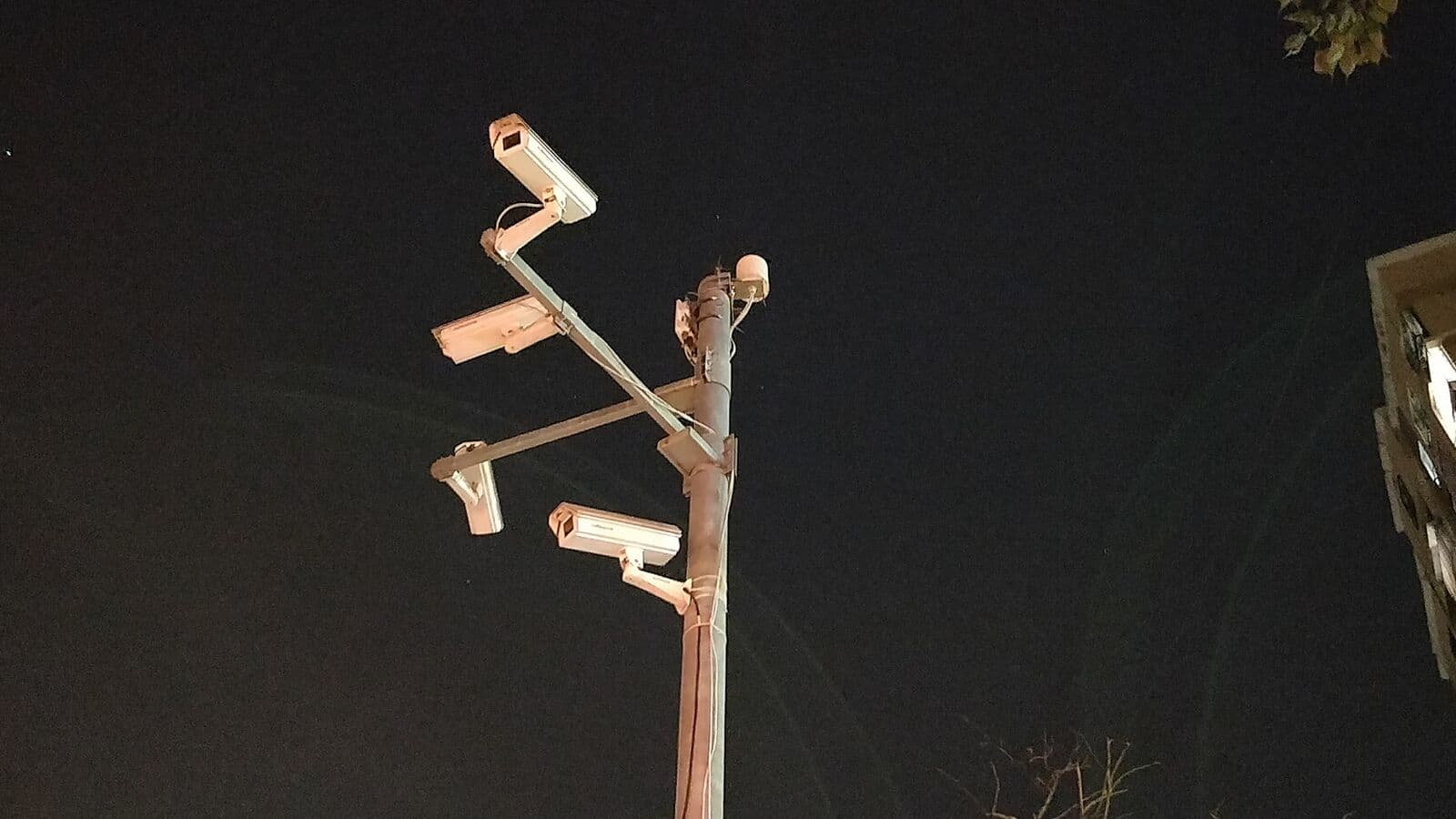
A warehouse in Gazipur was robbed in broad daylight. Security footage from the site's aging analog CCTV system captured the entire event — as a blurry, pixelated mess that police could not use for identification. The property loss exceeded BDT 45 lakh. The analog cameras cost BDT 12 lakh to install six years ago. A modern IP system would have cost BDT 18 lakh and delivered courtroom-quality 4K footage.
This scenario plays out repeatedly across Bangladesh's rapidly growing commercial sector. Businesses that invested in analog CCTV a decade ago now face a critical decision: maintain an outdated system, upgrade incrementally, or migrate fully to IP technology. Making the right choice requires understanding exactly what separates these two fundamentally different technologies — and what each choice costs you in the long run.
This guide gives you a complete, technical comparison to help you choose correctly for your specific situation.
What Is the Core Technical Difference?
Analog cameras convert light into an analog electrical signal and transmit it over coaxial cable to a Digital Video Recorder (DVR), which digitises and stores the footage. The signal degrades with cable length, and image quality is locked to the camera's analog resolution.
IP cameras digitise the image inside the camera itself, compress it using modern codecs like H.265, and transmit the digital stream over standard Ethernet (Cat 5e/Cat 6) to a Network Video Recorder (NVR). Because the signal is digital from the point of capture, there is no degradation over the network, and resolution scales as high as the camera sensor allows.
This fundamental difference cascades into every aspect of system performance, cost, and flexibility.
Resolution: The Most Visible Difference
Resolution is where the gap between analog and IP cameras is most stark.
| Technology | Resolution | Megapixels | Typical Use |
|---|---|---|---|
| Legacy Analog (CVBS) | 480 TVL | ~0.4 MP | Archival systems only |
| HD-TVI / HD-CVI Analog | 1080p | 2 MP | Budget upgrades |
| AHD 4K Analog | 3840×2160 | 8 MP | High-end analog (rare) |
| IP Entry-Level | 1080p | 2 MP | Small offices |
| IP Mid-Range | 4 MP / 5 MP | 4–5 MP | Commercial standard |
| IP High-End | 4K (8 MP) | 8 MP | Enterprise / compliance |
| IP Ultra-High | 12 MP / 32 MP | 12–32 MP | Forensic / critical infrastructure |
Standard analog cameras deliver approximately 0.4 megapixels. A 2-megapixel IP camera delivers five times more detail. A 4K IP camera delivers twenty times more detail than a legacy analog camera. This is not a marginal improvement — it is the difference between identifying a face and seeing a blurry outline of a person.
Why Resolution Matters in Bangladesh Bank Compliance
Bangladesh Bank's ICT Security Guideline v4.0 requires CCTV coverage at all bank branches with footage sufficient for investigative purposes. While the guideline does not mandate a specific resolution, the practical standard for identification purposes requires at minimum 1080p at key areas such as teller counters, ATMs, vault entrances, and IT rooms. Legacy analog systems frequently fail to meet this standard in practice, even when they technically have cameras installed.
Network Infrastructure: Coaxial vs. Ethernet
Analog: Coaxial Cable
Analog systems use RG-59 or RG-6 coaxial cable. This cable is thick, inflexible, difficult to route, and requires BNC connectors that must be crimped properly. Maximum effective distance is typically 300 metres for HD analog signals before quality degrades.
Coaxial cable cannot carry power. You need a separate power run to every camera, which doubles your cabling work and cost.
IP: Ethernet with PoE
IP cameras connect over Cat 5e or Cat 6 Ethernet cable — the same cable used for your office network. Power over Ethernet (PoE) delivers both data and power through a single cable, eliminating separate power runs entirely.
A PoE switch centrally powers all cameras on a single UPS. During power cuts — a daily reality across much of Bangladesh — your cameras continue operating without individual battery backups at each camera point.
Pro Tip: For new installations in Bangladesh, always specify Cat 6 cable rather than Cat 5e. The marginal cost difference is small, and Cat 6 handles Gigabit speeds for future 4K camera upgrades without recabling.
Maximum PoE distance is 100 metres per standard. For longer runs, use a PoE extender (adds another 100m) or a fibre optic link. Fibre is especially valuable for connecting buildings across a campus, as it is immune to lightning-induced surges — a significant risk during Bangladesh's monsoon season.
Remote Access and Mobile Monitoring
This is arguably the most significant practical advantage of IP systems for modern businesses.
Analog DVR systems typically support remote access through manufacturer proprietary apps with variable reliability. Footage quality is often re-encoded, losing significant detail. Many older DVR systems require port forwarding configurations that create cybersecurity vulnerabilities.
IP NVR systems stream digital footage directly. You view the same quality footage on your smartphone as you see on the local monitor. Enterprise IP systems support:
- Multi-site monitoring from a single dashboard
- Instant push alerts when motion or analytics events trigger
- Secure VPN-based remote access
- Multi-user access with granular permissions per user
- Forensic-quality footage export to USB or cloud in seconds
For Bangladesh business owners managing properties across Dhaka, Chittagong, and Sylhet simultaneously, this capability transforms security management.
Video Compression and Storage
Analog systems that have been digitised by a DVR typically use older compression standards. Modern H.264 compression was once the IP system standard. Now, H.265 is the baseline for any new IP installation.
H.265 reduces storage requirements by approximately 50% compared to H.264 for the same video quality. Hikvision's proprietary H.265+ achieves 70-80% reduction through additional optimisation.
Practical Storage Example
Consider a 32-camera system, 30 days retention, 2MP cameras recording at 15 fps:
| Compression | Daily Storage | 30-Day Total |
|---|---|---|
| Older DVR (H.264) | 3.2 TB | 96 TB |
| IP NVR (H.265) | 1.6 TB | 48 TB |
| IP NVR (H.265+) | 0.96 TB | 29 TB |
For Bangladesh Bank compliance requiring 90-day retention, these differences become enormous. An analog/DVR system at 90 days requires approximately 288 TB of storage. An H.265+ IP system requires approximately 87 TB — one-third the cost.
Total Cost of Ownership Analysis
The initial installation cost comparison is nuanced. Pure analog systems are cheaper upfront. However, TCO over five years tells a different story.
| Cost Factor | Analog System | IP System |
|---|---|---|
| Camera cost (per unit) | Lower (BDT 3,000–8,000) | Moderate–Higher (BDT 5,000–25,000+) |
| Cabling cost | Coaxial + power cable | Single Cat 6 cable |
| Recording hardware | DVR | NVR (similar cost) |
| Storage hardware (90-day) | Much higher (3× more HDDs) | Lower |
| Power consumption | Higher (separate PSUs per camera) | Lower (PoE, central UPS) |
| Maintenance | Higher (separate power points) | Lower |
| Scalability | Limited by DVR channel count | Flexible (software licences) |
| Compliance (Bangladesh Bank) | May require additional cameras | Meets requirements at lower camera count |
When you factor in storage hardware costs, power costs, and maintenance costs over five years, IP systems typically match or undercut analog system TCO — while delivering dramatically superior performance.
Bangladesh-Specific Considerations
Bangladesh Regulatory Callout
Bangladesh Bank ICT Security Guideline v4.0 requires CCTV at all bank branches with minimum 90-day footage retention. The guideline specifically requires biometric access control for IT rooms with CCTV coverage. In practical terms:
- 90-day retention of HD footage is economically viable only with H.265 or H.265+ IP cameras
- IP camera analytics (queue management, intrusion detection) directly support operational compliance
- Bangladesh Bank inspection teams increasingly scrutinise footage quality during audits
- Branches found using inadequate CCTV systems have been required to upgrade at their own cost with short compliance timelines
Monsoon and Environmental Performance
Bangladesh's monsoon season runs from June through September, bringing heavy rainfall, high humidity, and flooding risk. For outdoor cameras:
- All outdoor IP cameras should be IP66 or IP67 rated as minimum
- Avoid locations where standing water can submerge camera bases
- Surge protection on every PoE port is essential during thunderstorm season
- Hikvision's AcuSense cameras with IP67 ratings are well-proven in Bangladesh conditions
The Migration Path: Analog to IP
Many Bangladesh businesses have existing analog infrastructure they cannot write off immediately. Here are the three migration options:
Option 1: Hybrid DVR/NVR (HVR)
A Hybrid Video Recorder accepts both analog cameras and IP cameras. You keep existing analog cameras and add new IP cameras as budget allows. This is cost-effective for short-term transitions.
Option 2: Video Encoders (Analog to IP Conversion)
Analog-to-IP encoders connect to your existing coaxial cable and convert the analog signal to a digital IP stream for your NVR. This reuses coaxial cabling while gaining NVR benefits. Suitable when coaxial is in good condition and runs are under 300 metres.
Option 3: Full IP Migration
Replace cameras, cabling, and recording systems simultaneously. This delivers maximum performance and is cost-effective when existing coaxial cable is degraded, when compliance requirements are immediate, or when the site is being renovated anyway.
Pro Tip: If you are undertaking any renovation, fit Cat 6 cable in conduit at the same time. Cabling during construction costs a fraction of retrofitting after walls are finished. Do not miss this window.
When to Keep Analog (Short-Term)
There are legitimate scenarios where maintaining analog is the right choice:
- Your existing cameras are under two years old and working correctly
- Your budget cycle does not allow capital expenditure this year
- Your site will undergo major renovation within 12–18 months, making migration more cost-effective then
- Your compliance requirements do not mandate HD resolution in the short term
In these cases, ensure your DVR is upgraded to support H.264 at minimum, install larger HDDs to extend retention, and plan your IP migration for the next budget cycle.
When IP Is Essential (Act Now)
Do not delay migration if any of the following apply:
- You are a regulated entity under Bangladesh Bank (banks, NBFIs, mobile financial services)
- You are a listed company or enterprise subject to audit where security footage may be evidence
- Your existing analog cameras are more than five years old
- You are installing any new cameras (always install IP)
- You have experienced a security incident where footage quality was inadequate
- You manage multiple sites and need centralised remote monitoring
Key Takeaways
- IP cameras deliver 5–20× more resolution than legacy analog cameras — the difference between identifying a suspect and seeing a blur
- PoE simplifies installation and centralises power management, critical for Bangladesh's power reliability challenges
- H.265+ IP systems require one-third the storage of analog systems for 90-day retention — directly impacting Bangladesh Bank compliance costs
- Total cost of ownership over five years typically favours IP systems even though upfront camera costs are higher
- Three migration paths exist: hybrid recorder, video encoders, or full migration — each suited to different business situations
- New installations should always use IP cameras with no exceptions
Ready to Upgrade Your Security System?
SSAL's technical team conducts free site surveys across Bangladesh, evaluating your current infrastructure and designing the optimal IP camera system for your facility. Whether you need a 10-camera office upgrade or a 500-camera enterprise deployment meeting Bangladesh Bank compliance requirements, we deliver complete turnkey solutions using Hikvision, Dahua, Bosch, Axis, and Avigilon platforms.
Contact SSAL today for your free site survey:
- Phone: +880 1799-986890
- Email: info@smartsafety.com.bd
- Web: www.smartsafety.com.bd
- Office: Youth Tower Level 2, 822/2 Rokeya Sarani, Dhaka-1216
Already know what you need? Request a project quotation directly through our website and our team will respond within one business day with a detailed proposal.
Filed under
- CCTV
- IP camera
- analog camera
- Bangladesh Bank compliance
- security surveillance
- NVR
- DVR
- H.265
SSAL Technical Team
SSAL engineering team — Bangladesh-focused technical writing on security, fire-safety, ICT, and building technology.
Related Articles
4K Ultra-HD CCTV Cameras: Is the Extra Resolution Worth It for Your Business?
Is 4K CCTV worth the investment? Understand identification distances, storage costs, and the right use cases for 4K surveillance in Bangladesh facilities.
OpenAI-Powered Video Analytics: A Complete Guide for Bangladesh Enterprise Decision-Makers
Understand AI video analytics for Bangladesh enterprises. People counting, LPR, facial recognition, PPE compliance, and ROI analysis from SSAL's experts.
OpenThe Complete CCTV Buying Guide for Bangladeshi Businesses: 10 Questions to Ask Before You Buy
10 essential questions to answer before buying CCTV for your Bangladesh business. Coverage, compliance, analytics, maintenance, and vendor evaluation from SSAL.
OpenNeed Help Choosing the Right Solution?
SSAL engineers respond to RFQ submissions within 1 business day with a scoping call request.
- 48-hour site survey
- Free consultation
- 24/7 priority support