
Night Vision CCTV: IR Illumination vs. Low-Light Colour Cameras vs. Thermal — Which Is Right for You?
Author
SSAL Technical TeamPublished
Reading time
9 min read
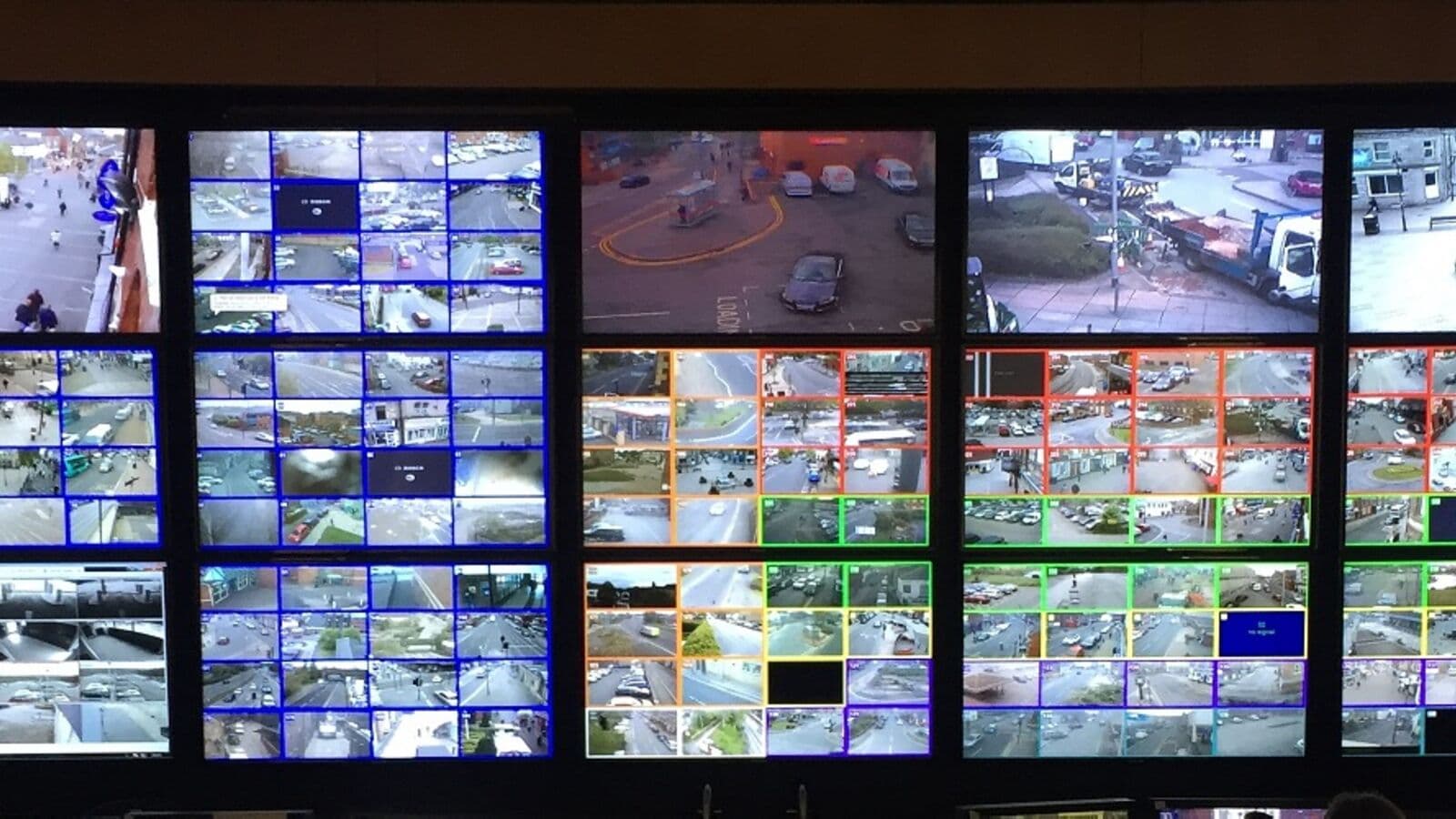
Every security incident in Bangladesh that occurred after dark in the past decade has something in common: footage quality determined whether evidence was usable. In areas with consistent street lighting, standard IR cameras provide adequate footage. In rural areas, industrial zones, and anywhere affected by Bangladesh's load-shedding, the footage quality degrades dramatically — dark scenes, grainy images, no colour information.
Bangladesh's specific challenge is unique: load-shedding is not a random emergency but a daily operational condition in many areas. An outdoor camera that relies on street lighting for usable footage is effectively blind during power cuts in its vicinity. This reality makes night-vision technology selection particularly consequential for Bangladesh facilities.
This guide explains the four main approaches to CCTV night vision, their performance characteristics, and the specific conditions under which each is the right choice.
How Standard CCTV Cameras Handle Darkness
All standard CCTV cameras use visible light sensors — the same basic technology as the camera in your smartphone. In complete darkness, these sensors capture nothing useful. Night vision capability must be engineered specifically.
The human eye can adapt to low light down to approximately 0.001 lux (full moon, open ground). Modern CCTV cameras without night vision technology struggle below 1 lux and produce unusable footage below 0.1 lux. Most outdoor environments without artificial lighting are at 0.01 lux or lower.
Four technologies address this limitation: IR illumination, Starlight/low-light sensors, supplemental white-light LEDs, and thermal imaging.
Technology 1: IR (Infrared) Illumination — The Standard Approach
How IR Illumination Works
IR cameras contain Infrared LED arrays built into the camera housing. These LEDs emit light at wavelengths of 850nm or 940nm — invisible to the human eye but detectable by the camera's CMOS sensor (which is sensitive to IR light). The camera illuminates the scene with IR light, and the sensor captures the IR-illuminated image.
The image produced is black and white (monochrome), because colour information requires visible light spectrum discrimination that IR light cannot provide.
IR Range
IR range depends on the power of the LED array and the lens aperture. Typical ranges:
| Camera Type | Typical IR Range |
|---|---|
| Mini dome (indoor) | 15–25 metres |
| Standard dome (outdoor) | 25–50 metres |
| Bullet camera (outdoor) | 50–100 metres |
| Long-range bullet | 100–200 metres |
| Dedicated IR illuminator (separate unit) | 200–500 metres |
Smart IR (available on most modern cameras including Hikvision AcuSense and Dahua WizSense) automatically adjusts IR LED intensity as subjects approach the camera, preventing overexposure of close subjects while maintaining adequate illumination at the maximum range.
850nm vs. 940nm IR
850nm IR: The most common. LEDs emit a faint visible reddish glow from the camera housing at close range. Performance is slightly better than 940nm for the same LED power. Appropriate for most applications.
940nm IR: Completely invisible to the human eye — no visible glow from the camera. Used for covert surveillance applications where visible LED glow would reveal the camera presence. Slightly shorter effective range for equivalent power.
IR Illumination Strengths
- Works in complete darkness — no ambient light required
- Standard feature on nearly all outdoor cameras — no additional cost
- Very long range possible with dedicated illuminators (up to 500m)
- Reliable and proven technology
IR Illumination Limitations
- Black-and-white footage only — no colour information
- Cannot identify clothing colour, vehicle colour, or other colour-dependent details
- IR reflection inside dome cameras can degrade image quality (use turret cameras to avoid this)
- IR range decreases in rain, fog, and haze (water droplets scatter IR light)
- 850nm cameras have a faint LED glow visible to close observers
Technology 2: Starlight / Low-Light Colour Cameras
How Starlight Technology Works
Starlight cameras (Hikvision's branding) and equivalent "low-light colour" cameras from Dahua (WizColor) and other manufacturers use a combination of techniques to capture usable colour footage at extremely low light levels:
Larger camera sensor: A physically larger CMOS sensor collects more photons per pixel, improving low-light performance.
Wider lens aperture (lower f-number): An f/1.2 or f/1.4 lens aperture allows significantly more light to reach the sensor than a standard f/2.0 lens.
Slow shutter speed (electronic): Extending the shutter period (up to 1/25 second) allows the sensor to accumulate more light per frame.
Advanced noise reduction: AI-based noise reduction algorithms (such as Hikvision's ANR technology) remove noise artefacts from low-light images while preserving image detail.
The result is colour footage at light levels approaching 0.001 lux — essentially matching human eye capability in low light. At this sensitivity, a scene illuminated only by moonlight or distant street lighting produces colour footage.
Starlight Performance vs. IR
| Light Level | Standard Camera | Starlight Camera | IR Camera |
|---|---|---|---|
| Bright daylight | Excellent colour | Excellent colour | Excellent colour |
| Overcast day | Good colour | Good colour | Good colour |
| Dusk (10 lux) | Good colour | Excellent colour | Switches to B&W IR |
| Street-lit night (1 lux) | Poor | Good colour | Good B&W |
| Moonlit (0.01 lux) | Unusable | Usable colour | Good B&W |
| Complete darkness (0 lux) | Nothing | Nothing | Good B&W (IR) |
The Starlight camera's advantage is colour information in low but non-zero light. It cannot function in complete darkness. Most modern Starlight cameras combine Starlight sensors with IR LEDs — they use the Starlight colour mode when light is present and switch to IR black-and-white mode in complete darkness.
Bangladesh Load-Shedding Relevance
When street lighting fails during load-shedding, Starlight cameras transition from colour low-light mode to IR black-and-white mode automatically. The camera continues functioning — but loses the colour advantage that distinguishes it from a standard IR camera. For complete darkness capability, Starlight cameras still need IR LEDs.
The practical recommendation: Starlight cameras are excellent for locations with street lighting that is reliable most of the time. During the periods of load-shedding-induced darkness, they fall back to standard IR performance.
Technology 3: Full-Colour with White Light LEDs
How White-Light Supplement Works
Some cameras (Hikvision ColorVu, Dahua Full-Color) include visible white light LEDs in addition to or instead of IR LEDs. When triggered by low light or motion detection, these LEDs illuminate the scene with white light, producing full-colour footage.
Because the illumination is visible white light, subjects are aware of the camera illuminating them — there is no covert aspect. The advantage is colour footage at any light level, including complete darkness.
Hikvision ColorVu: Permanent White Light
ColorVu cameras use white light LEDs that activate continuously in low-light conditions, maintaining colour footage throughout the night. The camera does not switch to black-and-white IR mode.
Applications where permanent colour is critical:
- Parking lots where vehicle colour identification is important for security response
- ATM locations where clothing colour identifies suspects across multiple cameras
- Factory perimeters where colour distinguishes between worker uniforms and intruders
- Any location where colour evidence is expected by investigators
Limitation: The white light LEDs are visible, potentially revealing the camera to subjects in covert applications. They also attract insects at night (a genuine operational nuisance in outdoor Bangladesh applications) — Hikvision's newest ColorVu cameras include insect-resistant lens covers.
Activated-on-Motion White Light
Some cameras activate white light LEDs only when motion is detected, remaining in IR mode at other times. This reduces power consumption and the "always illuminated" visibility while providing colour footage when subjects are present.
Technology 4: Thermal Cameras for Night Detection
Thermal cameras are covered in depth in our dedicated thermal camera guide. In the night vision context, thermal is the only technology that operates in complete darkness with no illumination whatsoever — no IR LEDs, no white light, no ambient light required.
Thermal cameras detect body heat. A person walking across a completely dark scene with no light source of any kind is perfectly visible on a thermal camera.
Night vision summary for thermal:
- Operates in zero light (no LEDs required)
- Detection range up to 500+ metres in total darkness
- No colour information
- Cannot identify individuals (only heat signatures)
- Highest cost
Recommendation Matrix
| Scenario | Best Technology |
|---|---|
| Indoor locations with reliable lighting | Standard camera (no night vision needed) |
| Indoor low-light (corridors, car parks) | IR dome or Starlight camera |
| Outdoor, consistent street lighting | Starlight + IR (automatically switches) |
| Outdoor, unreliable power / load shedding | IR camera (reliable regardless of ambient light) |
| Outdoor, colour evidence critical | ColorVu / Full-Color with white LEDs |
| Perimeter, long range, complete darkness | IR bullet (100m+) or thermal |
| Perimeter, identification after alarm | Thermal (for detection) + IR PTZ (for identification) |
| ATM vestibule, 24-hour colour | ColorVu with continuous white LEDs |
| Factory entrance, shift changes in darkness | Starlight or ColorVu |
| Remote site with no power, needs detection | Thermal (solar-powered option) |
Bangladesh-Specific Night Vision Considerations
Bangladesh Night Conditions and Recommendations
Load-shedding: Power cuts affecting street lighting are common in Bangladesh outside Dhaka's main commercial districts. Any outdoor camera that relies on street lighting for colour footage becomes an IR-only camera during load-shedding events. Design your system assuming zero ambient light at all times for outdoor locations in areas that experience regular load-shedding.
Monsoon season darkness: During heavy monsoon rainfall, ambient light levels drop significantly even during daytime. Outdoor cameras in exposed locations experience rain-degraded IR performance (water droplets scatter IR). Starlight cameras with large aperture lenses perform better in monsoon conditions than standard IR cameras with smaller apertures.
Insects and white light: White light LEDs on outdoor cameras attract insects — a genuine operational issue in Bangladesh's tropical climate. Modern ColorVu cameras include insect-resistant mesh covers. For locations with severe insect problems, IR illumination is more practical than white light LEDs.
Industrial haze and factory smoke: In industrial areas, IR illumination is degraded by haze. Starlight cameras (which use ambient light rather than IR) perform better in hazy conditions during the day and at dusk, but fall back to degraded IR at night. For industrial perimeters with permanent haze, thermal cameras are the only reliable solution.
Hikvision ColorVu and AcuSense Combination
Hikvision's latest cameras combine ColorVu white-light technology with AcuSense AI analytics. The AcuSense chip distinguishes between human and vehicle subjects and non-human motion (animals, leaves, rain). When a human is detected, the camera triggers the white-light LEDs for colour footage; non-human motion keeps the camera in energy-saving mode.
This combination delivers:
- Colour footage whenever a human or vehicle is present
- AI-filtered alerts (only human/vehicle triggers send notifications — no false alarms from animals or weather)
- Energy efficiency (LEDs only active when needed)
- Forensic colour evidence for all human and vehicle events
For Bangladesh outdoor applications requiring colour evidence, this is the premium recommendation.
Key Takeaways
- Standard IR illumination works in complete darkness and is reliable regardless of ambient light — critical for Bangladesh load-shedding conditions
- Starlight cameras deliver colour footage at very low light levels but require some ambient light — they fall back to IR in complete darkness
- ColorVu/Full-Color cameras with white LEDs provide colour footage in any condition including complete darkness — at the cost of visible illumination (not covert)
- Thermal cameras are the only technology that detects in absolute darkness without any illumination — but at high cost and without colour or identification capability
- For Bangladesh outdoor cameras in load-shedding-affected areas: specify IR or ColorVu as a base, with IR as the fallback — never rely on ambient light alone
- Monsoon rain degrades IR range — specify cameras with higher-than-needed IR range as margin for rain performance degradation
- Insects are a practical concern with white-light LED cameras outdoors in Bangladesh — use models with insect-resistant covers
Ready to Specify the Right Night Vision for Your Facility?
SSAL's technical team assesses your specific lighting conditions, load-shedding frequency, and security objectives to recommend the right night vision technology for every outdoor camera in your system. We supply Hikvision ColorVu, AcuSense, Starlight, and Dahua WizColor and WizSense cameras across Bangladesh.
Contact SSAL for a free night vision assessment:
- Phone: +880 1799-986890
- Email: info@smartsafety.com.bd
- Web: www.smartsafety.com.bd
- Office: Youth Tower Level 2, 822/2 Rokeya Sarani, Dhaka-1216
Want to see the difference between IR, Starlight, and ColorVu footage quality in real Bangladesh nighttime conditions? Request a night demonstration visit from our team — we bring live cameras to your site and demonstrate actual footage quality at night in your specific environment.
Filed under
- night vision
- IR camera
- Starlight camera
- ColorVu
- WizColor
- thermal camera
- low-light CCTV
- load shedding
- Bangladesh
- surveillance
SSAL Technical Team
SSAL engineering team — Bangladesh-focused technical writing on security, fire-safety, ICT, and building technology.
Related Articles
4K Ultra-HD CCTV Cameras: Is the Extra Resolution Worth It for Your Business?
Is 4K CCTV worth the investment? Understand identification distances, storage costs, and the right use cases for 4K surveillance in Bangladesh facilities.
OpenAI-Powered Video Analytics: A Complete Guide for Bangladesh Enterprise Decision-Makers
Understand AI video analytics for Bangladesh enterprises. People counting, LPR, facial recognition, PPE compliance, and ROI analysis from SSAL's experts.
OpenThe Complete CCTV Buying Guide for Bangladeshi Businesses: 10 Questions to Ask Before You Buy
10 essential questions to answer before buying CCTV for your Bangladesh business. Coverage, compliance, analytics, maintenance, and vendor evaluation from SSAL.
OpenNeed Help Choosing the Right Solution?
SSAL engineers respond to RFQ submissions within 1 business day with a scoping call request.
- 48-hour site survey
- Free consultation
- 24/7 priority support