
PTZ Cameras vs. Fixed Cameras: When to Use Each in Your Facility
Author
SSAL Technical TeamPublished
Reading time
9 min read
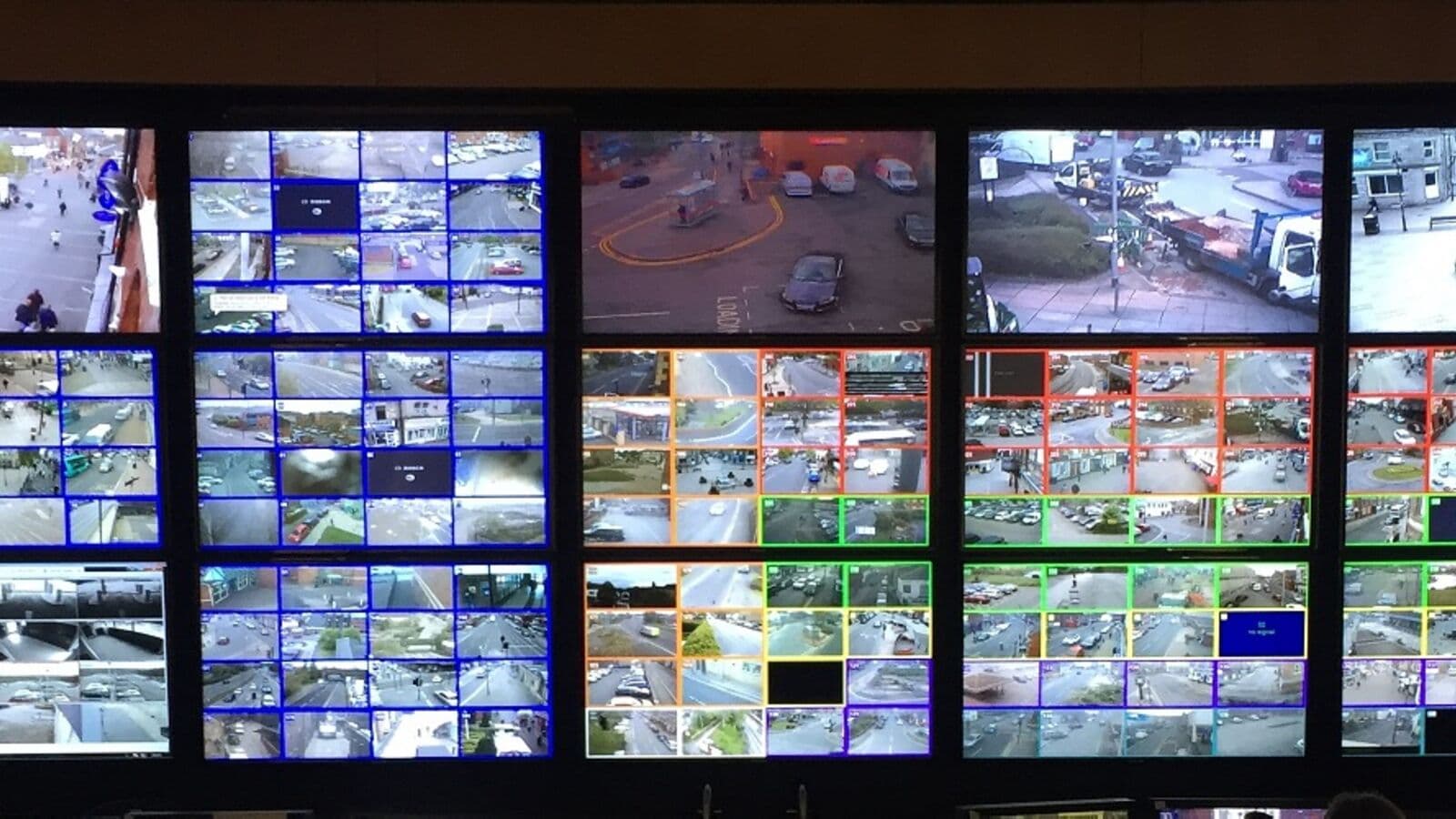
A logistics company in Chittagong installed 12 PTZ cameras across their 3-hectare container terminal, believing that PTZ cameras' ability to move and zoom would cover the entire site with fewer units. Eighteen months later, they had experienced three significant cargo thefts. In every case, the PTZ camera was pointing in the wrong direction at the time of the incident.
This is the fundamental challenge of PTZ cameras: they can only look in one direction at a time. A fixed camera never misses its designated coverage zone. PTZ cameras offer enormous flexibility and range, but that flexibility requires skilled operation and careful configuration to avoid coverage gaps.
Understanding when each technology serves you — and how to combine them effectively — is essential for designing a CCTV system that actually protects your facility.
How PTZ Cameras Work
PTZ stands for Pan-Tilt-Zoom. These cameras contain motorised mechanisms that allow the lens assembly to rotate horizontally (pan), tilt vertically (tilt), and adjust the lens focal length (zoom) — all under remote control or automated programming.
The Mechanics of PTZ Movement
Pan range: Most PTZ cameras rotate 360 degrees continuously (full 360° pan). Some high-speed PTZ cameras complete a full rotation in under 2 seconds.
Tilt range: Typically -90° to +90° (from pointing straight down to pointing straight up). Some cameras offer additional tilt range for specific applications.
Optical zoom: The most important technical specification of a PTZ camera. Optical zoom physically adjusts the lens focal length, maintaining full image resolution at the zoomed view. A 30× optical zoom on a 2MP camera provides a 2MP image at 30× magnification.
Digital zoom: Digital zoom crops and enlarges the image electronically, reducing resolution. Digital zoom is available on all cameras but provides no resolution benefit. Always specify optical zoom when comparing PTZ cameras.
Preset Positions, Tours, and Auto-Tracking
PTZ cameras deliver their value through programmable behaviour:
Preset positions: Store up to 300 predetermined camera positions. Operators can call up any preset with a single click, instantly pointing the camera at a specific location.
Guard tours: Programme the camera to cycle through a sequence of preset positions at defined intervals. A 10-position tour covering a large area every 60 seconds ensures systematic coverage — though it creates predictable gaps between positions.
Auto-tracking: Modern PTZ cameras with AI use object detection to automatically follow a moving person or vehicle within the camera's field of view. The camera locks onto a detected subject and tracks it across the scene. This is the most powerful PTZ feature for active security — the camera follows a suspicious person automatically without operator intervention.
Alarm-triggered PTZ: When motion is detected by a perimeter sensor or analytics event triggers on a fixed camera, the PTZ can automatically slew to the relevant preset position. This combines the coverage of fixed cameras with the zooming capability of PTZ.
Optical Zoom vs. Digital Zoom: A Critical Distinction
This distinction matters enormously in specification and purchasing.
| Specification | Optical Zoom | Digital Zoom |
|---|---|---|
| Resolution at zoom | Full sensor resolution | Reduced (cropped) |
| Lens mechanism | Physical focal length adjustment | Software crop/enlarge |
| Useful for identification | Yes | No (beyond 2×) |
| CCTV value | High | Low |
A 4K PTZ camera with 30× optical zoom can identify a face at distances exceeding 100 metres. The same camera using digital zoom would show an indistinct, pixelated blur at the same distance. Never accept a camera specification that conflates optical and digital zoom.
Pro Tip: When specifying PTZ cameras, always ask for the optical zoom ratio and the minimum/maximum focal length in millimetres. A 30× optical zoom with a 6–180mm lens range is a meaningful specification. "30× zoom" without specifying optical is not.
Cost Comparison: PTZ vs. Fixed
PTZ cameras are significantly more expensive than fixed cameras. The cost difference reflects the mechanical complexity of the motorised housing, the optical zoom lens assembly, and the intelligence for auto-tracking.
| Camera Type | Entry Level (BDT) | Mid-Range (BDT) | Enterprise (BDT) |
|---|---|---|---|
| Fixed dome (2MP, H.265) | 4,000–8,000 | 8,000–15,000 | 15,000–40,000 |
| Fixed bullet (2MP, H.265) | 5,000–10,000 | 10,000–18,000 | 18,000–45,000 |
| PTZ (20× optical zoom) | 35,000–60,000 | 60,000–120,000 | 120,000–300,000 |
| PTZ (36×, AI auto-track) | — | 120,000–200,000 | 200,000–500,000+ |
The typical cost multiplier between a fixed camera and a comparable PTZ is 5–10×. This cost must be justified by the specific application.
PTZ Camera: Best Use Cases
Large Open Areas
Warehouses, container terminals, factory yards, sports fields, and plaza areas with clear sightlines are ideal PTZ territory. A single well-positioned PTZ can cover an area that would require 8–12 fixed cameras to cover with overlap zones.
Parking Lots and Vehicle Areas
A PTZ camera at the centre of a large parking area can zoom in on any suspicious vehicle, read licence plates, and track individuals across the entire space. This is highly effective when combined with analytics-triggered alerts.
Perimeter Monitoring
Long perimeter fences and walls are natural PTZ territory. PTZ cameras mounted at perimeter corners can pan to inspect any section of the fence line and zoom in on detected intrusions. When paired with thermal detection cameras (which detect heat signatures at long range), PTZ optical cameras provide the identification detail that thermal cameras cannot.
Active Guard Monitoring
When a trained security guard is monitoring cameras in real time, PTZ cameras become dramatically more valuable. Guards can respond instantly to events, steering PTZ cameras to follow suspicious individuals and zoom in for identification. Facilities with 24/7 manned control rooms derive maximum value from PTZ cameras.
Critical Point Zooming
A PTZ positioned to overlook a vehicle entry gate can zoom in on number plates, then pan to follow a vehicle into the car park. This single camera performs multiple functions that would otherwise require a dedicated LPR camera plus multiple fixed cameras.
Fixed Cameras: Best Use Cases
Fixed cameras, despite their apparent simplicity, are the workhorses of every effective surveillance system. Their critical advantage is consistency: a fixed camera pointed at the teller counter records the teller counter every second of every day, regardless of what else is happening on the property.
Regulatory and Compliance Monitoring Points
Every point that must be continuously recorded without gaps requires a fixed camera. Bangladesh Bank mandates CCTV at teller counters, ATMs, vault entrances, and IT room entries. These must be fixed cameras. A PTZ that might be pointing elsewhere when an incident occurs at the teller counter is unacceptable for compliance purposes.
Entry and Exit Points
Doors, gates, turnstiles, and lifts require continuous, uninterrupted coverage. A fixed camera at each entry point captures everyone who passes through, every time, without fail.
Corridors and Stairwells
Narrow, linear spaces like corridors, stairwells, and escalators are ideal for fixed cameras. A single wide-angle fixed camera can cover an entire corridor from end to end with no movement required.
Retail and Indoor Spaces
Retail checkout counters, reception desks, safes, server racks, and storage areas benefit from dedicated fixed cameras that are always recording the specific point of interest.
Pro Tip: For Bangladesh Bank-compliant installations, always use fixed cameras at every mandated coverage point. Document the camera positions and angles in a site map for compliance audit evidence. PTZ cameras should supplement fixed coverage — never replace it at regulated points.
Hybrid Strategy for Large Campuses
The most effective large-facility surveillance design combines fixed and PTZ cameras in a deliberate architecture:
Layer 1 — Fixed cameras at all critical points: Every entry/exit, compliance monitoring point, internal chokepoint, and asset location has a dedicated fixed camera providing continuous uninterrupted coverage.
Layer 2 — PTZ cameras for wide-area surveillance and incident response: Positioned at elevated vantage points (rooftop corners, lamp posts, elevated structures) with clear sightlines to large open areas. These cameras perform guard tours when the control room is unoccupied and respond to incidents triggered by the fixed camera analytics.
Layer 3 — Analytics integration: Fixed cameras run AI analytics (people counting, perimeter tripwire, loitering detection). When analytics triggers an alert, the nearest PTZ automatically slews to the alarmed location to provide zoomed identification-quality footage.
This three-layer architecture delivers complete, uninterrupted coverage at all critical points plus intelligent, responsive surveillance of large open areas — at optimal cost.
Hikvision PTZ Recommendations
Hikvision's PTZ range is the most widely deployed in Bangladesh. Recommended models for 2026:
Hikvision DS-2DE4425IWG-E (Entry-level PTZ): 4MP resolution, 25× optical zoom, IR range 100m, H.265+, PoE. Suited to medium-sized car parks and perimeters. Typical price: BDT 65,000–85,000.
Hikvision DS-2DE4A425IWG (Mid-range PTZ with AcuSense): 4MP, 25× optical zoom, AI auto-tracking, false alarm reduction analytics, H.265+. Suited to active security monitoring. Typical price: BDT 90,000–130,000.
Hikvision DS-2DF8836IX-AEL (Enterprise PTZ): 8MP 4K resolution, 36× optical zoom, 400m IR range, AI deep learning analytics. Suited to large perimeters, airports, industrial sites. Typical price: BDT 200,000–300,000.
Bosch PTZ Recommendations
Bosch PTZ cameras are preferred for enterprise and banking deployments requiring long-term reliability and deep VMS integration.
Bosch AUTODOME 5100i: 2MP, 30× optical zoom, IVA analytics built-in, IP66/IK10, Bosch VMS and third-party VMS compatible. Premium build quality with exceptional mean time between failures. Typical price: BDT 180,000–250,000.
Bosch MIC inteox 7100i: Ruggedised 2MP PTZ for harsh outdoor environments, 30× optical zoom, -40°C operating range, IP68. Used at critical infrastructure sites requiring extreme reliability.
Application Matrix
| Location | Recommended Camera Type | Rationale |
|---|---|---|
| Bank teller counter | Fixed | Continuous compliance recording |
| Bank ATM | Fixed | Continuous compliance recording |
| Bank vault entrance | Fixed | Continuous compliance recording |
| Large outdoor car park | PTZ + Fixed at entry/exit | PTZ for wide coverage, fixed for entry points |
| Factory production floor | Fixed (wide-angle) | Continuous process monitoring |
| Factory perimeter | PTZ (auto-tracking) + fixed at gates | Wide perimeter coverage with gate documentation |
| Corporate lobby | Fixed + 1 PTZ | Fixed for reception desk, PTZ for lobby overview |
| Data centre hall | Fixed (all rows and aisles) | No gaps in server room coverage |
| Retail shop floor | Fixed | Continuous retail monitoring |
| Shopping mall common area | PTZ + fixed at shops | PTZ for incident response, fixed for shop fronts |
| Stadium or large venue | Multiple PTZ + fixed at entrances | PTZ for crowd management, fixed for access control |
Key Takeaways
- PTZ cameras can only monitor one direction at a time — they create coverage gaps if not properly managed through presets, tours, or auto-tracking
- Fixed cameras provide constant, uninterrupted coverage of their designated zone — essential for compliance monitoring points
- The cost differential between PTZ and fixed cameras is 5–10× — PTZ must be justified by the specific application
- Auto-tracking PTZ cameras dramatically improve effectiveness by following detected subjects automatically
- Best practice combines fixed cameras at all critical/compliance points with PTZ cameras for wide-area surveillance and incident response
- Alarm-triggered PTZ (where analytics on a fixed camera triggers a PTZ to slew to the location) delivers the best of both technologies
Ready to Design Your Camera Deployment?
SSAL's security consultants conduct free site surveys to design the optimal mix of PTZ and fixed cameras for your specific facility. We work with Hikvision, Bosch, Axis, Dahua, and Avigilon PTZ systems and design coverage plans using camera field-of-view modelling software.
Contact SSAL for a free site survey and camera placement design:
- Phone: +880 1799-986890
- Email: info@smartsafety.com.bd
- Web: www.smartsafety.com.bd
- Office: Youth Tower Level 2, 822/2 Rokeya Sarani, Dhaka-1216
Interested in auto-tracking PTZ cameras for your perimeter? Request a live demonstration from our team — we bring reference equipment to your site so you can evaluate real-world tracking performance before committing to a purchase.
Filed under
- PTZ camera
- fixed camera
- CCTV
- surveillance planning
- Hikvision PTZ
- Bosch PTZ
- auto-tracking
- Bangladesh
SSAL Technical Team
SSAL engineering team — Bangladesh-focused technical writing on security, fire-safety, ICT, and building technology.
Related Articles
4K Ultra-HD CCTV Cameras: Is the Extra Resolution Worth It for Your Business?
Is 4K CCTV worth the investment? Understand identification distances, storage costs, and the right use cases for 4K surveillance in Bangladesh facilities.
OpenAI-Powered Video Analytics: A Complete Guide for Bangladesh Enterprise Decision-Makers
Understand AI video analytics for Bangladesh enterprises. People counting, LPR, facial recognition, PPE compliance, and ROI analysis from SSAL's experts.
OpenThe Complete CCTV Buying Guide for Bangladeshi Businesses: 10 Questions to Ask Before You Buy
10 essential questions to answer before buying CCTV for your Bangladesh business. Coverage, compliance, analytics, maintenance, and vendor evaluation from SSAL.
OpenNeed Help Choosing the Right Solution?
SSAL engineers respond to RFQ submissions within 1 business day with a scoping call request.
- 48-hour site survey
- Free consultation
- 24/7 priority support