
Thermal Camera vs. Standard IP Camera for Perimeter Security: A Complete Analysis
Author
SSAL Technical TeamPublished
Reading time
9 min read
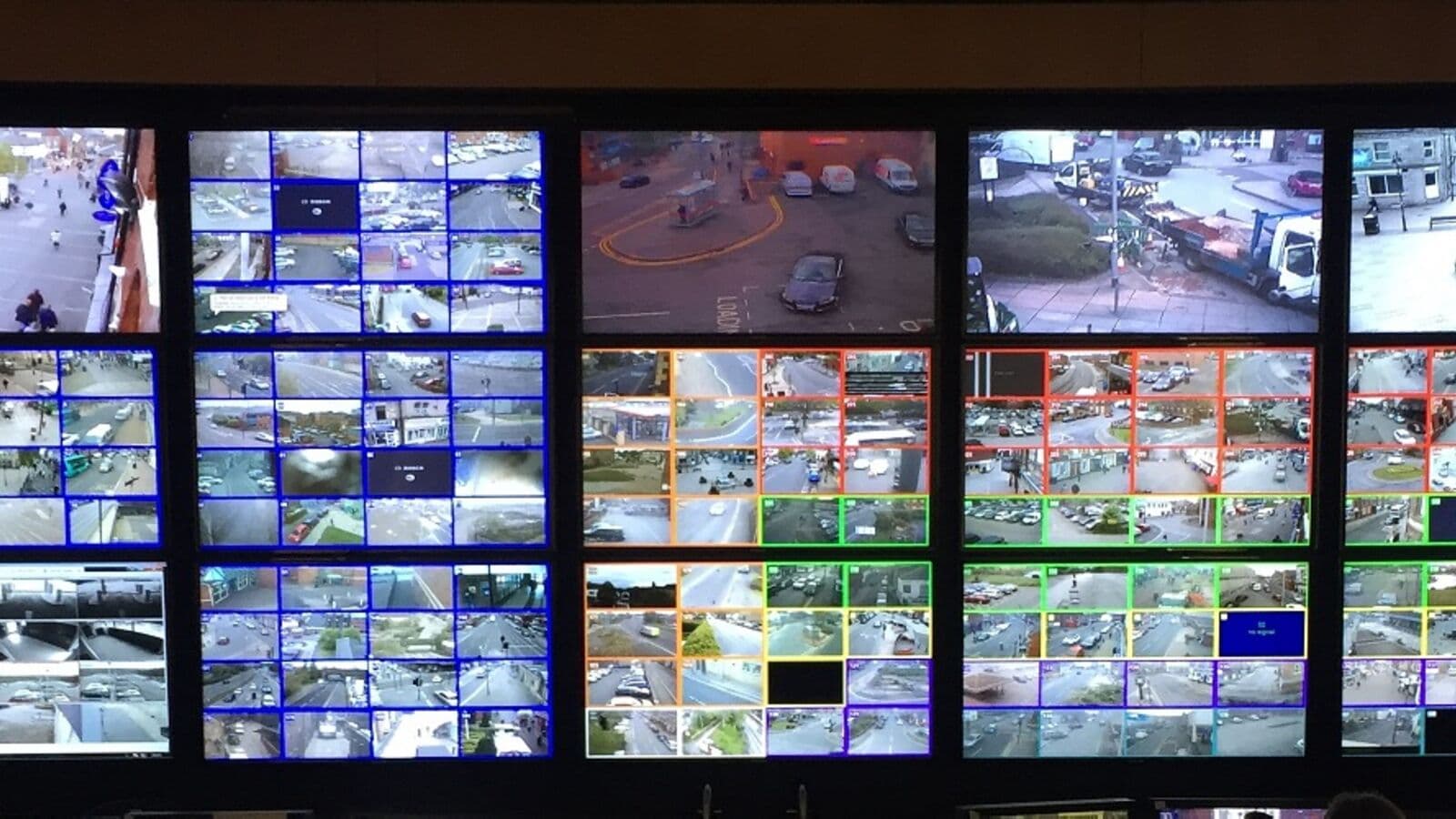
A chemical plant in Narayanganj's industrial zone had 40 IP cameras covering its perimeter fence. During monsoon season, heavy fog at night reduced the IR cameras' effective range to less than 20 metres. Intruders breached the perimeter on multiple occasions during these conditions, confident that the cameras were blinded. The plant subsequently installed 8 thermal cameras at strategic perimeter points. The very next fog event triggered 3 valid intrusion alerts before the intruders reached the fence.
Thermal cameras fundamentally change perimeter security by detecting heat rather than light. In a country where monsoon conditions, industrial haze, and nightly fog regularly degrade optical camera performance, thermal imaging fills a critical gap in perimeter protection.
However, thermal cameras are not universal solutions. They are expensive, cannot read text or identify faces, and serve specific detection functions best. This guide explains precisely when thermal cameras are worth the investment — and when standard IP cameras with good IR illumination are sufficient.
How Thermal Imaging Works
All objects above absolute zero (-273°C) emit infrared radiation proportional to their temperature. Thermal cameras use uncooled microbolometer sensors that detect this radiation in the 8–14 micron wavelength range (long-wave infrared, LWIR), converting it into a temperature map that produces a visible image.
Crucially, thermal cameras do not require any light whatsoever. They detect temperature differences between objects and their background. A human body at 37°C stands out clearly against a background wall or vegetation at 20°C regardless of whether it is pitch dark, heavily overcast, or dense with fog.
This is the core advantage: thermal cameras are completely independent of visible light conditions.
What Thermal Images Show
Thermal cameras produce grayscale or pseudo-colour images where brightness represents temperature rather than light intensity. Hotter objects appear brighter (or red in colour palette modes).
You can see:
- Human and animal silhouettes based on body heat
- Vehicles based on engine and exhaust heat signatures
- Hot or cold spots on machinery for predictive maintenance
- Structural heat loss through building walls (thermographic inspection)
You cannot see:
- Facial features for identification
- Text (licence plates, signage)
- Colour information
- Fine detail for evidentiary identification
Key Advantages of Thermal Cameras for Perimeter Security
1. Adverse Weather Performance
This is the defining advantage for Bangladesh applications.
Fog: Standard IR cameras are severely degraded by fog. The IR light scatters off water droplets, reducing range dramatically and creating glare that obscures the image. Thermal cameras are unaffected by fog — they detect heat radiation, which passes through fog without scattering.
Rain: Heavy monsoon rain reduces IP camera effectiveness through lens water droplets, reduced contrast, and moving rain noise triggering false alarms. Thermal cameras are far less affected. Rain is at ambient temperature and creates minimal contrast against a background; human body heat stands out clearly.
Darkness: Standard cameras with IR illuminators require the IR LEDs to have sufficient range for the target distance. At ranges beyond 100–150 metres, even powerful IR illuminators lose effectiveness. Thermal cameras detect body heat at 500+ metres with no illumination whatsoever.
Camouflage: A person wearing dark clothing against a dark background is nearly invisible to an optical camera at night. To a thermal camera, the person's body heat is immediately visible regardless of clothing colour.
2. Long Detection Range
High-quality thermal cameras can detect a standing human at distances exceeding 500 metres. Vehicle detection ranges can exceed 1,000 metres. This capability is simply impossible with optical cameras and IR illumination at any reasonable cost.
For perimeter monitoring of large industrial sites, EPZ zones, airports, power plants, and data centre campuses, thermal cameras' long detection range means fewer cameras are required to cover the full perimeter.
3. AI Analytics Compatibility
Modern thermal cameras integrate with the same AI video analytics as optical cameras: tripwire detection, zone intrusion, people tracking, and classification (person vs. vehicle vs. animal). Because thermal images have strong contrast between warm objects and cool backgrounds, AI analytics often performs more reliably on thermal feeds than on optical feeds in challenging lighting conditions.
Key Disadvantages and Limitations
1. Cannot Identify Individuals
Thermal cameras detect heat signatures but cannot resolve facial features, clothing details, or other identifying characteristics. A thermal camera tells you "there is a human-sized heat source near the perimeter fence." It cannot tell you who that person is.
This is why thermal cameras are detection tools, not identification tools. Every effective thermal perimeter system pairs thermal cameras (for long-range detection) with optical cameras (for close-range identification after an alert).
2. Cannot Read Text
Licence plates, vehicle markings, signage, and documents are all invisible to thermal cameras. A vehicle at the gate shows as a heat signature; the plate number is unreadable. LPR requires optical cameras.
3. High Cost
Thermal camera sensors are significantly more expensive to manufacture than visible-light CMOS sensors. Entry-level perimeter thermal cameras cost BDT 200,000–500,000 each. High-performance long-range thermal cameras with AI analytics cost BDT 500,000–2,000,000+. This cost restricts thermal cameras to high-priority perimeter points rather than comprehensive coverage.
4. Lower Image Resolution
Thermal sensors typically operate at lower pixel counts than optical cameras. Common resolutions are 384×288 or 640×480 pixels — far below a 2MP optical camera's 1920×1080 pixels. While this is sufficient for detection and classification, it limits the granularity of the thermal image.
Dual-Sensor Thermal + Optical Cameras: The Best of Both
The optimal perimeter solution combines thermal and optical sensors in a single housing. Dual-sensor cameras (also called bispectral cameras) mount both a thermal sensor and an optical camera together, typically with motorised alignment.
How they work:
- The thermal sensor continuously monitors the full scene for heat anomalies
- When the thermal analytics detects a person or vehicle, it triggers an alert
- The optical camera automatically slews to the detected location and provides identification-quality footage
- PTZ-enabled optical cameras can zoom in on the detected subject for face/vehicle identification
This architecture eliminates the fundamental limitation of thermal cameras — the inability to identify subjects — by automatically directing an optical camera to any thermal detection event.
Thermal Camera Products for Bangladesh
FLIR (Teledyne FLIR)
FLIR is the global market leader in thermal cameras. Their security camera range includes:
FLIR FC-Series S: Entry-level fixed thermal cameras for perimeter detection. 320×240 to 640×480 sensors, built-in analytics, PoE powered. Detection range up to 400m for humans. Suitable for industrial perimeters and gated community boundaries.
FLIR PT-Series (PTZ thermal + optical): Dual-sensor PTZ combining a thermal detector with an HD optical camera. The thermal sensor detects intrusions; the optical PTZ slews for identification. Suited to airport, port, and critical infrastructure applications.
Hikvision Thermal Range
Hikvision DS-2TD2136-15 (Fixed Thermal): 384×288 thermal sensor, 15mm lens, detection range approximately 350m for humans, AI classification (person/vehicle), H.265, PoE. Excellent value for mid-tier perimeter applications. Typical price: BDT 280,000–380,000.
Hikvision DS-2TD4236D-25 (Dual-Sensor Thermal + PTZ Optical): 400×300 thermal sensor paired with 2MP optical PTZ (36× optical zoom). Thermal detects at distance, PTZ optical zooms in for identification. Comprehensive perimeter solution. Typical price: BDT 800,000–1,200,000.
Axis Thermal Range
Axis Q19 Series: Compact fixed thermal cameras with ARTPEC-7 processing for on-camera AI analytics. VAPIX API for deep VMS integration. NDAA-compliant for US government projects. Premium build quality and cybersecurity features. Typical price: BDT 350,000–600,000.
Axis Q6135-LE (PTZ thermal + optical): Combined thermal sensor and 2MP optical PTZ in a single housing, industry-leading analytics. Suited to high-security perimeters requiring the highest reliability.
Specific Use Cases in Bangladesh
RMG Factory Perimeters
Large RMG factory complexes in Ashulia, Gazipur, and Narsingdi span several hectares with perimeter fence lines of 500–2,000 metres. Covering these perimeters with optical cameras requires dense placement (every 30–40 metres), large numbers of cameras, and extensive IR lighting infrastructure.
Three to four strategically placed thermal cameras at perimeter corners can detect intrusions across the full perimeter and direct optical PTZ cameras for identification — at significantly lower total system cost than dense optical camera coverage.
Chemical Plant and Industrial Site Security
Industrial zones in Narayanganj, Chittagong's port area, and EPZ industrial parks require perimeter security that functions through industrial haze, smoke, and night fog. Thermal cameras are the only technology that reliably operates through these conditions. The addition of fire detection analytics on thermal cameras (detecting heat anomalies indicating early-stage fires) provides dual security and safety value.
Power Plant and Utility Infrastructure
Power generation facilities, substation compounds, and utility infrastructure have large perimeters and face serious consequences from sabotage or intrusion. Thermal cameras with long detection ranges and AI classification provide the detection capability required at these high-consequence facilities.
Port and Logistics Facilities
Chittagong port facilities and inland container depots have perimeters adjacent to water, where sea mist and humidity regularly degrade optical camera performance. Thermal cameras provide reliable detection where optical cameras struggle.
Bangladesh Monsoon Consideration
Bangladesh Context: Monsoon Performance
Bangladesh's monsoon season (June–September) brings conditions that specifically challenge optical perimeter security:
- Heavy rainfall reducing optical camera range and increasing false alarms from moving rain
- Dense fog in low-lying areas, river valleys, and coastal regions — particularly problematic at night
- High humidity that can degrade optical IR performance on poorly sealed cameras
Thermal cameras perform in all of these conditions because they detect heat, not light. For perimeter security at any Bangladesh site that experiences seasonal fog or industrial haze, the case for at least strategic thermal camera deployment at perimeter corners is compelling.
Minimum specification for outdoor thermal cameras: IP66 or IP67 weatherproofing rating. IK10 vandal resistance for cameras within reach of perimeter fences.
Cost Justification Framework
Given the significant premium of thermal cameras over optical cameras, a structured cost justification is advisable:
| Factor | Question to Answer | Thermal Justified If... |
|---|---|---|
| Perimeter length | What distance must be monitored? | Over 200m perimeter sections |
| Optical camera count needed | How many optical cameras needed vs thermal? | Thermal reduces total camera count |
| Night performance requirement | Does performance in total darkness matter? | Yes — thermal is essential |
| Fog/weather frequency | Does seasonal fog degrade optical cameras? | More than 10 nights/year — thermal justified |
| Asset value at risk | What is the cost of a successful perimeter breach? | Over BDT 50 lakh — thermal justified |
| False alarm cost | What does each false alarm cost in guard response? | High — thermal reduces false alarms significantly |
For most industrial facilities, hospitals, data centres, and logistics compounds in Bangladesh, the combination of monsoon conditions, large perimeter areas, and high-value assets justifies thermal camera deployment at strategic perimeter points with optical cameras for entry points and identification.
Key Takeaways
- Thermal cameras detect heat radiation rather than light — they function in complete darkness, heavy fog, rain, and haze
- Detection ranges exceeding 500 metres for humans make thermal cameras essential for large perimeter sites
- Thermal cameras cannot identify individuals or read text — they are detection tools, not identification tools
- Dual-sensor thermal + optical cameras solve the identification limitation by automatically directing an optical PTZ to detected heat events
- For Bangladesh perimeters, monsoon fog and rain are specific conditions where thermal cameras significantly outperform optical systems
- Cost is high (BDT 200,000–1,200,000+ per camera) — justify through perimeter length, asset value, and weather conditions at the specific site
- Hikvision, FLIR, and Axis all offer suitable thermal perimeter solutions for Bangladesh conditions
Ready to Secure Your Perimeter with Thermal Imaging?
SSAL designs thermal perimeter security systems for industrial facilities, logistics compounds, and critical infrastructure across Bangladesh. Our team conducts free site surveys, assesses your perimeter challenges, and designs the optimal combination of thermal detection and optical identification cameras.
Contact SSAL for a free perimeter security assessment:
- Phone: +880 1799-986890
- Email: info@smartsafety.com.bd
- Web: www.smartsafety.com.bd
- Office: Youth Tower Level 2, 822/2 Rokeya Sarani, Dhaka-1216
Interested in seeing thermal camera performance in Bangladeshi weather conditions? Request a thermal camera site demonstration — our team brings equipment to your facility and demonstrates real-world detection performance during your actual environmental conditions.
Filed under
- thermal camera
- perimeter security
- infrared camera
- FLIR
- Hikvision thermal
- Axis thermal
- Bangladesh
- perimeter detection
- surveillance
SSAL Technical Team
SSAL engineering team — Bangladesh-focused technical writing on security, fire-safety, ICT, and building technology.
Related Articles
4K Ultra-HD CCTV Cameras: Is the Extra Resolution Worth It for Your Business?
Is 4K CCTV worth the investment? Understand identification distances, storage costs, and the right use cases for 4K surveillance in Bangladesh facilities.
OpenAI-Powered Video Analytics: A Complete Guide for Bangladesh Enterprise Decision-Makers
Understand AI video analytics for Bangladesh enterprises. People counting, LPR, facial recognition, PPE compliance, and ROI analysis from SSAL's experts.
OpenThe Complete CCTV Buying Guide for Bangladeshi Businesses: 10 Questions to Ask Before You Buy
10 essential questions to answer before buying CCTV for your Bangladesh business. Coverage, compliance, analytics, maintenance, and vendor evaluation from SSAL.
OpenNeed Help Choosing the Right Solution?
SSAL engineers respond to RFQ submissions within 1 business day with a scoping call request.
- 48-hour site survey
- Free consultation
- 24/7 priority support